English
 English

High-Level Talks in Mumbai (Image Source: Internet)
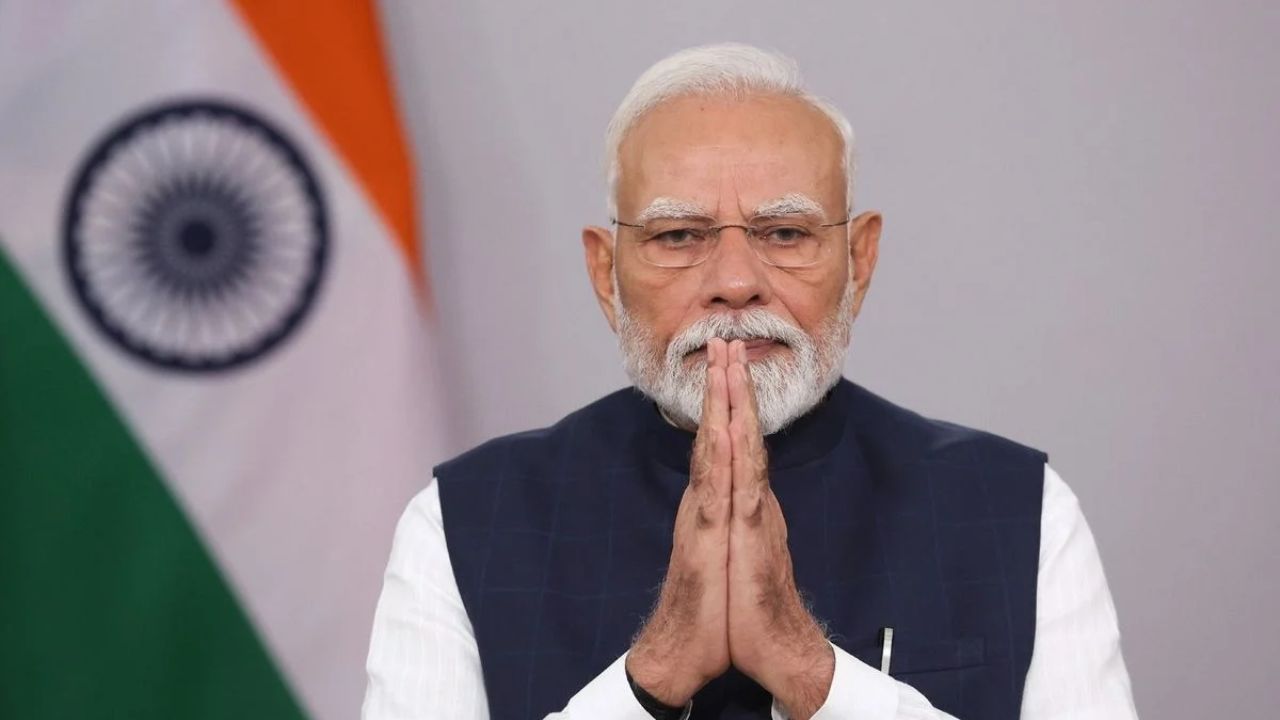
Mumbai: Prime Minister Narendra Modi will meet French President Emmanuel Macron in Mumbai, where the two leaders are expected to review the progress of the long-standing India-France strategic partnership. Strengthening existing cooperation and expanding old ties into new and emerging sectors will be the focus of discussion. Both leaders will also exchange views on key regional and global developments.
President Macron is visiting India from February 17 to 19 at the invitation of Prime Minister Modi. He will alo participate in the AI Impact Summit hosted by India and hold bilateral talks in Mumbai. This marks his fourth visit to India and his first official visit to Mumbai.
The two leaders will hold formal engagements at Lok Bhavan in Mumbai and later jointly inaugurate the India-France Year of Innovation 2026. After this, both leaders will address business leaders, start-ups, researchers, and innovators from both countries, highlighting the growing collaboration in technology and innovation sectors.
A major highlight of the partnership is the announcement of a new defense industrial roadmap. The plan focuses on co-design, co-development, and co-production of military hardware, while also strengthening defense supply chains between the two nations.
Officials said the roadmap covers cooperation in aircraft manufacturing, maritime and underwater warfare, space technology, robotics, cyber defense, and artificial intelligence-driven systems.
The two sides also signed agreements on space cooperation, including collaboration on space situational awareness and satellite launches.
An agreement between Airbus and the Tata Group for local manufacturing of civilian helicopters was also finalized. However, negotiations on major defense deals—including 26 Rafale-M fighter jets for the Indian Navy and additional Scorpene-class submarines—are still ongoing and in the cost negotiation phase.
Despite progress in several areas, no breakthrough was reported on the long-pending civil nuclear cooperation project at Jaitapur. Discussions continue between French company EDF and India’s Nuclear Power Corporation regarding technical, financial, and localization aspects.
India and France have also agreed to revise their 1992 tax treaty. The updated agreement will allow the French companies holding more than a 10% stake in Indian entities to pay less tax on dividends (profit money sent from India to France), while allowing India more power to tax profits made by French investors when they sell their shares in Indian companies.
The revised treaty will also remove the “most favored nation” clause, addressing previous disputes over its interpretation.
India-France relations have grown steadily in recent years, particularly in defense and strategic cooperation. Macron’s participation in India’s Republic Day celebrations earlier reflected the high level of trust between the two leaders. Officials described the frequent high-level meetings as a sign of close supervision and commitment to the partnership.
With expanding collaboration in defense, technology, trade, and innovation, India and France appear set to deepen one of their most important global strategic relationships.