 English
 English

Modi And Xi Walk Together At SCO Summit, Diplomatic Signals From Bishkek
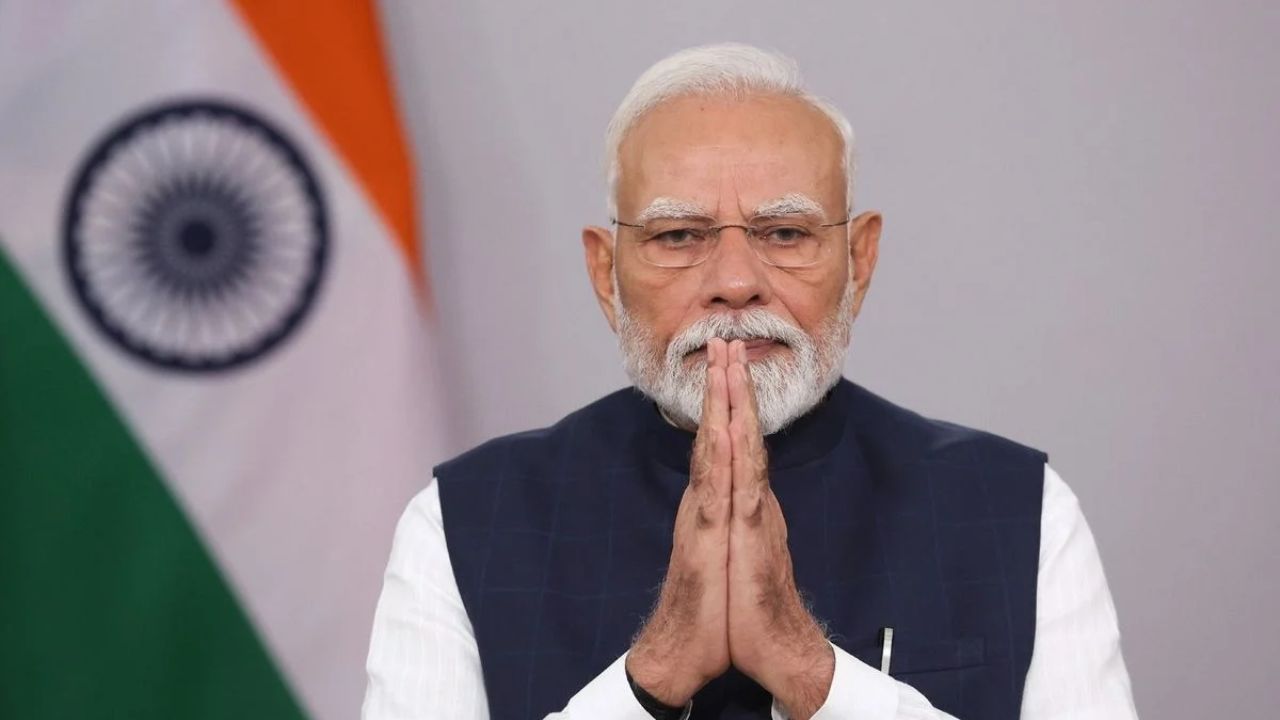
New Delhi: A brief but significant diplomatic moment between Prime Minister Narendra Modi and Chinese President Xi Jinping at the SCO Summit in Bishkek attracted global attention on Tuesday, with the two leaders seen walking side by side and interacting before the start of the high-level meeting.
The visual of Modi and Xi engaging in conversation after the leaders’ group photograph quickly became one of the key moments from the summit. The interaction holds importance as India and China continue to navigate a relationship shaped by cooperation, strategic competition, regional security concerns and economic interests.
The meeting in Kyrgyzstan’s capital comes at a time when both Asian powers are focusing on maintaining diplomatic engagement through multilateral platforms while addressing differences through dialogue.
Prime Minister Narendra Modi and President Xi Jinping met on the sidelines of the 26th Shanghai Cooperation Organisation Summit in Bishkek, where leaders from several major Eurasian nations gathered to discuss regional challenges and cooperation.
After posing for the official group photograph, the two leaders were seen exchanging greetings and walking together towards the summit venue. The brief interaction carried diplomatic significance as meetings between Indian and Chinese leadership at international forums are closely observed for signals on bilateral relations.
India and China are among the world’s largest economies and influential regional players. Any engagement between their leaders has wider implications for issues including border stability, trade, connectivity, security cooperation and regional development. The two leaders had earlier interacted on the sidelines of the SCO Summit in Tianjin in August 2025.
Prime Minister Narendra Modi arrived in Bishkek for the SCO Summit, where he received a warm welcome from Kyrgyz officials. The 26th SCO Summit brought together leaders of 10 member countries, including India, China, Russia, Pakistan, Iran, Belarus, Kazakhstan, Kyrgyzstan, Tajikistan and Uzbekistan.
The organisation also includes observer countries and dialogue partners, making it one of the important platforms for discussions on security, economic cooperation, connectivity and regional stability. India’s participation reflects its growing engagement with Central Asia and its efforts to strengthen partnerships across the Eurasian region.
During the summit, New Delhi focused on issues including terrorism, narco-terrorism, energy security, sustainable development, trade connectivity and regional cooperation.
The leaders of SCO member countries signed the Bishkek Declaration marking the 25th anniversary of the organisation. The summit was hosted by Kyrgyz President Sadyr Japarov from August 31 to September 1, 2026, under the theme of sustainable peace, development and prosperity.
Along with the main declaration, SCO leaders signed several important agreements related to security, technology, climate cooperation, energy systems and logistics development. One of the major outcomes was the approval of regulations for the Universal Centre for Countering Challenges and Threats to the Security of SCO Member States.
The mechanism is expected to improve cooperation among member countries against terrorism, extremism, organised crime and other cross-border threats.
The Bishkek Declaration supports greater coordination among SCO nations on emerging security challenges, including terrorism and organised criminal networks. India has repeatedly raised concerns over terrorism, cross-border security threats and narco-terrorism at international forums.
The new SCO security framework is expected to improve information sharing, coordination between agencies and joint efforts to tackle threats affecting regional stability. For India, the platform provides another opportunity to push for stronger global cooperation against security challenges.
The Ministry of External Affairs highlighted several important outcomes from the Bishkek Summit that align with India’s strategic priorities. A protocol related to amendments and additions to the SCO Charter allows India to participate more actively in shaping the future structure of the organisation.
India also supported expanding the role of English within the SCO framework to improve communication and wider participation among member nations. The summit also witnessed agreements on information cooperation between SCO countries, creating opportunities for institutional exchanges and sharing of perspectives.
Another important development was cooperation on climate change, including climate adaptation, technology sharing and sustainable development initiatives.
The SCO Summit followed Prime Minister Modi’s visit to Uzbekistan, where India and Uzbekistan decided to strengthen their partnership across strategic and economic sectors.
During the visit, both countries discussed cooperation in defence, artificial intelligence, digital public infrastructure, critical minerals, energy, healthcare, pharmaceuticals and education.
India and Uzbekistan also focused on expanding bilateral trade and strengthening defence industry cooperation through joint production and capacity-building initiatives. The visit highlighted India’s growing focus on Central Asia as a key region for connectivity, energy security and strategic partnerships.
Defence cooperation remained an important part of India’s engagement with Central Asian nations. The India-Uzbekistan military partnership has expanded through joint exercises and training programmes, including the DUSTLIK exercise aimed at improving operational coordination between the armed forces.
During his Central Asia visit, Prime Minister Modi also interacted with members of the Indian diaspora and local communities. Cultural exchanges, yoga initiatives and educational cooperation were highlighted as important pillars of India’s growing relationship with the region.
The Modi-Xi interaction in Bishkek reflects India’s approach of maintaining diplomatic engagement while protecting its strategic interests. The SCO platform has become increasingly important as countries deal with challenges related to terrorism, energy security, economic uncertainty and changing global power dynamics.
For India, the summit provides an opportunity to strengthen partnerships, increase its influence in Eurasia and ensure its voice remains significant in regional decision-making. The brief Modi-Xi moment may have lasted only a few seconds, but its diplomatic message has drawn attention across the world.