 English
 English

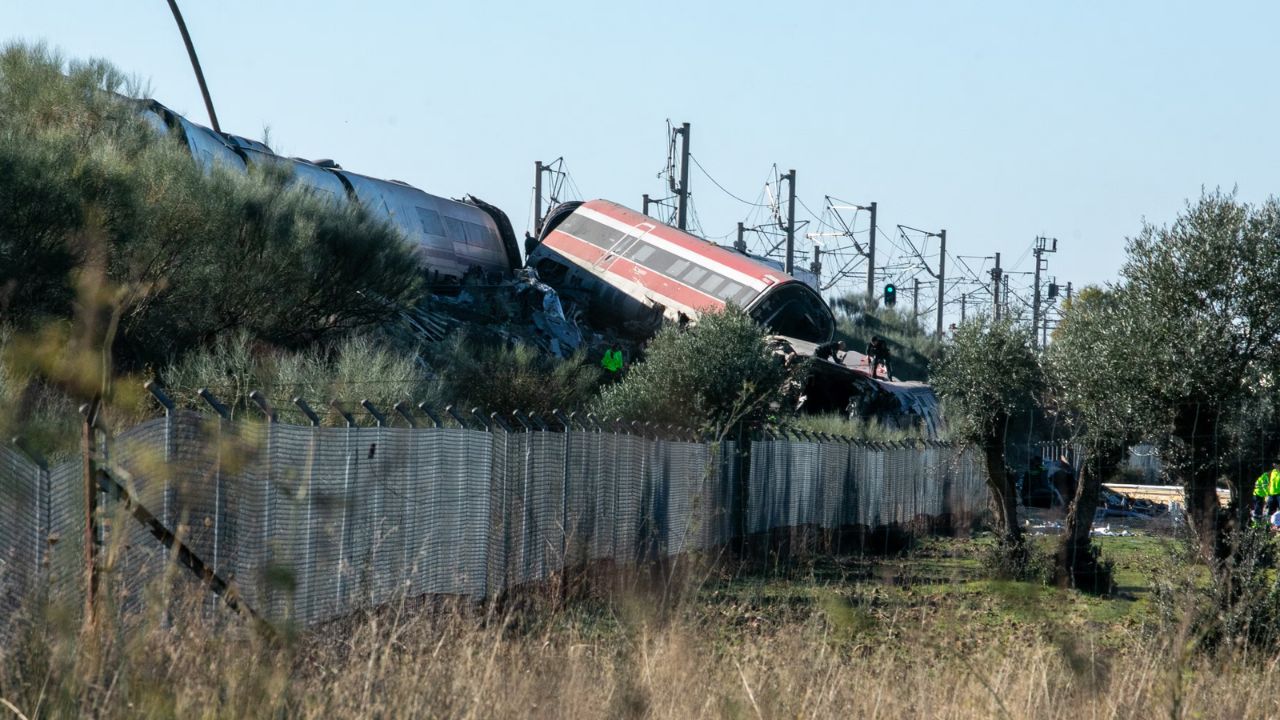
Derailment debris and damaged carriages reveal the scale of the disaster that killed at least 68 people on Spain's Madrid-Seville rail corridor. (Img: X)
Madrid: Spain announced a three-day national mourning on Thursday after a devastating high-speed train collision killed at least 68 people and injured several persons near Urda in the central province of Toledo.
The fatal collision occurred shortly before 9 am local time on Wednesday, October 28, near Urda, between the municipalities of Mora and Orgaz in Castilla-La Mancha, approximately 120–140 km south of Madrid. Two high-speed trains travelling south from Madrid towards Seville were involved in the disaster, which has become one of Europe's deadliest recent railway accidents.
A Renfe-operated train struck the rear of an Iryo service that had reportedly stopped on the tracks. The impact derailed carriages on both trains, with several coaches tumbling down an embankment. The wreckage was scattered across the railway corridor, leaving passengers trapped inside severely damaged compartments.
At least 68 fatalities had been reported in the initial aftermath, while dozens of passengers sustained injuries. Emergency personnel continued searching the wreckage for victims and survivors, and authorities worked to identify the deceased and reunite missing passengers with their families.
The scale of the destruction, the number of casualties and the possibility of a preventable signalling failure have placed the disaster at the centre of Spain's national conversation about railway safety and public accountability.
## How the Collision Unfolded: Two Trains, More Than 500 Passengers
The Iryo train, operating on the Madrid-Seville route, was carrying approximately 147 passengers, including a baby. The Renfe service had 397 passengers on board, taking the combined passenger count to more than 540.
According to preliminary accounts, the Iryo train had stopped on the railway line following a disruption affecting the signalling and communications system. The Renfe train approached from behind and collided with the stationary service.
The force of the impact caused several carriages to derail and descend an embankment, complicating rescue operations. Passengers described a sudden deceleration followed by a violent impact that sent luggage, mobile phones and other belongings flying through the compartments.
Witness accounts and footage from the scene showed injured passengers, overturned carriages, smoke and extensive structural damage. One carriage was reported to have caught fire, adding to the challenges facing emergency teams.
Authorities have yet to establish the complete sequence of events, and the final casualty figures and identification of victims remain subject to official updates.
## Spain Train Crash Cause: Investigators Examine Red Signal and Computer Failure
The precise cause of the collision remains under investigation, but preliminary information has focused attention on a reported computer communications failure affecting railway operations.
Spain's Transport Minister Óscar Puente said the malfunction had disrupted the railway safety system and automatically stopped multiple trains along a stretch of approximately 63 km of track. The infrastructure manager, Adif, subsequently assumed manual control of the affected system, according to accounts of the incident.
The most serious question concerns the reported decision to allow the Renfe train to resume movement despite a red signal prohibiting it from proceeding. Preliminary accounts indicate that the train was authorised to continue without the speed restrictions that would ordinarily be expected under such circumstances.
Puente characterised the decision as inexplicable and indicated that investigators would need to establish how the clearance was issued and why the train was permitted to proceed.
Audio recordings between railway controllers and train drivers reportedly appear to show that a train was cleared to move even though another service ahead had stalled. The recordings, signalling records and communications between the control centre and train crews are expected to form important parts of the investigation.
The authorities must determine whether the incident stemmed from a technical malfunction, a procedural failure, human error or a combination of factors. Investigators are also expected to examine the functioning of automatic safety mechanisms and whether established railway operating protocols were followed.
Railway safety experts will be particularly interested in how the signalling system responded to the communications disruption and whether safeguards designed to prevent conflicting train movements were compromised.
The findings could have implications for operational procedures across Spain's extensive high-speed rail network. However, responsibility for the crash cannot be established until the investigation has concluded.
## Three Days of National Mourning as Spain Grieves
Prime Minister Pedro Sánchez announced three days of national mourning beginning Thursday, October 29, as Spain confronted the scale of the tragedy.
Sánchez visited the crash site and acknowledged the profound loss suffered by families and communities. He also indicated that the government would establish the circumstances behind the collision and address any failures identified by investigators.
The disaster prompted Spanish political leaders to cancel public engagements and suspend campaigning for upcoming parliamentary elections. The royal family expressed its concern and condolences for the victims, while the European Union signalled solidarity with Spain.
European Union flags were lowered to half-mast in Brussels as a gesture of support during the mourning period.
In Toledo, residents observed a minute's silence during a vigil for the victims. The gathering reflected the grief of communities confronting a disaster that has affected passengers from different backgrounds and left families waiting for news of missing relatives.
The official mourning period is intended to honour those who lost their lives while emergency services, investigators and families continue to deal with the consequences of the collision.
## Rescue Operations Continue as Families Await News of Missing Passengers
Hundreds of emergency personnel were deployed to the crash site, with firefighters, medical teams, police officers and specialist rescue units working through the night under powerful floodlights.
Drones and helicopters were used to survey the affected area, locate victims and assist with the assessment of the wreckage. Rescue teams worked to cut through twisted metal and reach passengers trapped inside damaged carriages.
Hospitals across the affected region faced a sudden influx of casualties. Reports indicated that dozens of people were receiving treatment, including patients in serious and critical condition. Some medical facilities in Toledo, Ciudad Real and Alcázar de San Juan reportedly cancelled planned procedures to accommodate emergency cases.
A blood transfusion centre in Madrid appealed for urgent donations amid concerns about the potential demand for blood products.
The Spanish Civil Guard established missing-person assistance bureaux in Madrid, Toledo, Seville and Córdoba. Authorities prioritised the identification of victims and the collection of DNA samples to help establish family connections and provide reliable information to relatives.
Among those reported missing was Fátima Báñez, who heads the foundation of the Spanish Confederation of Business Organisations. Her reported presence on one of the trains highlighted the broad range of people affected by the disaster.
For families waiting for confirmation about loved ones, the identification process has become one of the most distressing aspects of the aftermath. Authorities face the difficult task of providing accurate information while avoiding premature identification or speculation.
## Public Anger Erupts Outside Spain's Transport Ministry
The collision has triggered public anger over railway safety, infrastructure management and government accountability.
Hundreds of demonstrators gathered outside the Transport Ministry in Madrid on Wednesday night, with some reports putting attendance at approximately 1,500. Protesters called for accountability and demanded political consequences following the deaths.
The demonstration escalated when some participants reportedly threw bottles and flares, prompting police to use tear gas to disperse the crowd. Initial reports did not indicate any injuries or arrests connected with the confrontation.
The main opposition People's Party leader, Alberto Núñez Feijóo, called for transparency regarding the condition of Spain's railway infrastructure and the circumstances that allowed the collision to occur.
The public reaction has been intensified by the fact that Spain suffered another deadly high-speed rail disaster earlier in 2026. Questions are now being raised about maintenance, signalling reliability, emergency protocols and whether sufficient safeguards are in place to prevent similar incidents.
The Spanish trade union CSIF has also called for due process, urging the government not to prejudge the responsibility of railway personnel while the investigation remains underway.
The debate has widened beyond the immediate cause of the crash to encompass the institutional responsibilities of railway operators, infrastructure managers and government authorities.
## Railway Drivers Plan Strike Amid Safety Concerns
Spain's railway drivers are expected to proceed with planned strike action on Thursday, October 29, with the Spanish Union of Railway Drivers, known as Semaf, framing the industrial action around railway safety.
The planned strike adds another dimension to the crisis, as the country attempts to maintain essential transport services while investigating the disaster and addressing concerns among railway workers.
The collision has intensified scrutiny of working procedures, operational communications and the effectiveness of safety systems. Any disruption to rail services could also affect commuters and passengers travelling between major Spanish cities.
The immediate challenge for authorities is to balance the demands of the investigation, public confidence and transport continuity without compromising safety.
## Spain's Second Major High-Speed Rail Disaster This Year
The Toledo collision has renewed painful memories of a deadly railway accident in southern Spain in January 2026, when a train derailment and subsequent collision involving a Renfe service claimed 46 lives.
The January disaster occurred in Córdoba province and involved an Iryo train whose derailed rear carriages entered the path of an oncoming Renfe train. The latest collision has therefore intensified concerns about the safety of the country's high-speed railway operations.
Spain has built approximately 3,900 km of high-speed railway, making its network one of the largest in the world. The system has played a major role in connecting major urban centres, reducing journey times and supporting domestic tourism and business travel.
The network's scale also means that signalling failures, infrastructure defects or operational errors can have serious consequences if safety barriers fail.
The latest disaster has prompted renewed calls for a detailed review of railway safety procedures, infrastructure resilience, maintenance standards and emergency response systems.
The government is likely to face growing pressure to explain how the collision occurred and what steps will be taken to prevent a recurrence. Any proposed reforms will depend on the findings of the formal investigation.
## Political Fallout: Vox Refuses to Suspend Campaigning
Most political parties suspended campaigning following the crash, reflecting the gravity of the tragedy and the beginning of the national mourning period.
The far-right Vox party, however, said it would not participate in what its leader Santiago Abascal characterised as efforts to use the mourning period to restrict criticism of railway infrastructure and government policy.
The disagreement highlights the political sensitivity surrounding the disaster. While the immediate priority remains the recovery of victims and support for affected families, questions about infrastructure management and institutional accountability are expected to remain central to the public debate.
The government has pledged to investigate the incident and address any failures uncovered. The opposition, meanwhile, is demanding transparency and answers about the safety of the national railway network.
The coming days are likely to see continued scrutiny of official briefings, technical evidence and the decisions taken before the collision.
## What Happens Next in the Spain Train Crash Investigation?
The investigation will focus on the sequence of events leading up to the collision, including the reported computer communications failure, the operation of railway signalling systems and the authorisation that allowed the Renfe train to proceed.
Investigators will need to establish whether safety procedures were followed, whether the automatic protections functioned as intended and whether human or technical failures contributed to the disaster.
Authorities will also continue identifying victims, supporting survivors, informing families and assessing the structural damage to the railway infrastructure. Rail services on the affected route have been suspended while the authorities evaluate the site and determine when it can safely reopen.
The government has indicated that any negligence or security-system failures identified during the investigation will be addressed. The findings could lead to operational changes, disciplinary action or broader reforms, depending on the evidence.
For the families of the victims, the immediate priority is reliable information, dignified identification procedures and support for those injured or bereaved. For Spain as a whole, the challenge is to establish the truth behind the collision and restore public confidence in the safety of its railway network.
As the country enters three days of mourning, the tragedy has become more than a transport accident. It is a test of emergency response, institutional accountability and the safeguards that underpin one of Europe's most extensive high-speed rail systems.