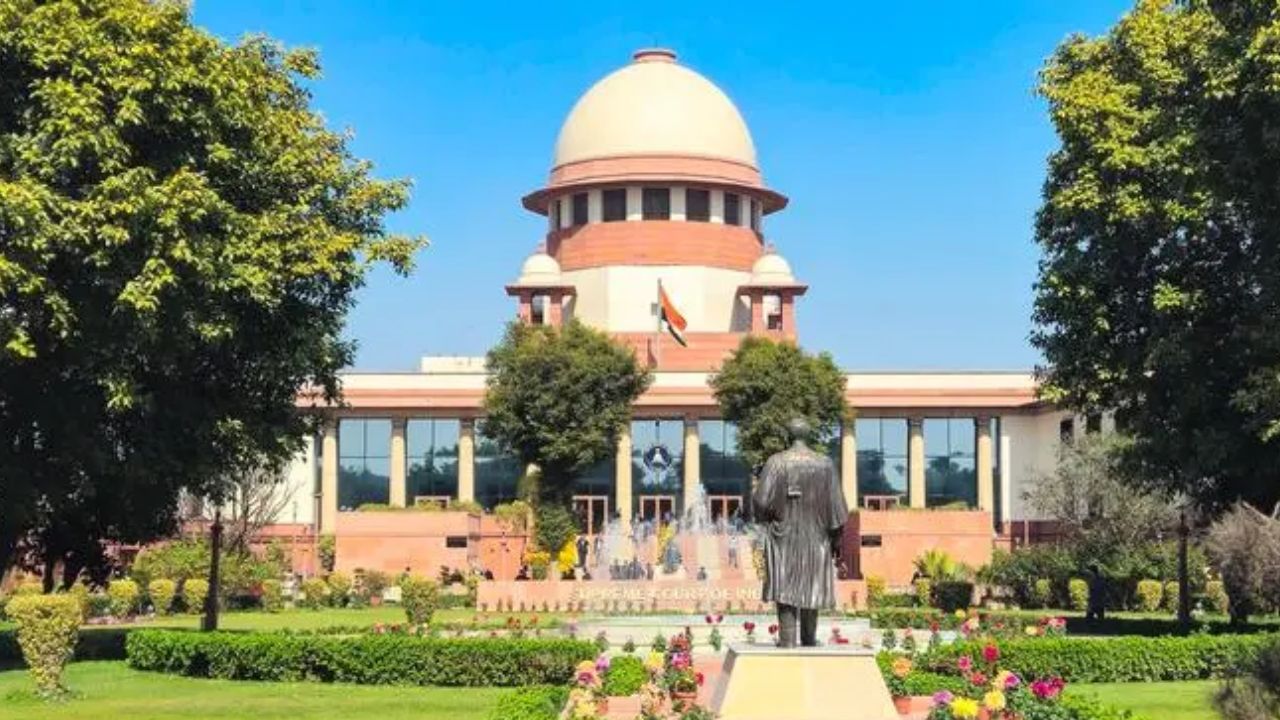
Centre clears appointment of 5 new Supreme Court judges
New Delhi: The Centre has cleared the appointment of five new judges to the Apex Court. They include four High Court Chief Justices and Senior Advocate V Mohana.
The development was shared on X by Union Minister of State of Law and Justice Arjun Ram Meghwal this morning. He wrote the President has approved the appointment of four High Court Chief Justices and Senior Advocate V. Mohana as judges of the Supreme Court under Article 124(2) of the Constitution.
In exercise of the power conferred by clause (2) of Article 124 of the Constitution of India, the President of India, after consultation with Chief Justice of India, is pleased to appoint the following as Judges of the Supreme Court of India. I convey my best wishes to them:- pic.twitter.com/WxHaRYWF6p
— Arjun Ram Meghwal (@arjunrammeghwal) June 1, 2026
The appointments come days after the sanctioned strength of the Supreme Court was increased from 34 to 38 through an ordinance.
1. Justice Sheel Nagu
Chief Justice of Punjab & Haryana High Court
2. Justice Shree Chandrashekhar Chief Justice of Bombay High Court
3. Justice Sanjeev Sachdeva Chief Justice of Madhya Pradesh High Court
4. Justice Arun Palli
Chief Justice of Jammu & Kashmir and Ladakh High Court
5. Senior Advocate Venkita Subramani Mohana
These appointments were recommended by the Supreme Court Collegium. During its meetings held on May 22 and May 27, 2026, the Collegium forwarded its recommendations to the Central Government for the appointment of these five individuals to the Supreme Court. Subsequently, upon the completion of the Central Government's procedural formalities, the President granted her approval for these appointments.
The Supreme Court Collegium system is a pivotal mechanism in India governing the appointment and transfer of judges. It is presided over by the Chief Justice of India and comprises the most senior judges of the Supreme Court. This system formulates recommendations regarding the appointment of judges to both High Courts and the Supreme Court.
The process for appointing judges to High Courts is governed by a prescribed Memorandum of Procedure (MoP). According to this procedure, a proposal for any appointment is initiated by the Chief Justice of the concerned High Court, following consultation with the two most senior judges of that court.
Subsequently, this proposal is forwarded to the State Chief Minister, who then transmits it to the Governor. The Governor, in turn, sends it—along with the necessary documents—to the Union Ministry of Law and Justice. Thereafter, the Central Government takes further action on this proposal.
Once the Central Government's process is complete, the proposal is forwarded to the Chief Justice of India. The Chief Justice finalizes the proposal after consulting with senior judges of the Supreme Court. Following the approval of the Collegium, this recommendation is sent to the Central Government.
The appointment becomes effective only after the President of India signs the warrant of appointment. Subsequently, a notification regarding the appointment is issued by the Department of Legal Affairs in the Gazette of India.

