 English
 English

Delhi Chokes as AQI Soars
New Delhi: Air pollution levels in Delhi and the surrounding NCR region have reached extremely critical levels. The Air Quality Index (AQI) in the national capital has crossed 400, making the air dangerous to breathe.
To control pollution, the Central Pollution Control Board (CPCB) and related agencies, under the Commission for Air Quality Management (CAQM), have implemented strict GRAP 4 guidelines.
Parliament Session: LoP Rahul Gandhi demands urgent debate on rising Air Pollution in the House
GRAP, or Graded Response Action Plan, is a four-stage plan designed for pollution control.
GRAP 1: Implemented when the AQI is between 201 and 300.
GRAP 2: Implemented when the AQI is between 301 and 400.
GRAP 3: Implemented when the AQI is between 401 and 450.
GRAP 4: Implemented when the AQI is above 450.
However, this time, GRAP 4 has been implemented in Delhi NCR even though the AQI crossed 400, which is considered the strictest measure for pollution control.
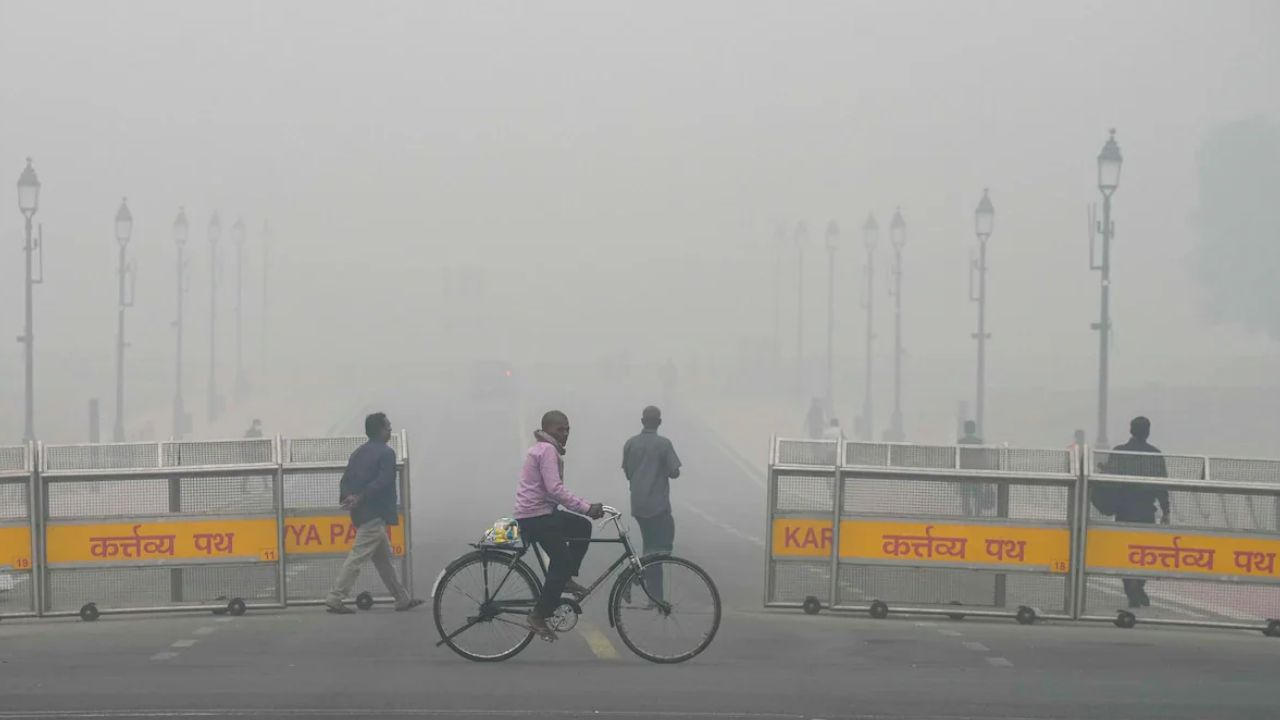
Severe Air Pollution Hits Delhi, Smog Blankets Entire NCR
The strictest restrictions are implemented under GRAP 4 to help improve air quality. These restrictions are currently in effect:
Complete ban on construction work: A complete ban has been imposed on all construction activities in the Delhi NCR region. This step is considered necessary to reduce dust and pollution.
Stone crushers shut down: Stone crushing machines have also been ordered to shut down, as these devices release large amounts of dust.
Ban on BS3 petrol and BS4 diesel vehicles: A ban has been imposed on the operation of older and more polluting vehicles (BS3 petrol and BS4 diesel) in Delhi, Noida, Gurugram, Faridabad, and Ghaziabad.
Hybrid Mode for Schools: Schools up to the fifth grade will operate in a hybrid mode, meaning children will study both online and offline to protect themselves from polluted air.
This is a necessary step to control pollution. Every year during the winter months, pollution levels rise in the Delhi-NCR region. Factory emissions, vehicular pollution, and stubble burning are major contributing factors.
Opposition MPs protest against air pollution outside Parliament; Details here
The increase in the Air Quality Index (AQI) has serious health implications for people, especially children, the elderly, and those with respiratory illnesses. GRAP 4 restrictions are necessary to address this situation, to immediately improve air quality and provide relief to people struggling to breathe.
Air pollution levels in Delhi-NCR have reached extremely hazardous levels, leading to the implementation of GRAP 4 restrictions. Construction activities, stone crushers, and older vehicles have been banned, and schools have been instructed to operate in a hybrid mode. These steps are crucial to reduce pollution and protect people's health.