 English
 English

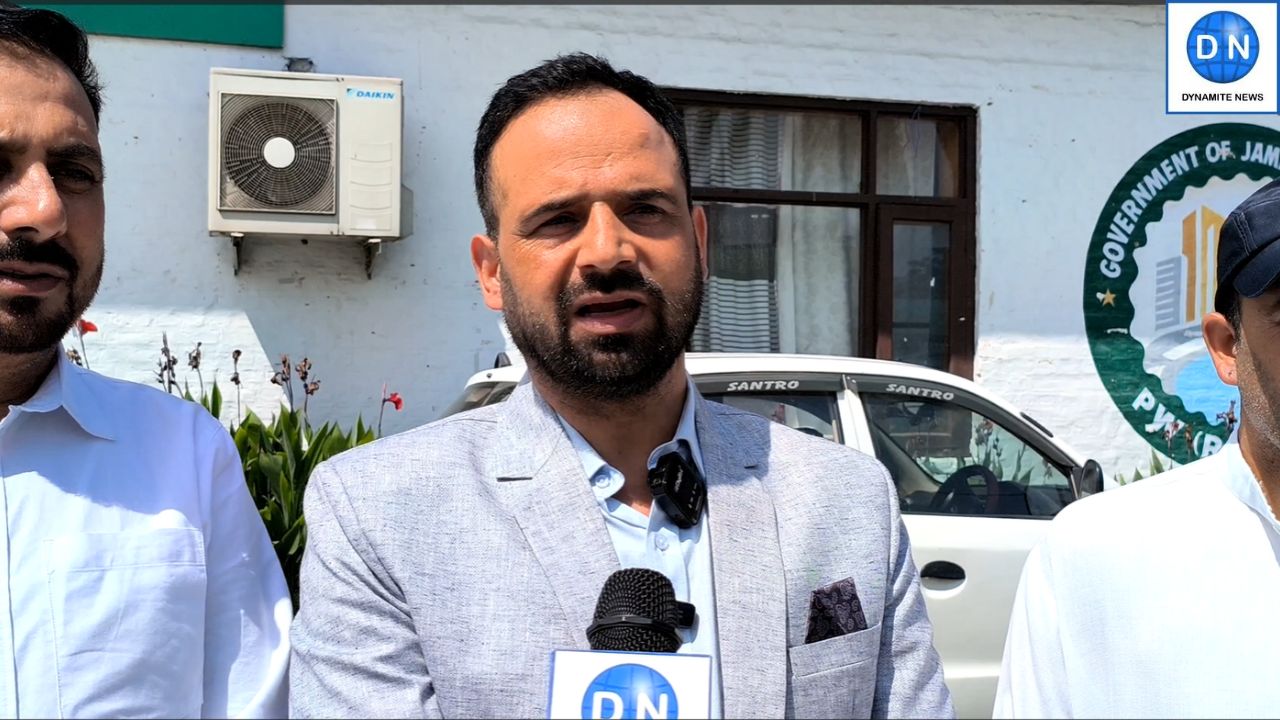
Javid Hassan Baig backs Omar Abdullah amid the ongoing debate over governance powers in Jammu and Kashmir. (Img: Dynamite News)
Baramulla: Jammu and Kashmir politics has witnessed a fresh political flashpoint after National Conference MLA Javid Hassan Baig strongly backed Chief Minister Omar Abdullah and launched a sharp attack on the BJP over governance, development and the powers available to the elected government.
Speaking to Dynamite News, the Baramulla legislator said the National Conference had received a clear mandate from the people of Jammu and Kashmir and remained committed to delivering on the promises made during the electoral process.
However, Baig alleged that the elected administration is operating under significant institutional and administrative constraints, with the bureaucracy limiting its ability to implement its political and development agenda.
His remarks have added fresh momentum to the long-running debate over the division of powers between Jammu and Kashmir's elected government, the Union Territory administration and the bureaucracy.
Baig came out strongly in support of Omar Abdullah, portraying the Chief Minister as a leader continuing to work for the people despite the political and administrative challenges facing the elected government.
The NC MLA argued that Omar Abdullah has remained focused on public issues despite the difficult circumstances surrounding the functioning of the Union Territory administration.
His defence of the Chief Minister also underlines the National Conference leadership's broader political position that the elected government should have adequate authority to fulfil the mandate given to it by voters.
Baig's sharpest criticism was directed at the functioning of the bureaucracy. The Baramulla MLA alleged that the elected government is being disempowered and does not have sufficient authority to execute the agenda on which the National Conference sought a mandate from the people. The allegation has brought the issue of administrative control and decision-making powers back into focus.
In a Union Territory structure, the relationship between elected representatives, the Lieutenant Governor's administration and senior bureaucracy remains a crucial governance issue.
Any disagreement over who controls decisions can directly affect policy implementation, development projects and accountability. Baig maintained that despite these constraints, the National Conference would continue working to fulfil its commitments as far as possible.
The Baramulla MLA also directly challenged the BJP to debate its development record in Jammu and Kashmir. Baig pointed towards development work in his constituency and argued that political claims should be tested against actual figures, completed projects and works currently under implementation.
The challenge could intensify the political contest between the National Conference and BJP, particularly over governance outcomes and development delivery. Rather than limiting the political discussion to allegations and counter-allegations, Baig called for a public assessment based on measurable development indicators.
The National Conference MLA said his primary focus remains development and the interests of people who voted for the party. His remarks highlight the challenge before the Omar Abdullah government: demonstrating delivery while simultaneously arguing that the elected administration does not have complete control over several aspects of governance.
For the ruling National Conference, development performance is likely to remain a key political measure as it seeks to defend its mandate and respond to criticism from the opposition. For the BJP, the development record of the past decade remains an important part of its political argument in Jammu and Kashmir.
Baig also strongly reaffirmed his association with the National Conference. He made it clear that he would not compromise on his relationship with the party and expressed confidence in Omar Abdullah's leadership and understanding of what is required to serve the people.
The statement comes at a time when governance, political authority and the functioning of the elected administration remain closely watched across Jammu and Kashmir.
Baig also referred to the legacy of the Hurriyat and its continuing influence on the political discourse surrounding Kashmir. His remarks suggested that developments from previous decades continue to shape the political environment and public debate in Jammu and Kashmir.
The reference adds a historical dimension to the current political confrontation, linking today's governance debate with the region's complex political history.
The NC MLA also made a cryptic reference to several issues that he said could be discussed in detail at another time. Baig indicated that there were matters he could reveal publicly but suggested that the present circumstances were not appropriate for doing so.
The remark is likely to generate political curiosity because it comes amid an intense debate over administrative powers, governance and political accountability in Jammu and Kashmir. However, he did not publicly disclose the details of the issues he was referring to.
Despite the political and administrative pressures he described, Baig said he would continue raising issues concerning the rights and interests of the people of Jammu and Kashmir. His comments reflect a defiant political stance and reinforce his positioning as a vocal representative of Baramulla.
The broader message from the NC MLA was that political pressure would not prevent him from raising issues affecting his constituency and the wider region.
The dispute over administrative powers is not merely a political disagreement. It directly affects how an elected government implements policies and delivers on promises made to voters.
Jammu and Kashmir currently functions as a Union Territory with an elected legislative government. This creates a complex administrative framework involving elected representatives, the Lieutenant Governor's office and the bureaucracy.
For political parties, the question of authority is closely connected to accountability. If elected representatives are responsible for delivering on public promises, they argue that they also need adequate decision-making powers.
Baig's remarks have therefore reopened a much larger question: how much administrative space does the elected government have to implement its political mandate?
The political contest between the BJP and National Conference is also increasingly centred on development and governance. Baig's proposed debate would put constituency-level projects, infrastructure development, public works and implementation figures under scrutiny.
Such a comparison could provide voters with a more measurable assessment of competing political claims, particularly if the debate focuses on completed projects, ongoing works, public spending and delivery timelines.
Baig's comments are likely to trigger a fresh political response from the BJP and could intensify the debate over governance and development in Jammu and Kashmir.
The immediate focus is likely to remain on the actual powers of the elected government, the role of the bureaucracy and the development record claimed by different political parties.
For the National Conference, the challenge will be to demonstrate delivery despite the administrative limitations it has highlighted. For the BJP, the political challenge will be to defend its record and respond to Baig's demand for an open debate.
As the political battle develops, the issue of who controls decision-making and who should be held accountable for governance is likely to remain one of the biggest questions in Jammu and Kashmir politics.