 English
 English

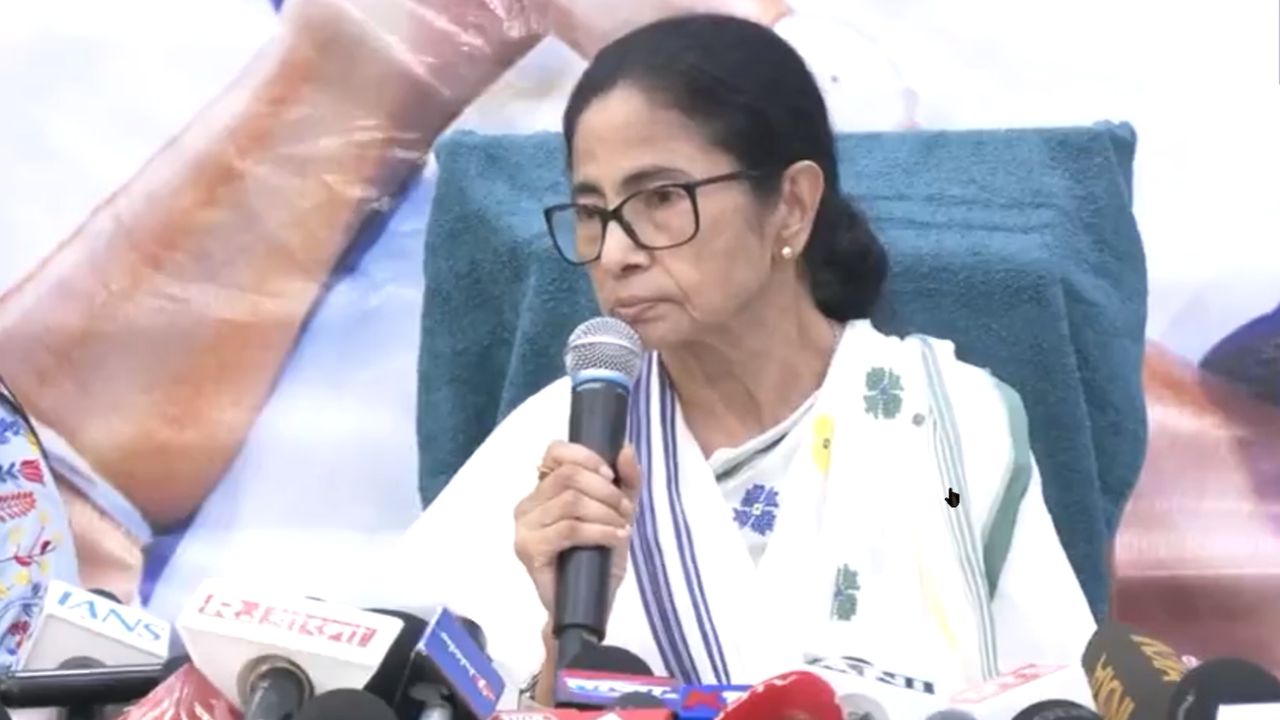
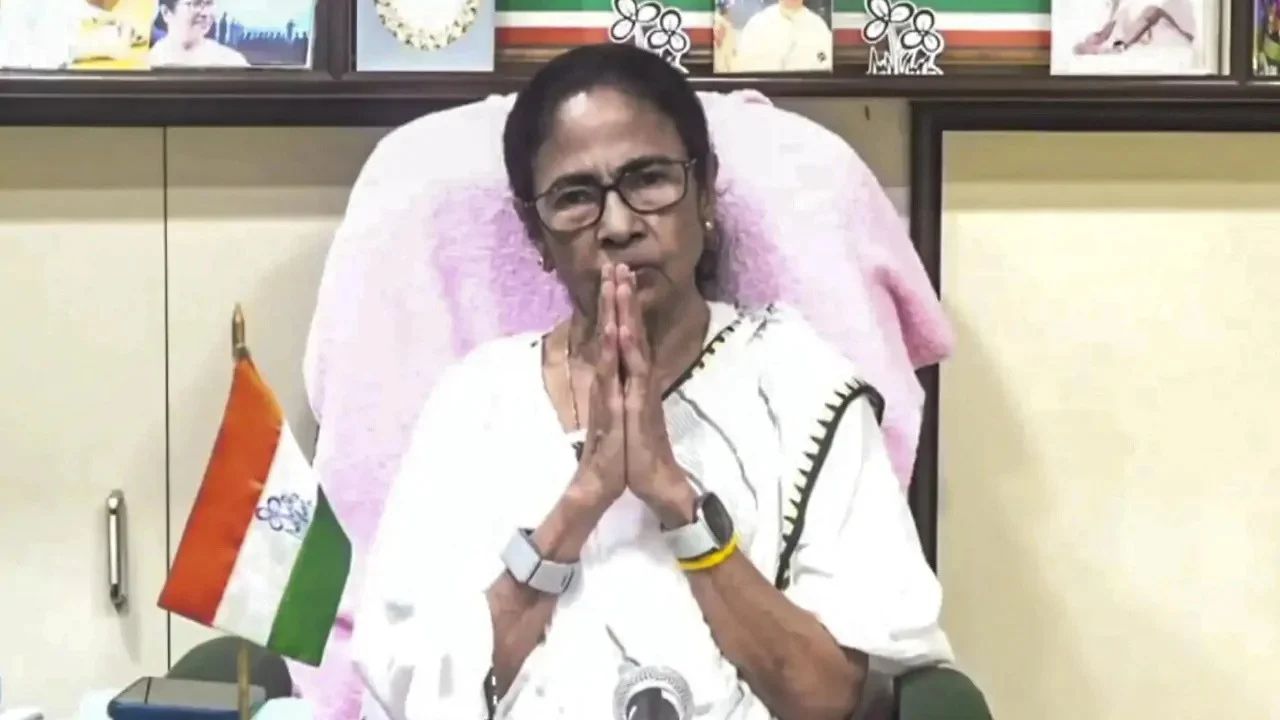
Mamata Banerjee (File PhotZ)
Kolkata: Mamata Banerjee, known for her combative and fierce way of conducting politics, is staring at the worst time of her career as her Trinamool Congress party is on its way out of power in West Bengal.
The 71-year-old lady, popularly known as ‘Didi’ (elder sister), has failed to lead her party to victory for the fourth consecutive time, with the BJP staging a massive upset by gaining power in the eastern state of India.
It will be for the first time that the BJP would be forming a government in West Bengal, which has been under the rule of Trinamool Congress for the last 15 years and the Left Parties for 34 long years earlier. Before that, the state was ruled by the Congress till 1977.
Hailing from a humble background, Mamata Banerjee entered politics in early 1970s, initially working as a youth leader of the Congress.
But she moved up quickly and acquired prominence in West Bengal politics while being associated with the Indian National Congress (INC).
In 1991, she was elected to the Lok Sabha from Kolkata and was made a Minister of State for Human Resource Development, Youth Affairs and Sports in the P.V. Narasimha Rao government.
In 1998, she left the Congress party and floated Trinamool Congress (TMC), with focus on West Bengal.
Her projection as a champion of the rural and common masses catapulted her political fortunes and her party as she challenged the dominance of Left parties in West Bengal.
She associated with the BJP and her party TMC became a member of the National Democratic Alliance (NDA) which was in power at the Centre.
In the Atal Bihari Vajpayee government, she was made the Minister of Railways in 1999.
However, her association with the NDA was short-lived and she dumped it.
In 2004, when the Congress-led UPA came to power at the Centre, Mamata Banerjee became a member of the alliance and became the Minister of Coal and Mines.
But she was more interested in the Railways portfolio and got it in 2009.
Soon after, she decided to return to West Bengal to give a direct challenge to the well-entrenched Left parties by contesting the Assembly elections in a major way in 2011.
She set the stage for it by leading a major agitation in Nandigram against a car-manufacturing project of the Tata Group.
In the 2011 Assembly elections, TMC registered a historic victory and ended the 34-rule of Left parties in the state.
Resultantly, Mamata Banerjee became the first woman Chief Minister of Bengal.
Ruling with an iron fist, she maintained dominance over the politics of West Bengal for the last 15 years.
She managed to thwart two dedicated attempts by the BJP to oust Trinamool Congress from power in 2016 and 2021 Assembly elections but failed to do it this time -- the third time.
Mamata Banerjee was born on January 5, 1955, in Kolkata to Shiv Chand Banerjee and Gayatri Devi Banerjee.
Her father is said to have been a freedom fighter while her mother was a homemaker.
She pursued her education in Kolkata and earned her Bachelor Degree in Arts from the University of Calcutta after studying in Jogamaya Devi College.
Taking inspiration from her father, she got actively involved in student politics and social activism from her college days.
She was associated with several movements advocating for the rights of the marginalized and was influenced by the political climate of the time, which motivated her to pursue a career in public service.
Formation of Trinamool Congress (TMC) was a major turning point in her political career.
After detaching from the Congress, Banerjee founded the TMC as a regional party in 1998 with the main focus of challenging the dominance of the Left Front in West Bengal.
In the 2011 West Bengal Assembly elections, the TMC-led alliance defeated the Communist Party of India (Marxist)-led Left parties, ending their 34 years of governance.
In the subsequent elections, TMC maintained big dominance as Mamata Banerjee consolidated her power and expanded her influence.
With that, she became a prominent face in Indian politics.
The Mamata Banerjee rule focussed on issues mostly related to rural areas, education and women.
Her government launched various schemes aimed at improving women’s safety, health, and economic participation.
It prioritized education reforms and infrastructure development, besides enhancing healthcare facilities and introducing schemes to improve maternal and child health.
Among her major programmes were the Kanyashree Prakalpa scheme to promote education among girls and prevent child marriage.
She also introduced the Swasthya Sathi health insurance scheme to improve healthcare access.
Considering her governance style, Mamata Banerjee often courted controversies and difficulties.
Her tenure was marred by allegations of political violence and challenges in maintaining law and order, especially during election times.
Critics also raised questions over issues related to development policies and implementation.
She also faced legal scrutiny and allegations at various points but she maintained her political resilience.