English
 English

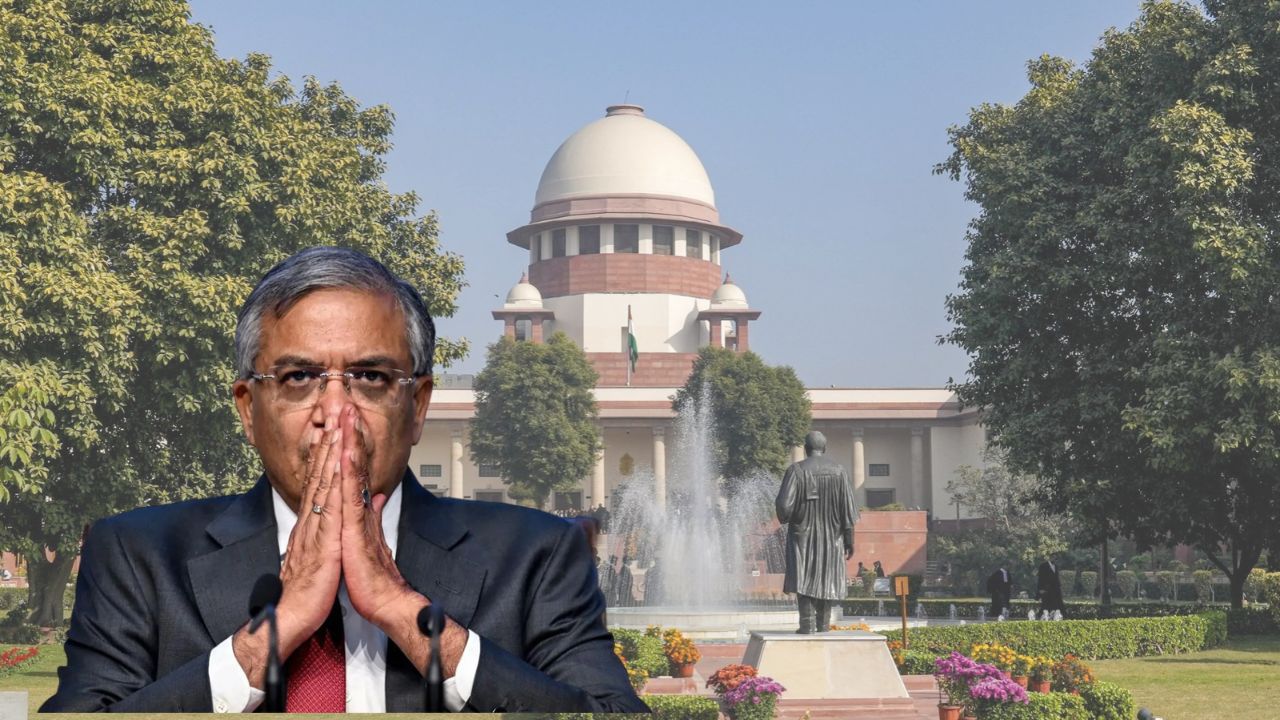
CJI Surya Kant-led bench delivers key decision on Hindi language demand. (Img: Pinterest)
New Delhi: The Supreme Court has rejected a plea seeking the adoption of Hindi as the official language of the apex court, bringing the long-running debate over language accessibility in India’s judicial system into focus once again.
A bench headed by Chief Justice of India Surya Kant along with Justice Joymalya Bagchi and Justice V Mohana dismissed the petition seeking directions to the Centre to constitute a commission for examining the use of Hindi in Supreme Court proceedings.
The court observed that changes related to the official language framework of the judiciary cannot be introduced through judicial directions and require consideration through appropriate constitutional and legislative processes.
The decision has renewed discussions around access to justice, use of Indian languages in courts, constitutional provisions and the challenges of creating a multilingual judicial system.
Why Hindi Language Plea Was Filed
The petition was filed seeking greater use of Hindi in the Supreme Court and requested the formation of a commission to examine the possibility of adopting Hindi as an official language for apex court proceedings.
The petitioner argued that constitutional provisions could support such an initiative and requested intervention from the court to begin the process.
However, the Supreme Court noted that the issue involves wider institutional considerations and cannot be decided only through a judicial order.
The bench indicated that matters related to court language require a broader policy approach involving constitutional authorities and lawmakers.
Supreme Court Explains Existing Language Reforms
During the hearing, the Chief Justice highlighted that the Supreme Court has already been taking steps towards improving language accessibility.
The court has started providing brief descriptions and summaries of important judgments in Hindi to help citizens understand major legal decisions more easily.
The apex court also indicated that similar initiatives could gradually be expanded to other regional languages.
The judges emphasised that India’s linguistic diversity requires a balanced approach where Hindi and other Indian languages are respected while maintaining the functioning of a national constitutional court.
Article 348 And Supreme Court Language Rules
The language of Supreme Court proceedings is governed by Article 348 of the Constitution of India.
Under Article 348(1)(a), proceedings in the Supreme Court and High Courts are conducted in English unless Parliament provides otherwise through law.
Article 348(2) allows the use of Hindi or other state languages in High Court proceedings with prior approval from the President. However, there is currently no similar provision allowing Hindi to replace English in Supreme Court proceedings.
This constitutional framework played an important role in the discussion during the hearing.
Why Court Said Judicial Order Cannot Change Language Policy
The Supreme Court observed that major reforms in institutional functioning are introduced through a gradual process rather than through court directions.
The bench noted that language-related changes require detailed planning, administrative arrangements, translation systems and legal terminology development.
A multilingual judicial system also involves challenges such as maintaining accuracy of legal terms, consistency of judgments and ensuring equal interpretation across languages.
The court stressed that reforms need to progress through proper channels instead of being imposed through judicial intervention.
Debate Over Regional Languages In Judiciary
The dismissal of the plea has once again highlighted the debate over the use of Indian languages in courts.
Many supporters of regional language usage argue that citizens should be able to understand legal information in languages they are comfortable with, especially when accessing justice.
Legal experts have also pointed out that translating complex legal terminology into multiple languages requires significant infrastructure, trained professionals and uniform standards.
The challenge remains to increase accessibility while protecting the accuracy and authority of constitutional court proceedings.
Supreme Court’s Push For Better Public Access
The Supreme Court has in recent years focused on improving public access to legal information through technology and digital initiatives.
Online availability of judgments, digital court services and simplified information formats have been introduced to make the judicial system more citizen-friendly.
The move towards providing judgment summaries in Hindi and other languages is part of these broader efforts to reduce the gap between courts and ordinary citizens.
Public Impact And Larger Implications
The language debate directly affects millions of citizens who interact with the justice system.
While English remains the primary language of higher judiciary proceedings, the demand for greater use of Indian languages reflects concerns about accessibility and understanding of legal processes.
The Supreme Court’s decision has clarified that any major change in the language structure of the apex court would require action beyond judicial intervention.
What Happens Next
The issue of language reforms in the judiciary is expected to remain part of wider discussions on legal accessibility and judicial modernisation.
Future changes regarding the use of Hindi or other Indian languages in the Supreme Court would depend on constitutional, legislative and administrative decisions.
Meanwhile, the apex court is expected to continue expanding initiatives aimed at making legal information available to a wider section of citizens.