 English
 English

Kashmir politics heats up as Rashtriya Lok Jan Shakti Party national general secretary Sanjay Saraf attacks Ruhullah Mehdi over Article 370 debate, calls for development-focused politics and backs J&K statehood demand.
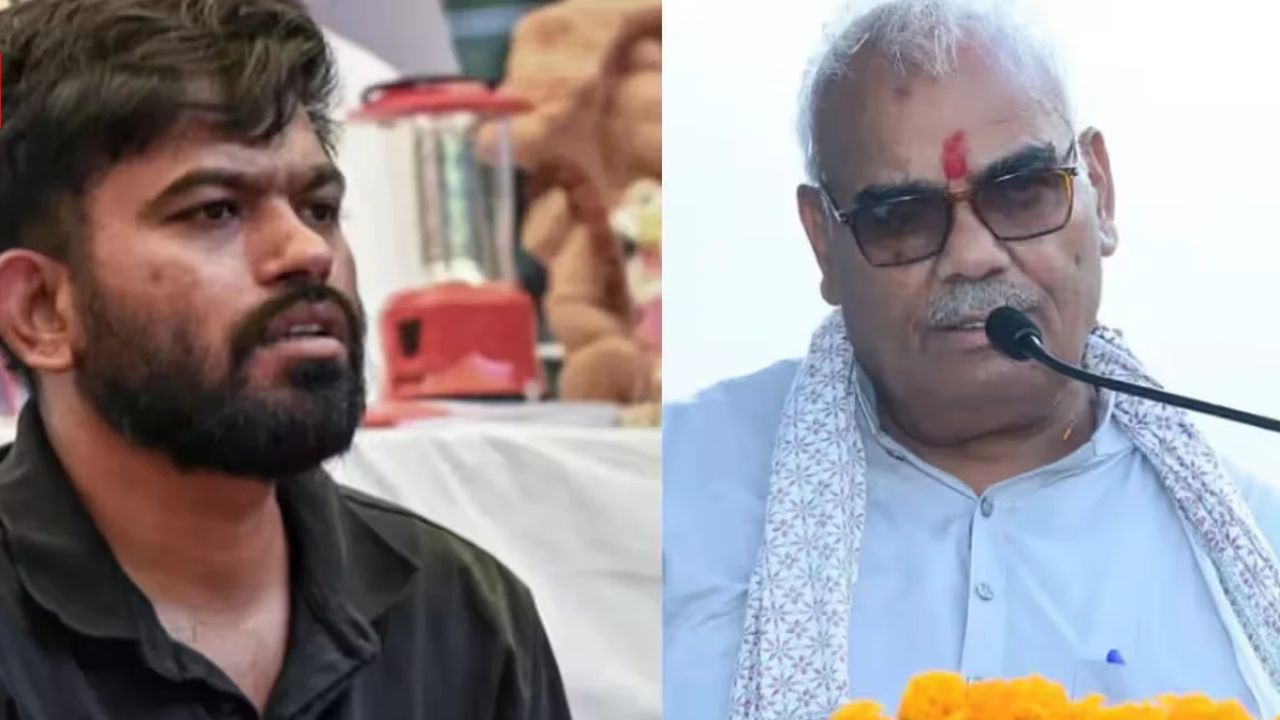
Srinagar: Political tensions in Jammu and Kashmir intensified after Rashtriya Lok Jan Shakti Party national general secretary and chief spokesperson Sanjay Saraf launched a sharp attack on National Conference MP Agha Ruhullah Mehdi over his stand on constitutional issues and the region’s political future.
Saraf accused Ruhullah of creating unrealistic expectations among people by repeatedly raising issues linked to Articles 370 and 35A, arguing that Jammu and Kashmir needs practical solutions, development-focused politics and a clear roadmap instead of emotional debates.
The remarks have triggered a fresh political discussion in Jammu and Kashmir, where issues such as restoration of statehood, development, employment opportunities and the future of governance continue to remain major concerns.
Saraf said political leaders in Jammu and Kashmir are aware of the current legal and constitutional position after the abrogation of Article 370 and changes related to Article 35A. He questioned the repeated focus on restoring provisions that no longer exist in their previous form, saying such political narratives could create confusion among the public and raise expectations without a clear path for implementation.
According to Saraf, the people of Jammu and Kashmir deserve transparency from their leaders and should be informed about what is practically achievable under the present constitutional framework. He said political discussions should move beyond emotional issues and focus on challenges directly affecting people’s daily lives.
Targeting what he described as promise-based politics, Saraf said the biggest concerns of people in Jammu and Kashmir are employment, infrastructure, investment, better connectivity and economic opportunities. He argued that young people in the region need career opportunities and development rather than repeated political debates that do not provide immediate solutions.
Saraf stressed that responsible leadership requires addressing ground-level issues and delivering measurable results for citizens. He said the focus of politics should be on improving the quality of life of ordinary people and creating opportunities for future generations.
Kashmir Politics Debate Intensifies!
Sanjay Saraf’s sharp remarks on Agha Ruhullah Mehdi, Article 370 debate and Jammu & Kashmir statehood demand have sparked fresh political discussions.
Saraf said Kashmir needs development, jobs and opportunities, while calling for honest… pic.twitter.com/C4KZ9WCLaF
— Dynamite News (@DynamiteNews_) August 21, 2026
While criticising the political debate around Article 370 and Article 35A, Saraf strongly supported the demand for restoration of statehood for Jammu and Kashmir. He said statehood is a democratic demand of the people and should not be presented as a political favour.
According to Saraf, restoring full state status would provide greater administrative authority and strengthen democratic representation in the region. The demand for statehood has remained one of the biggest political issues in Jammu and Kashmir after the erstwhile state was reorganised into two Union Territories in 2019.
Addressing criticism over the Omar Abdullah-led government’s approach towards the central government, Saraf said cooperation between the Centre and Jammu and Kashmir administration is necessary for development.
He argued that continuous political confrontation cannot solve the region’s problems and that governance should focus on public welfare, infrastructure projects and economic growth.
Saraf said political differences should not prevent governments from working together on issues that directly impact citizens. According to him, Jammu and Kashmir requires result-oriented governance instead of conflict-driven politics.
Reacting to the Kashmir visit of US Ambassador Sergio Gor, Saraf said the visit should be viewed as part of regular diplomatic engagement and should not be turned into unnecessary political controversy.
He maintained that international diplomatic interactions should be understood from a broader perspective rather than being used to create political narratives. The comments came amid continued attention on Jammu and Kashmir’s political and security situation.
Saraf also raised concerns over threats directed towards the Kashmiri Pandit community and called for strict action against anyone attempting to create fear or insecurity.
He said no community should be forced to live under fear and that maintaining peace, security and communal harmony must remain a priority. He emphasised that protecting the rights and safety of every resident is essential for lasting stability in Jammu and Kashmir.
Saraf’s remarks have added another layer to the ongoing political debate in Jammu and Kashmir over constitutional changes, statehood restoration and the future direction of governance. The region continues to witness discussions between different political groups with contrasting views on Article 370, development priorities and representation.
While some leaders continue to demand greater political powers and restoration of previous constitutional arrangements, others argue that the focus should shift towards economic growth, employment and development. The latest remarks highlight the continuing political divide over how Jammu and Kashmir should move forward.
At the centre of the debate is the question of what should be the priority for Jammu and Kashmir, constitutional issues or development challenges. Supporters of a development-first approach argue that employment, investment, tourism and infrastructure should remain the immediate focus.
Meanwhile, regional political parties continue to highlight issues related to identity, autonomy, statehood and political representation. The debate reflects the complex political landscape of Jammu and Kashmir, where governance, security, development and constitutional questions remain deeply connected.
As political parties prepare their positions on Jammu and Kashmir’s future, questions around development, democratic representation and governance will continue to shape the region’s political narrative.