 English
 English

Sharmila Tagore’s remarks on Vande Mataram's verses draws sharp response from Kangana Ranaut.
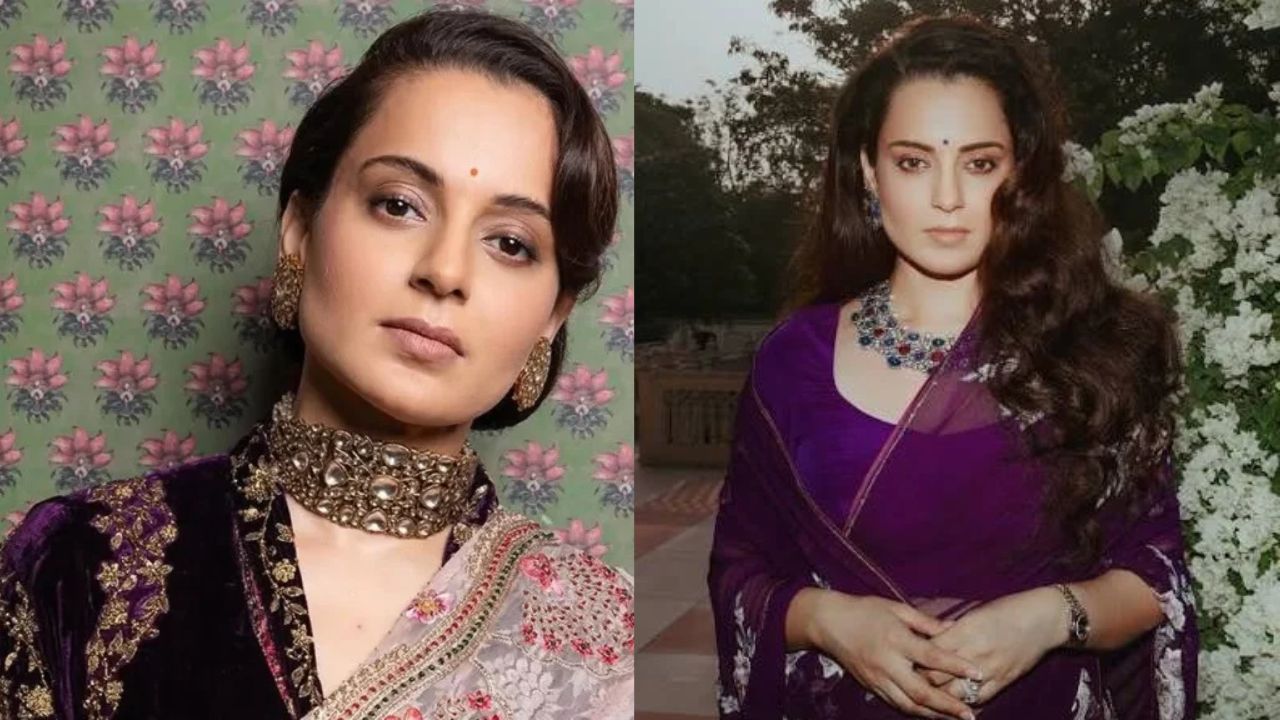
Mumbai: The debate over India’s national song Vande Mataram has returned to the spotlight after actor-politician Kangana Ranaut reacted to veteran actress Sharmila Tagore’s remarks on the song’s verses. Kangana disagreed with Tagore’s suggestion that only the first two stanzas should be preferred and said the composition should be viewed as a symbol of India’s freedom struggle, artistic expression and national spirit.
The exchange between the two prominent actors has triggered a wider discussion on social media, with people debating the balance between historical significance, artistic interpretation, religious sentiments and the inclusive nature of national symbols.
Kangana Ranaut shared her reaction after Sharmila Tagore spoke about the interpretation of Vande Mataram and its relevance among citizens from different faith backgrounds. While respecting Tagore’s opinion, Kangana questioned the approach of viewing poetry only through a religious framework. She argued that literature and music often use metaphors, symbolism and imagination to express deeper emotions and ideas.
According to Kangana, Vande Mataram represents the energy and spirit behind India’s independence movement. She said the references of strength and power in artistic works should be understood as broader symbols rather than limited interpretations. The Tejas actor highlighted that the song carries a message of courage, awakening and patriotism that played an important role during India’s struggle against British rule.
The controversy began after Sharmila Tagore discussed the different interpretations of Vande Mataram and its relevance in a multicultural society. The veteran actress pointed out that some later verses of the song contain references to Hindu deities, which may create difficulty for people belonging to faiths that follow the concept of one God.
She suggested that the first two stanzas have wider acceptance as they mainly focus on the beauty, prosperity and greatness of the motherland. Her comments brought back an old discussion about how national symbols should be understood in a country known for its religious and cultural diversity.
Vande Mataram was written by Bankim Chandra Chattopadhyay in the 1870s and was later included in his famous novel Anandamath. The song became a powerful symbol during India’s freedom movement and inspired national leaders and citizens during the fight against British colonial rule.
The opening verses describe India as a motherland filled with natural beauty, prosperity and strength. Later portions include references to Hindu goddesses such as Durga, Lakshmi and Saraswati, which have led to discussions over interpretation and representation over several decades. Vande Mataram was officially given the status of India’s National Song, while Jana Gana Mana continues to remain the country’s National Anthem.
The latest Vande Mataram controversy comes amid renewed discussions about the use and rendition of the song at public and political events. Different groups have expressed different opinions on whether the complete composition should be performed or whether selected portions should be used to maintain broader acceptance.
Supporters of the complete rendition believe the song represents India’s historical struggle for independence and national pride. Others argue that national symbols in a diverse country should also consider the sentiments of all communities.
The discussion around Vande Mataram also gained attention after actor Mukesh Khanna expressed his view that the song should be given the status of India’s National Anthem. His remarks led to a separate debate about the history and significance of India’s national symbols. However, the official position remains unchanged. Jana Gana Mana is India’s National Anthem, while Vande Mataram continues to hold the status of National Song.
The Kangana Ranaut and Sharmila Tagore exchange has generated strong reactions online. Many users supported Kangana’s argument that artistic creations should be understood in their historical and literary context. Others supported Tagore’s point about ensuring that national symbols remain meaningful and acceptable for people from different backgrounds.
The debate has once again shown the emotional connection Indians share with patriotic songs and how discussions around history, culture and identity continue to shape public conversations.
The Vande Mataram row is not limited to a disagreement between two celebrities. It reflects a larger conversation about how historical works should be preserved and interpreted in modern India. The controversy has brought renewed attention to Bankim Chandra Chattopadhyay’s creation and its lasting role in India’s cultural and national identity.