English
 English

First Solar Eclipse of the Year Brings Rare Annular Phenomenon
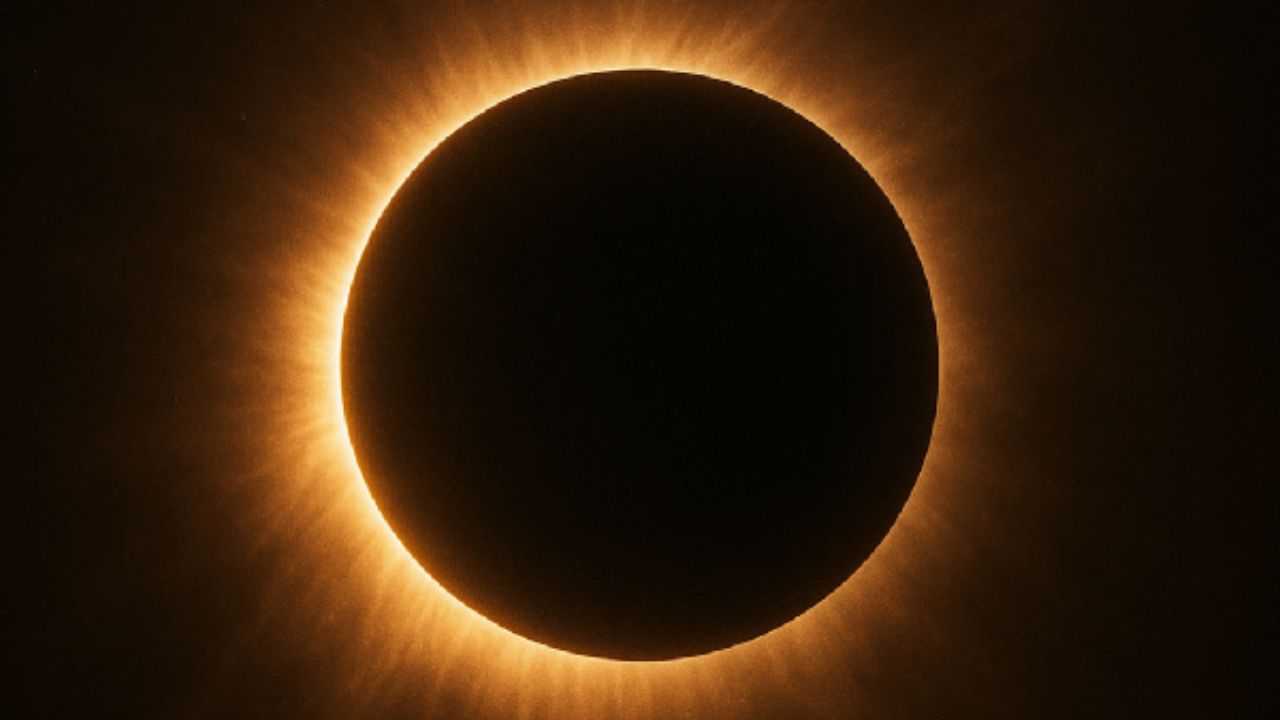
New Delhi: An important astronomical event is set to occur today, on the new moon day of the month of Phalgun. An annular solar eclipse, known scientifically as the "Ring of Fire," is taking place. During this time, the Moon will cover approximately 96 percent of the Sun, creating a spectacular spectacle in the sky. Astronomers and the general public are both extremely curious about this event.
The solar eclipse will begin at 3:26 pm Indian Standard Time. The eclipse will peak between 5:13 pm and 6:11 pm and end at 7:57 pm. This astronomical event will last for a total of 4 hours and 32 minutes. Scientifically, this is the result of the special position of the Sun, Moon, and Earth.
When will Solar and Lunar Eclipses occur in 2026? Dates, timings and visibility in India
This solar eclipse will not be visible in India. It will be clearly visible in South Africa, Antarctica, and several countries in South America. In areas where the eclipse will be visible, people will observe this rare spectacle using special glasses and scientific instruments. Due to the lack of visibility in India, its direct impact is not expected here.
According to religious traditions, the Sutak period begins approximately 12 hours before the solar eclipse. The Sutak period is considered an inauspicious time, during which it is advised to avoid worship, auspicious functions, and the beginning of new projects. However, classical belief also states that the Sutak period is valid only when the eclipse is visible at that location.
Since this solar eclipse will not be visible in India, the Sutak period will not be valid here. Therefore, normal worship, charity, and daily religious activities can be performed without any hindrance. Astrologers say that the eclipse's impact is primarily felt in areas where it is directly visible.
Solar eclipses are a highly significant event not only from a religious perspective but also from a scientific perspective. Such occasions contribute to astronomical studies, space exploration, and understanding the structure of the universe. Culturally, they also strengthen people's faith, tradition, and curiosity about nature.
No related posts found.