 English
 English

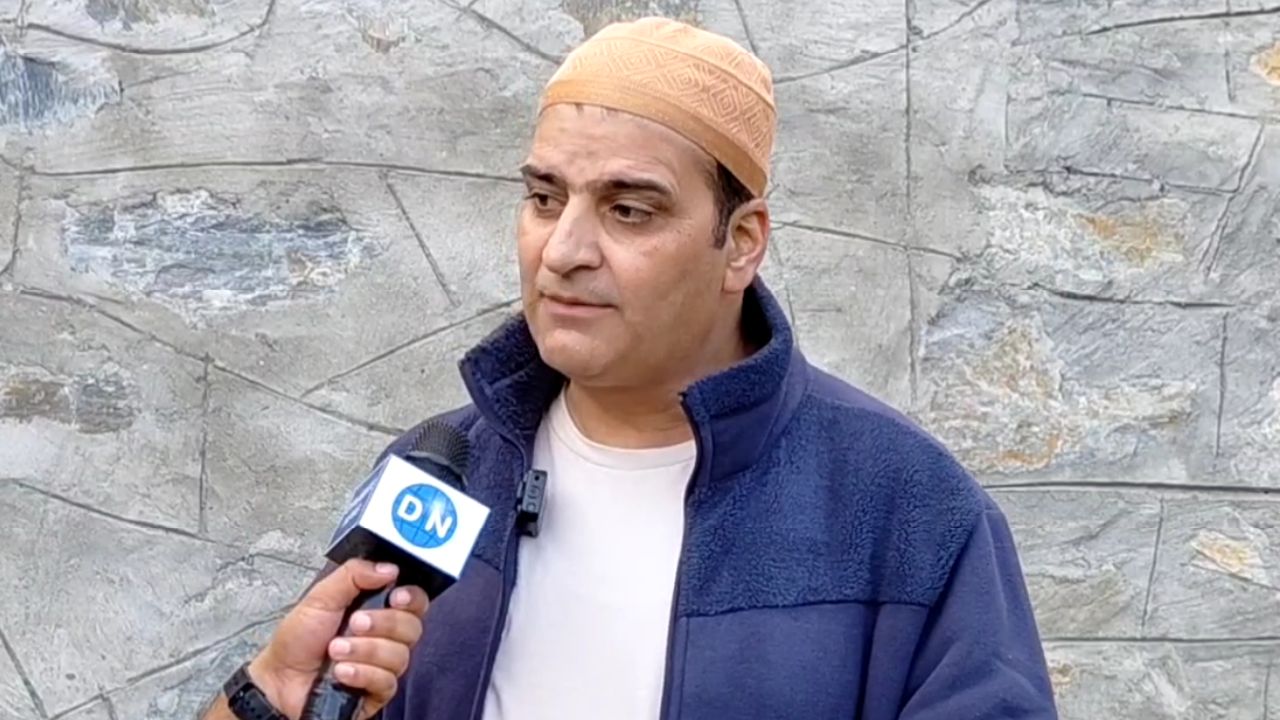
Exclusive Interview with Acharya Dr. Lokesh Muni on The Candid Talk (Image: Dynamite News)
New Delhi: Manoj Tibrewal Akash, Editor-in-Chief of Dynamite News, had a special conversation today on The Candid Talk podcast with spiritual guru and founder of Ahimsa Vishva Bharati, Acharya Dr. Lokesh Muni, who works to promote world peace. Acharya Dr. Lokesh gave straightforward answers to bold questions. In the Dynamite News Delhi studio, he spoke candidly about social reform, morality, and global peace.
Ahimsa Vishva Bharati was founded in 2005-06 with the aim of connecting religion with spirituality, linking religion to social service, and using religion as a means to eradicate social evils. If this happens, the luminous essence of religion can be revealed to the world. Along with this, Ahimsa Vishva Bharati has also established India’s first 'World Peace Center.' Our goal is to spread the message of non-violence, peace, and goodwill worldwide, so that the world can be free from violence, war, stress, poverty, and deprivation."
Jainism has two main sects Digambara and Svetambara. In the Digambara tradition, monks do not wear clothes, while in the Svetambara tradition, monks wear white robes. The Svetambara tradition itself has three branches—Murtipujak, Sthanakvasi, and Terapanthi. The mouth covering is meant to protect tiny living beings, preventing harm even while breathing. This reflects a highly sensitive approach to non-violence. I belong to the Terapanthi tradition. My initiation guru was Acharya Tulsi, who promoted the 'Anuvrat Movement' and walked over 100,000 kilometers. My education guru was Acharya Mahapragya. In the company of these great saints, I had the opportunity to learn spirituality."
Non-violence doesn’t simply mean refraining from killing. Its deeper meaning is to respect the existence of others, honor their ideas, and maintain respect for all religions. Jainism even teaches that causing mental hurt is considered violence. Non-violence in its positive form includes compassion, love, mercy, empathy, and sensitivity. We should respect our own religion while also avoiding harm to followers of other religions."
Violence can never solve a problem. Violence only leads to counter-violence. Every problem can be solved through dialogue and discussion. There is no problem in the world that cannot be resolved with understanding and conversation. We should strive to keep the lamp of non-violence always burning. War, violence, and terrorism are not solutions."
When I was 12-13 years old, a saint visited our village. His personality was so inspiring that I felt I wanted to be like him. As I grew and gained understanding and education, my resolve strengthened. Initially, my parents did not give permission, but after about 10 years, they agreed."
It’s often said that young people are moving away from religion and spirituality, but my experience is different. I believe that if religion can change our habits, refine our character, and awaken our consciousness, youth are still attracted to it. True transformation comes from practice, not just teachings or principles. When the experimental aspect of religion is visible, youth are naturally drawn. For example, we conduct exercises in anger management, stress management, and meditation. People with anger issues feel behavioral changes through these camps. Those struggling with addictions also benefit."
They need to come with a spirit of dedication. For this purpose, we have established the 'World Peace Center' in Gurugram, Delhi-NCR, just 20 minutes from Delhi Airport. Regular programs like meditation, yoga, anger management, stress management, and self-management are conducted there. If necessary in the future, we can also start such courses online."
Politics used to be a medium for service, but when 'ethics' disappear, only 'rule' remains. In ancient times, kings sought guidance from saints. Politics should draw inspiration from religion, but religion should remain free from political interference. There is no place for violence, hatred, or animosity in religion. If political and religious leaders work with the principle of 'first the nation, then the party, then self,' the country can move in a new direction."
Inner peace is the foundation of world peace. The problem is that we want peace but walk on paths that lead to unrest. Big nations talk about peace but spend billions on weapons. Today, training in peace and non-violence is essential. That’s why we established India’s first 'World Peace Center,' where dialogue and peace can solve conflicts and tension."
Technology, like everything else, has two sides. Used moderately, it is a blessing; in excess, it becomes a curse. People have become so addicted to technology that it affects their routine and mental health. I feel that, like fasting, 'digital fasting' will become necessary in the future."
Aspiring for success is not wrong. Dreaming big is also fine. But one must recognize their inner strength. Humans are not just a body; immense energy and potential lie within. When one awakens this inner power, success naturally follows."
Both karma and destiny are real. Lord Mahavir accepted karma, effort (purushartha), and destiny. I always say that destiny is not in the lines of your hand but in your efforts. When the soul engages in good deeds, it brings fortune; in bad deeds, misfortune follows. Thus, one is the creator of their own destiny."
What appears on social media is often glamorous, but people don’t see the effort, struggle, and hard work behind it. Dreams alone are not enough. A.P.J. Abdul Kalam said that dreams are not those you see while sleeping but those that don’t let you sleep. With effort and courage, social media success can also be achieved in real life."
Those influenced by this should understand that social media and real life are different. Many trend on social media but face struggles and disputes in real life. Jain philosophy mentions 'upadan' and 'nimitta.' Life’s true value lies in effort, practice, and deeds, not likes or followers, which fluctuate."
Today, social media spreads the most hateful and divisive content. I often say that ideological pollution is even more dangerous than environmental pollution. Trash on streets can be cleaned, but hatred planted in the minds of future generations may take generations to clear."
Because we are connecting less with humans and more with machines. Emotions arise from human interaction, not from machines. This is becoming a major problem in Western countries—they have material comforts but lack mental peace and emotional balance. Balance in life is essential."
The greatest strength of Indian culture has been its family and social structure. I have traveled to many countries but haven’t seen the warmth of Indian culture elsewhere. Today, the joint family tradition is weakening, elderly homes are increasing, and emotional distance in society is growing. To strengthen India, we must control corruption, overpopulation, and pollution."
You have worked on issues like female foeticide, addiction, and the environment.
Change comes slowly. A revolution in thought gradually turns into a revolution in practice. Continuous awareness is essential against issues like female foeticide, addiction, and environmental pollution. I organized the 'Sarvadharma Sadbhav Padyatra' from Gujarat to Amritsar to spread awareness against female foeticide. Today, change is visible, but persistent effort is necessary."
There must be consistency between words and actions. The biggest problem today is that people say one thing