 English
 English
New Delhi: A crisis that has shaken the entire country's aviation system, a crisis that has shattered passenger confidence, raised serious questions about the preparedness of airlines, and forced us to consider whether India's air travel system has become so fragile and one-sided that the failure of a single airline can cripple the entire system. We are talking about the sudden cancellation of hundreds of flights by IndiGo, the country's largest private airline, which left thousands of passengers stranded, caused ticket prices to skyrocket, and created unprecedented chaos at airports.
Senior journalist Manoj Tibrewal Aakash explains in his show The MTA Speaks why this entire crisis occurred, who is responsible for it, what steps the government has taken, why the DGCA's new rule is controversial, and whether IndiGo's massive dominance could become a threat to India's aviation system in the future. Along with this, he also examines whether the relaxation in the new Flight Duty Time Limitations (FDTL) rules is truly a solution or a sign of an even bigger risk.
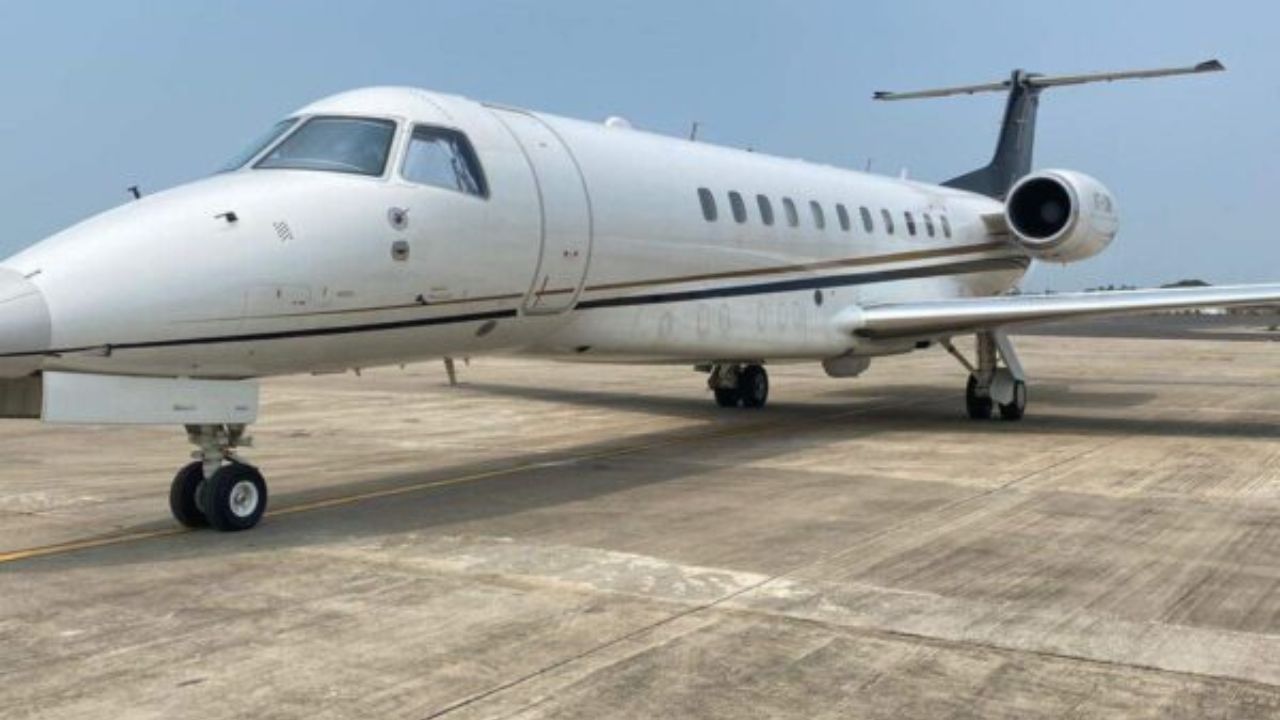
IndiGo was founded in 2005. Its founders were Rahul Bhatia and Rakesh Gangwal. Rahul Bhatia of InterGlobe Enterprises and Rakesh Gangwal of the American company Caelum Investments entered the Indian aviation industry at a time when air travel was rapidly growing in the country. In 2005, IndiGo placed an order for 100 Airbus A320-200 aircraft, signaling that it was a long-term player. On July 28, 2006, IndiGo received its first Airbus aircraft, and exactly one week later, on August 4, 2006, IndiGo's first flight took off on the Delhi-Guwahati-Imphal route.
In its initial years, IndiGo had only a few aircraft, but the company continuously expanded its network. By the end of 2006, it had 6 aircraft, and by 2007, this number had reached 9. Gradually, IndiGo dominated the Indian skies with its low-cost model and reputation for on-time flights. The rising purchasing power of the middle class, the increase in business travel, and the rapidly developing airports across the country all contributed to making IndiGo India's number one domestic airline. After 2014, IndiGo rapidly increased its market share, achieving 60 to 65 percent in just a few years. This large market share effectively made IndiGo the "real driver of the market." While IndiGo won the trust of passengers with its affordable, reliable, and frequent flights, its growing dominance and near-monopoly also created future risks.
Then came 2025, and with it, a new chapter in aviation history, a major change in the Flight Duty Time Limitations (FDTL) rules. The DGCA implemented new guidelines keeping in mind the safety of pilots and crew, fatigue management, limitations on night flights, and mandatory rest periods. It is widely accepted globally that fatigue affects the performance of aircrew and increases the likelihood of errors. Therefore, the aim of these rules was to ensure adequate rest for the crew, restrict consecutive night flights, reduce duty hours, and enhance passenger safety. Several pilot associations in India had been demanding such rules for a long time.
But the problem arose where IndiGo was bearing the weight of its own success. IndiGo had known for months that the DGCA would implement the new FDTL rules. Despite this, the company did not take timely steps such as recruiting sufficient backup pilots, creating a crew reserve pool, making scheduling changes, and improving rosters. On the contrary, the company continued to prepare for increasing the number of flights, expanding night operations, and adding new routes. As a result, as soon as the new rules came into effect, IndiGo did not have enough pilots and crew available for night shifts. The increased rest time meant that pilots could not operate as many flights. Rosters were disrupted, schedules went haywire, and suddenly hundreds of flights began to be canceled. According to reports, in November 2025 alone, IndiGo canceled 1,232 flights, of which approximately 60 percent, or 755 flights, were canceled directly due to FDTL (Flight Duty Time Limitations) and crew shortages. IndiGo's on-time performance i, more than 500 flights were canceled in a single day. Chaos ensued at major airports like Delhi, Mumbai, Bengaluru, Hyderabad, Goa, Jaipur, and Lucknow. Passengers complained of long queues at airport counters, frustration, protests, and widespread disarray.
Many passengers reported receiving information about flight cancellations at the last minute. Some claimed they were not offered alternative flights or amenities such as meal vouchers. Many passengers missed their connecting flights, some had their international travel plans disrupted, and others had their weddings, interviews, or medical emergencies affected. Videos went viral on social media showing passengers sleeping on the floor at the airport. Some passengers were stranded at the airport overnight. Children, the elderly, and women were the most affected. This was one of those days in India's aviation history when passengers lost faith in the airline system.
As the situation worsened, the DGCA (Directorate General of Civil Aviation) and the central government finally took notice. The DGCA acknowledged that IndiGo's scheduling failures and the implementation of FDTL provisions exacerbated the crisis. The DGCA provided temporary relief by relaxing some FDTL rules—such as night rest-time and consecutive night duty restrictions—for a limited period.
An exemption was granted. This step was intended to alleviate the immediate difficulties faced by passengers, but it sparked a new controversy. Several experts questioned whether relaxing safety-related regulations was appropriate. Could it increase pilot fatigue and safety risks? Were the rules weakened to benefit a large airline group?
Meanwhile, the central government constituted a four-member high-level inquiry committee, comprising aviation experts, administrative officers, and operational specialists. This committee is tasked with investigating why Indigo failed to prepare in advance, why its scheduling flaws emerged, and whether the DGCA (Directorate General of Civil Aviation) properly assessed the airlines' capabilities when implementing FDTL (Flight Duty Time Limitations). The investigation will also examine whether Indigo delayed pilot recruitment to save costs, whether it took risks by adopting a “lean crew model,” and whether its roster planning did not match the actual flight frequency.
This entire crisis highlights another major problem in India's aviation system—monopoly or quasi-monopoly. When a single company controls 60-65 percent of a country's domestic flights, and it suddenly falters, the entire aviation system begins to collapse in a chain reaction. After the collapse of Jet Airways, the bankruptcy of Go First, and the privatization of Air India, competition in the private airline sector has significantly decreased in India. As a result, passengers have very limited options. When a single giant company like Indigo falters, not only does its schedule get disrupted, but the entire market is affected—ticket prices increase, alternative flights are unavailable, and passengers are forced to buy expensive tickets.
Now the question is how to get out of this situation and what measures are necessary to prevent such a crisis from recurring in the future. Experts believe that airlines should maintain equally robust backup plans alongside their expansion. Flight cancellations due to a shortage of pilots and crew prove that cost-saving strategies come at a heavy price for passengers. Airlines should ensure timely and adequate recruitment, proper training, balanced scheduling, and technical backup. The DGCA should also assess the actual capabilities of airlines before formulating safety regulations.
It is also important for passengers to consider not only the cheapest fares when choosing an airline, but also the airline's reliability, on-time performance, and crisis management capabilities. The government should encourage more competitive airlines, support regional flights, develop new airports, and promote healthy competition in the aviation sector. Only then will the failure of one airline not disrupt the entire country's air travel system.