English
 English

Beyond the IAS badge: The officer who brought hope to communities
Lucknow: In the vast landscape of Indian administration, where decisions often travel through layers of paperwork before reaching the ground, a few officers leave behind a different kind of legacy, one measured not by designations held, but by lives touched.
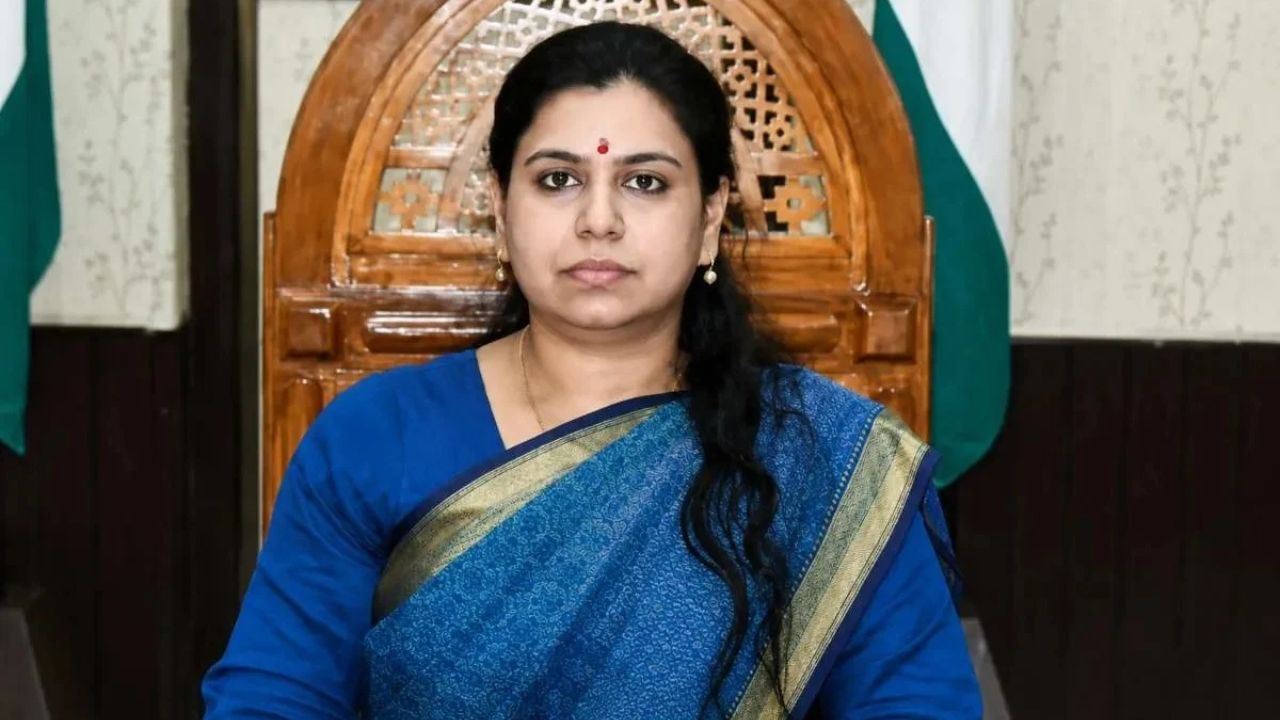
IAS officer Divya Mittal was one such administrator whose journey reflected a rare blend of ambition, courage and a deep connection with ordinary citizens.
Her story was not simply about clearing one of India’s toughest examinations or holding powerful government positions. It was about choosing a difficult road, stepping away from personal comfort and placing herself at the intersection where policies meet people’s realities.
From the financial towers of London to the remote villages of Uttar Pradesh, Mittal’s journey represented a remarkable transformation — from managing global financial systems to solving everyday challenges faced by common citizens.
An IIT Delhi graduate and IIM Bangalore alumna, she left behind a promising international career and entered public service, carrying with her a belief that the true purpose of success lies in creating an impact beyond oneself.
Before becoming an IAS officer, Divya Mittal had already achieved what many professionals dream of. After completing her engineering from IIT Delhi and management education from IIM Bangalore, she entered the world of international finance and worked in London with JPMorgan.
The corporate world offered recognition, stability and professional growth. Yet somewhere beyond the skyscrapers and financial markets of London, she felt a pull towards something larger.
The decision to return to India and prepare for the UPSC Civil Services Examination was not an ordinary career move. It was a choice to embrace uncertainty, responsibility and public service.
Leaving behind a comfortable global career, she stepped into the demanding world of administration, a field where challenges arrive every day and solutions must often be created with limited resources.
As an IAS officer of the Uttar Pradesh cadre, Divya Mittal served in some of the most demanding administrative roles. She worked as District Magistrate in Sant Kabir Nagar, Mirzapur and Deoria, positions where an officer becomes the face of governance for thousands of citizens.
The role of a district magistrate carries immense responsibility. From maintaining law and order to implementing welfare schemes, managing crises and ensuring development reaches the last mile, the officer stands as a bridge between government institutions and people.
For Mittal, administration was not merely about issuing directions from an office. It was about stepping into communities, understanding struggles and finding solutions that could change daily lives. Her approach reflected a simple but powerful idea: governance becomes meaningful only when people can feel its presence.
Among the many chapters of her administrative career, her work in Mirzapur remains one of the most remembered. In Lahuria Dah village, residents had faced a severe water crisis for decades. Access to a basic necessity had become a daily struggle, with families waiting for a solution that seemed distant for years.
Addressing such challenges required more than official instructions. It required persistence, coordination and the determination to overcome geographical and administrative hurdles. The effort to provide piped water connections to around 125 families transformed the lives of villagers.
For government records, it was an infrastructure achievement. For residents, it was a moment of dignity and relief. It meant fewer struggles, better living conditions and the feeling that the machinery of governance had finally reached their doorstep. The story of Lahuria Dah became a powerful reminder that the success of administration is ultimately written in the lives of people.
Divya Mittal also represented a new generation of administrators who embraced technology as a tool for inclusion. Understanding the challenges faced by rural students and first-generation learners, she worked towards creating digital solutions to support education and skill development.
Her use of social media created another bridge between bureaucracy and citizens. Through online platforms, she connected with young aspirants, shared experiences and offered guidance to those preparing for competitive examinations.
In an era where public trust is increasingly shaped by accessibility and communication, her digital presence reflected a changing style of governance.
The image of a bureaucrat is often associated with government buildings, official meetings and administrative files. But the real story of governance unfolds far away from offices, in villages, schools, hospitals and communities where decisions impact everyday lives. Divya Mittal’s journey highlighted that administration is not only about managing systems; it is about understanding people.
A water pipeline reaching a village, a student receiving educational support or a citizen finding hope through government assistance, these are the moments that define public service. Her work reflected the belief that behind every government scheme is a human story waiting to be transformed.
Public service demands resilience. It requires officers to navigate complex challenges, balance competing expectations and continue working despite obstacles. Mittal’s career reflected this spirit of perseverance, the determination to move beyond limitations and find possibilities where others saw difficulties.
Her journey demonstrated that leadership in bureaucracy is not only about authority. It is about responsibility, empathy and the courage to stand with people during their most difficult moments. The strongest administrators are often remembered not because of the positions they occupied, but because of the trust they created.
While her resignation marked the end of her formal journey in the Indian Administrative Service, the stories connected with her work continue to define her public image.
For many people, Divya Mittal represents a generation of officers who brought a more human approach to governance. Her journey from London’s corporate world to Uttar Pradesh’s villages reflects a larger story about purpose, sacrifice and service.
It is a reminder that true leadership is not measured only by power or position, but by the courage to create change where it matters most. Because in the end, governments may function through files and systems, but they are remembered through people.