 English
 English

Health gains and obesity challenges in India
New Delhi: The Economic Survey 2025–26, tabled in Parliament by Union Finance Minister Nirmala Sitharaman, underlines how improvements in public health are crucial for strengthening India’s human capital and boosting economic productivity.
Over the years, increased public investment in healthcare has expanded access to affordable and quality services, covering preventive care, treatment, nutrition support, and health insurance.
Flagship initiatives such as the National Health Mission and Ayushman Bharat have played a central role in making healthcare more inclusive and accessible, especially for vulnerable populations.
The Survey highlights remarkable progress in key health outcomes since 1990. India has reduced its maternal mortality rate by 86 per cent, far outperforming the global average decline of 48 per cent. Under-five mortality has dropped by 78 per cent, while neonatal mortality has fallen by 70 per cent, again exceeding global trends.
In the past decade alone, infant mortality declined sharply from 40 deaths per 1,000 live births in 2013 to 25 in 2023. These improvements reflect better maternal and child healthcare services, expanded immunisation coverage, and overall socio-economic development.
The Survey places strong emphasis on the role of digital tools and information technology in strengthening healthcare delivery. Platforms such as the Ayushman Bharat Digital Mission (ABDM), Hospital Management Information Systems, and e-Sanjeevani have helped integrate healthcare and insurance systems, improve transparency, and widen access to services.
Digital healthcare has also created new employment opportunities, supported evidence-based policymaking, and improved hospital efficiency across the country.
Despite progress, the Survey warns of new-age health challenges, particularly the rapid rise in obesity. Changing lifestyles, reduced physical activity, and increased consumption of ultra-processed foods are contributing to higher rates of diabetes, heart disease, and hypertension.
NFHS data shows that nearly one in four Indian adults is overweight or obese, while excess weight among children under five has also increased. In response, the government has launched initiatives such as Poshan 2.0, Fit India, Eat Right India, and awareness campaigns to promote healthier diets and physical activity.
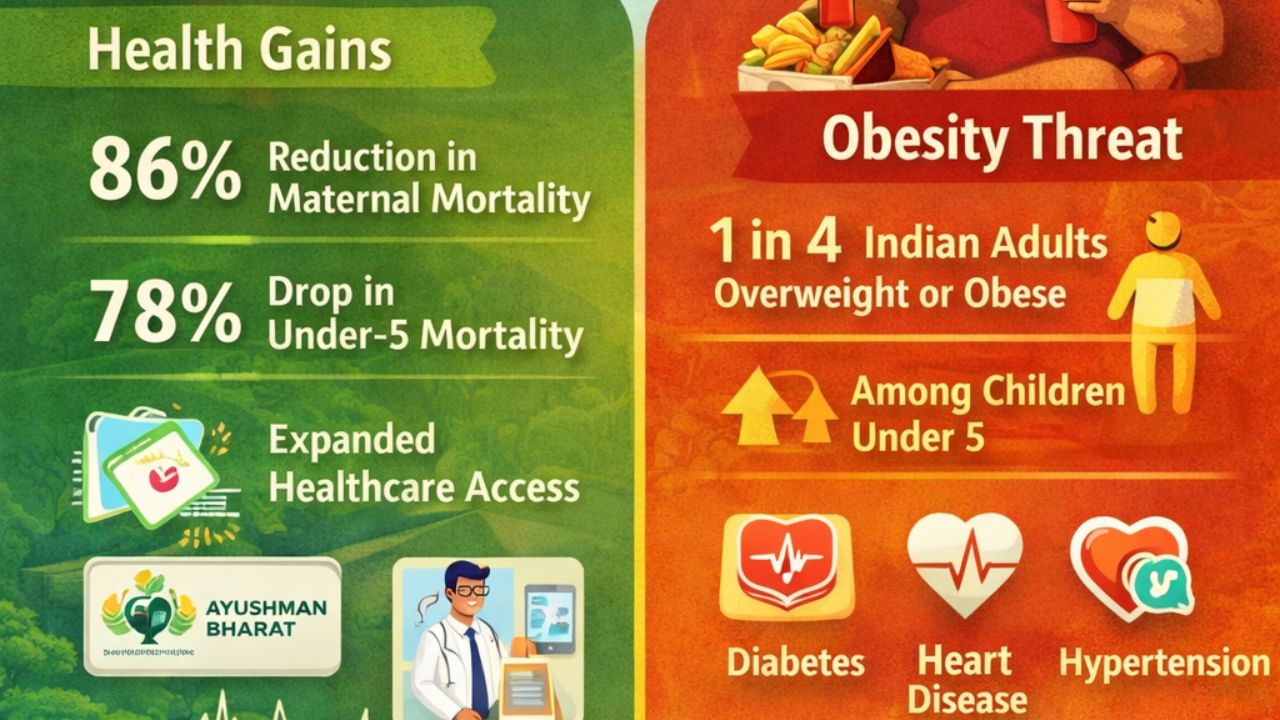
Health progress and obesity threat in India
The Survey draws attention to growing digital addiction among children and youth, which is impacting academic performance, productivity, and social well-being. Excessive screen time is closely linked to anxiety, depression, sleep disorders, and low self-esteem. To address this, the government has introduced guidelines on safe internet use, digital education frameworks, and mental health interventions.
Initiatives like Tele-MANAS, a 24/7 mental health helpline, and specialised clinics such as the SHUT Clinic at NIMHANS are providing much-needed support. The upcoming National Mental Health Survey is expected to offer deeper insights into India’s mental health landscape.
The Survey also highlights the growing use of AI and technology-driven surveys to identify health hotspots and monitor diseases. Integrating platforms like ABDM and UDISE+ with AI tools can help target interventions more effectively, particularly for chronic diseases, maternal and child health, and emerging mental health challenges.
The Economic Survey stresses that India’s future growth depends on addressing both physical and mental health together. A holistic approach, combining technology, preventive care, nutrition, and mental well-being, is essential to build a healthier, more resilient nation.