 English
 English

Former CJI DY Chandrachud delivers a thought-provoking lecture on access to justice
Port Louis: Former Chief Justice of India DY Chandrachud on Friday said that the fight to justice did not begin when a person entered a courtroom, it began much earlier, with the struggle to know one’s rights, find the right legal path and feel confident that the system will listen.
Delivering the keynote address at the Mauritius Bar Association Annual Conference 2026, the former CJI examined one of the biggest challenges facing modern democracies, the gap between legal promises and the reality experienced by ordinary citizens.
Speaking on the theme “Access to Justice: Bridging the Gap Between Law and Reality”, Dr Chandrachud explained that a justice system cannot be judged only by the number of courts it has, the strength of its laws or the independence of its judges. The real test is whether a common person can actually reach justice, understand the process and receive a meaningful remedy.
Drawing a connection between ancient Indian wisdom and modern constitutional principles, Dr Chandrachud began his address by referring to the Rig Veda’s message of collective harmony and the Mahabharata’s episode from the dice hall of Hastinapura.
The former CJI explained that the Mahabharata episode carries a timeless lesson, injustice does not occur only when laws are missing. Sometimes, laws and institutions exist, people recognise wrongdoing, yet justice remains unreachable because those responsible fail to act. According to him, the challenge before modern legal systems is not only creating laws but ensuring that those laws become a living reality for citizens.
Dr Chandrachud presented access to justice as a difficult journey where ordinary people often encounter several hidden barriers. He described these barriers as gates that citizens must cross before they can truly experience justice.
He said the first obstacle begins even before a legal battle starts: awareness. People cannot seek justice if they do not know that a right exists, where to seek help or which institution can provide a solution.
Dr Chandrachud highlighted that legal rights written in constitutions and statutes have limited value if citizens cannot understand or access them. For many people, the justice system remains a distant world filled with complex language, unfamiliar procedures and institutions they do not know how to approach, he noted.
One of the biggest challenges highlighted by Dr Chandrachud was the financial burden of accessing justice. He explained that many people fall into a difficult category — they are not poor enough to qualify for legal aid but cannot afford expensive litigation. This group is often described as the “missing middle”.
The cost of justice is not limited to lawyers’ fees. It also includes court expenses, travel costs, childcare responsibilities and lost income from taking time away from work. A person fighting for justice may not only spend money on the case but may also lose earnings simply by attending hearings.
Dr Chandrachud highlighted that millions of people across the world continue to face unmet legal needs, while many cannot even begin their legal journey because they lack essential identity documents required to prove who they are.
However, he also pointed towards reforms that can remove these barriers. He highlighted Mauritius’ expansion of legal aid assistance, allowing people with limited resources to receive legal support during police inquiries and bail proceedings.
A court may legally be open to everyone, but physical distance can still become a major obstacle. Dr Chandrachud explained that repeated travel to courts requires time, money and resources, creating difficulties for ordinary citizens.
Highlighting Mauritius’ judicial system, he pointed out that the country’s highest appellate forum, the Judicial Committee of the Privy Council, is located in London. For a person with limited resources, accessing the final stage of justice can become a significant challenge. He also warned that technology does not automatically solve the problem of distance.
Digital courts and online hearings may help many people, but they can also create new barriers for elderly citizens, people with disabilities or those without reliable internet access. Language can become another invisible wall when citizens cannot understand legal notices, court proceedings or official documents without assistance.
Dr Chandrachud explained that many citizens struggle not only with reaching courts but also with understanding where to go. A person facing a problem may not know whether the matter belongs before a court, tribunal, police authority, regulator or mediation platform. Choosing the wrong path can result in delays or even the loss of legal rights.
He also highlighted the growing importance of evidence in the digital age. Messages, emails, CCTV footage and online records may hold the truth of a dispute, but citizens must still know how to preserve, authenticate and present that evidence before the law.
According to Dr Chandrachud, access to justice is not only about filing cases. It is about being heard with dignity. He explained that every person entering the justice system carries more than a legal claim. They carry their identity, privacy, dignity and personal struggles.
Highlighting the landmark privacy judgment of Justice KS Puttaswamy versus Union of India, Dr Chandrachud explained that privacy is closely connected with human dignity, legal aid and speedy justice. He noted that Mauritius also protects similar values through constitutional safeguards, civil law principles and data protection laws.
Dr Chandrachud described delay as one of the most serious threats to justice. A delayed family dispute can affect generations. A delayed business case can destroy a livelihood before the final judgment arrives.
He referred to the constitutional promise of a fair hearing within a reasonable time and explained that judicial delays can weaken even the strongest legal protections. Discussing the case of Sarvansingh Kasory, he highlighted how prolonged legal proceedings can affect outcomes and public confidence in justice delivery.
He stressed that delays are not always caused by wrongdoing. They often emerge from backlogs, procedural complexity and systemic pressures. But for citizens waiting for justice, the impact remains painful.
Dr Chandrachud explained that justice does not end when a court delivers a judgment. The final question is whether the person actually receives the benefit of that decision. A legal victory that cannot be implemented may leave citizens feeling that justice exists only on paper.
He said trust in the justice system depends not only on decisions being delivered but also on people believing that those decisions create real change in their lives.
Dr Chandrachud also focused on the challenges faced by victims, particularly survivors of sexual violence. He explained that the courtroom itself can sometimes become another difficult barrier when victims are judged through outdated assumptions and stereotypes.
Referring to legal developments around the Tarun Tejpal case, he highlighted the danger of expecting victims to behave according to a fixed image of trauma. He emphasised the importance of moving away from the idea of a “perfect victim” and ensuring that courts focus on evidence rather than stereotypes. He also referred to judicial efforts to remove victim-blaming language from legal proceedings.

Former CJI DY Chandrachud’s Big Justice Warning: Courts Alone Cannot Bridge The Law-Reality Gap
Dr Chandrachud highlighted the concept of intersectionality, explaining that discrimination often becomes more complex when multiple identities overlap.
Using the example of Patan Jamal Vali versus State of Andhra Pradesh, he discussed the experience of a blind Dalit woman who faced sexual violence and explained why legal systems must understand people in their complete social reality.
He said justice cannot fully succeed if institutions see only one aspect of a person’s identity while ignoring the combined impact of multiple disadvantages.
Looking ahead, Dr Chandrachud warned that technology could become either a bridge or another barrier. Artificial intelligence, digital courts and online legal services have the potential to make justice faster and cheaper.
However, he cautioned that technology should support justice rather than replace human legal assistance. He raised concerns about a future where wealthy citizens have lawyers using advanced technology while vulnerable groups are left depending only on automated systems.
He also highlighted Mauritius’ recent judicial reforms aimed at simplifying procedures, improving appeals and making legal processes more transparent.
The Mauritius Bar Association Annual Conference 2026, where Dr DY Chandrachud delivered the keynote address, was organised jointly by the Mauritius Bar Association and the Mauritius Institute of Judicial and Legal Studies.
The conference focused on narrowing the gap between constitutional promises and citizens’ lived experiences by examining how legal systems can become more accessible and effective.
Mauritius’ legal leadership also highlighted challenges including affordability of legal services, judicial delays, lack of legal awareness, technology gaps and accessibility issues.
The conference discussions covered important areas including protection of civil liberties, professional ethics, modernisation of courts and procedural barriers affecting legal proceedings.

Rights On Paper, Justice Out Of Reach? DY Chandrachud’s Powerful Message From Mauritius
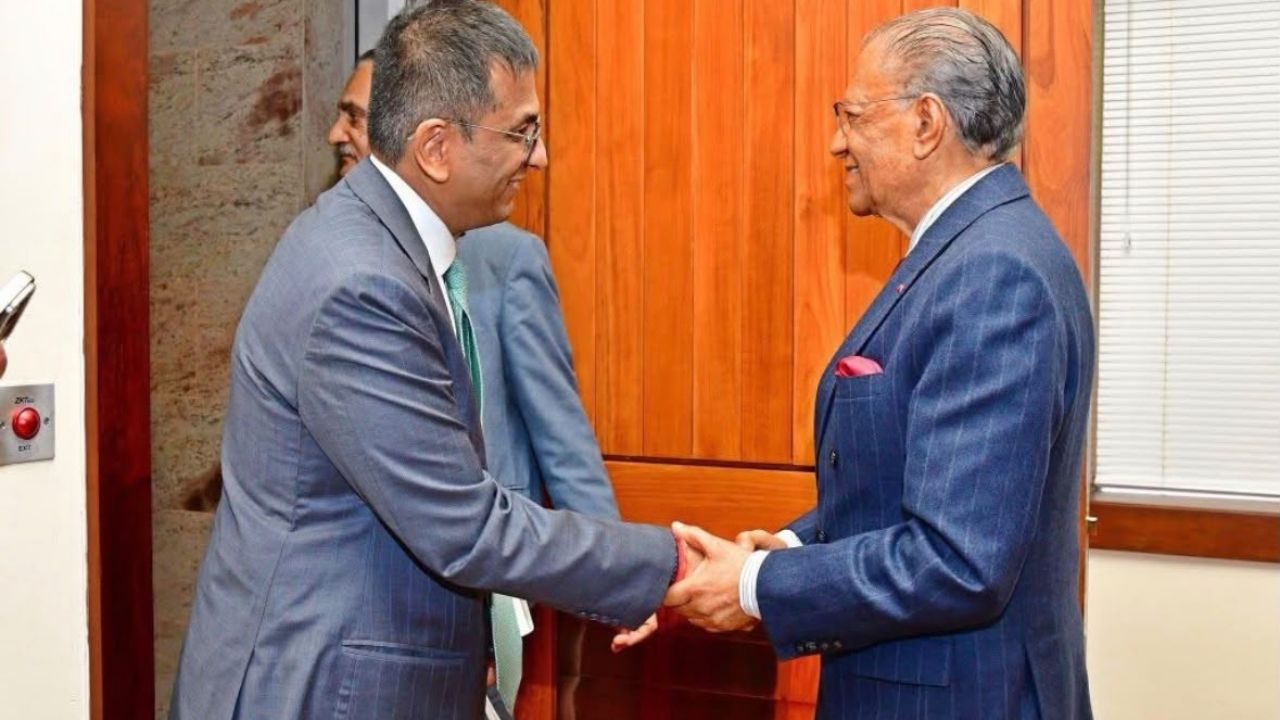
The event was attended by Mauritius President Dharam Gokhool, Chief Justice of Mauritius Rehana Mungly-Gulbul, Speaker of the National Assembly Shirin Aumeeruddy-Cziffra, judges of the Supreme Court of Mauritius, former Chief Justices, judges, barristers and political leaders. Indian High Commissioner to Mauritius Anurag Srivastava was also present at the occasion. Dr Chandrachud and his wife Kalpana Das are scheduled to call on Mauritian President Dharam Gokhool and Prime Minister Navin Ramgoolam on Monday.