English
 English

India challenges UN report over Dawood Ibrahim's D-Company (Img: X)
New Delhi: India on Wednesday criticised UN Special Rapporteur Ben Saul over a counter-terrorism report describing underworld don Dawood Ibrahim's D-Company as “India-based”, flagging what it called glaring factual inaccuracies and demanding greater accountability from UN experts.
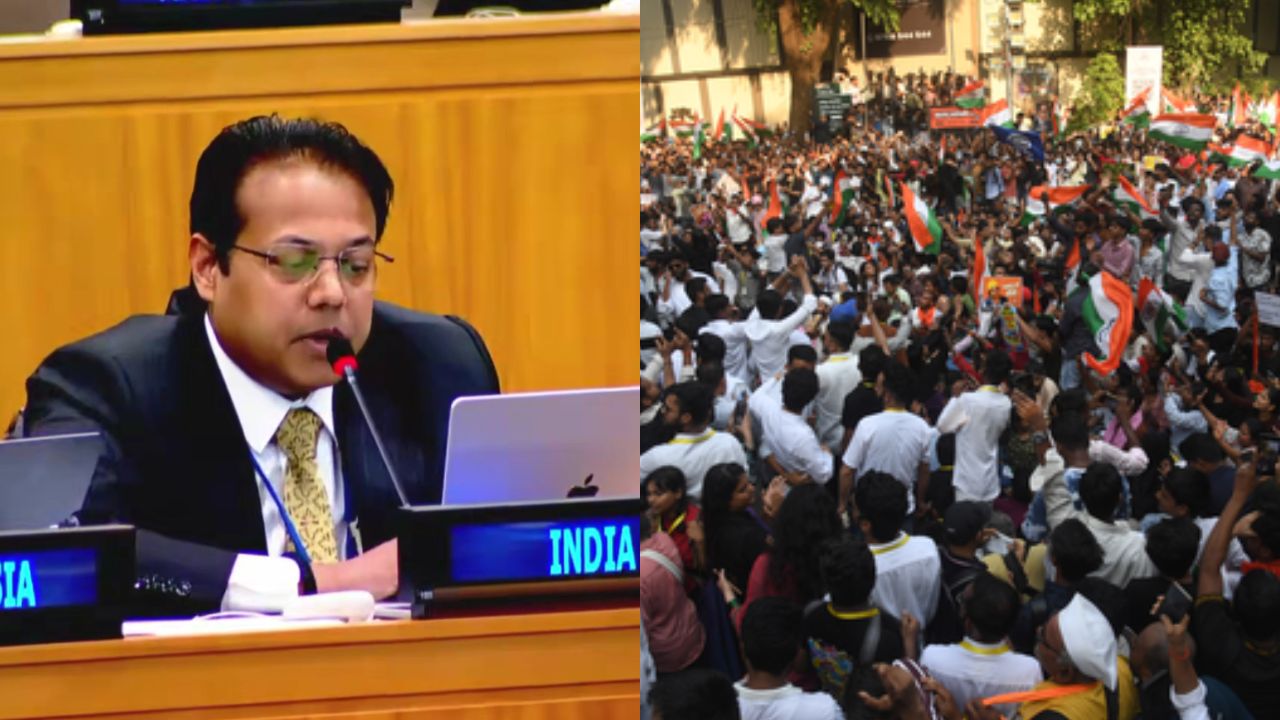
Raghoo Puri, India's First Secretary at the Permanent Mission of India to the UN, raised the objections during an interactive dialogue with the Special Rapporteur in the Third Committee of the UN General Assembly. The discussion concerned the promotion and protection of human rights and fundamental freedoms while countering terrorism.
Puri expressed concern over special rapporteurs issuing reports containing factual errors without being held accountable.
“My delegation has been pointing out in other forums as well our serious concern at the unacceptable situation of the SR (Special Rapporteur) releasing reports with factual inaccuracies, while not being held accountable for them,” Puri said.
He added, “It is in this context that we would like to point out some particularly glaring inaccuracies as far as my country is concerned.”
The objection concerned Saul's July report, titled Distinguishing organized crime from terrorism to protect human rights. It described D-Company as “India-based” and stated that the UN Security Council had listed its leader in 2003 for association with Al-Qaeda.
“Read in isolation, this line paints a very different picture from the actual reality,” Puri said.
He argued that the report failed to adequately reflect Dawood Ibrahim's record and the circumstances surrounding his UN listing.
“This is clearly written in the narrative summary of reasons of listing under the 1267 sanctions regime,” Puri said, referring to the UN record documenting the reasons for the listing.
“Not mentioning this fact is regrettable, and such incompetence on the part of special mandate holders does this organisation tremendous harm,” he added.
Puri said Dawood had fled India well before the 2003 listing and was designated for his links to Al-Qaeda and Osama bin Laden while operating from outside the country.
“Let me correct it for the record. This individual fled India much before the 2003 listing, and it was during this period from outside our country that he was listed for being associated with Al Qaeda and with Osama bin Laden.”
Puri also said Dawood remained a wanted criminal in India and “resides in the same country where Osama bin Laden was found and neutralised”, referring to Pakistan.
Bin Laden, the mastermind behind the September 11, 2001, terror attacks in the United States that killed nearly 3,000 people, was killed by US Navy SEALs in a raid on his compound in Abbottabad, Pakistan, in 2011.
Puri warned against using human rights frameworks to defend terrorism or shield those who promote extremism.
"It seems to have become fashionable for sponsors of terror to use human rights and the framework of counterterrorism to justify their misdeeds. The human rights framework cannot be the refuge of the perpetrators of terror and those who propagate radicalisation and extremism. Terrorism can never be justified," he said.
Puri also rejected remarks by the Pakistani delegation concerning Jammu and Kashmir and Ladakh, accusing Islamabad of using the issue for political gain.
"Regarding the statement just made by the delegate of Pakistan, everyone in this room knows that what has been mentioned against my country, including about the Union Territories of Jammu and Kashmir and Ladakh, is pure propaganda made for very narrow political gains. And these have been on account of the actual rulers of Pakistan, which is its military,” he said.
He reiterated India's position on the two Union Territories.
“I would like to reiterate for the record that Jammu and Kashmir and Ladakh are inalienable parts of India, have been so, and will always remain so.”