 English
 English

Water Tensions Rise Between India And Pakistan Over Historic River Agreement
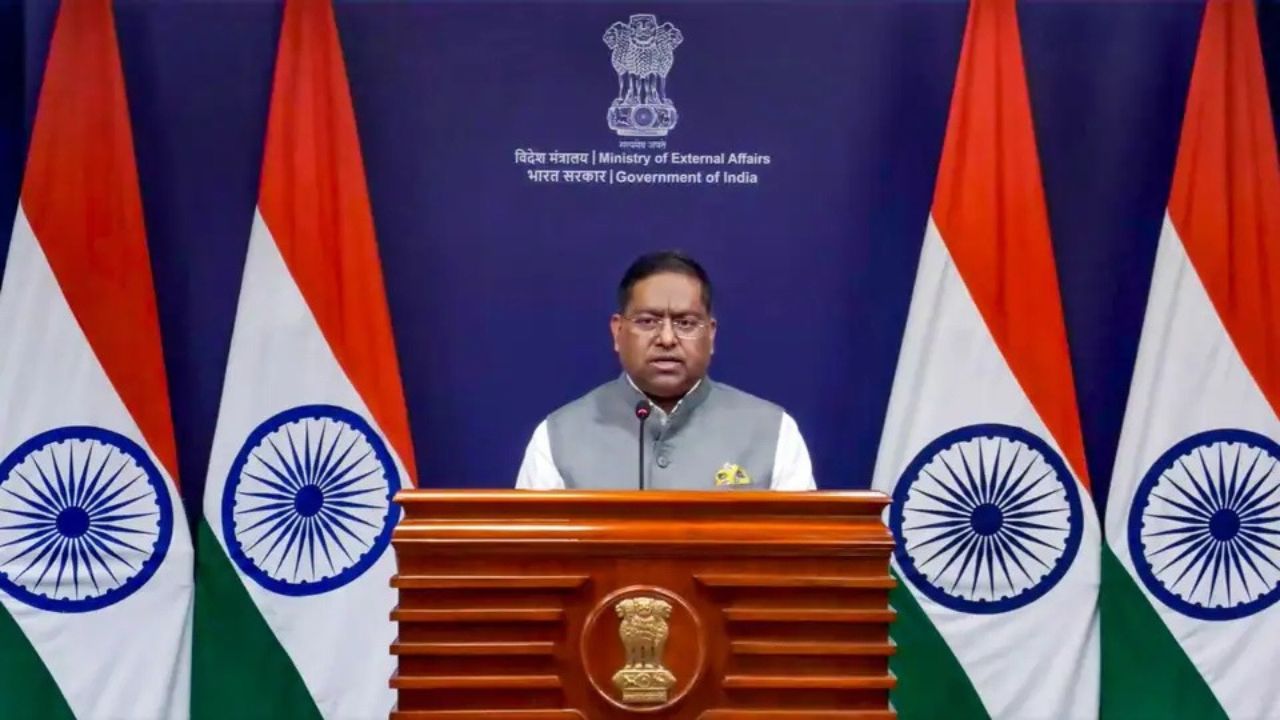
New Delhi: A fresh diplomatic confrontation emerged between India and Pakistan on Monday after New Delhi rejected the Hague-based Court of Arbitration’s ruling on the Indus Waters Treaty, stating that the tribunal has no authority to interfere in India’s sovereign decisions.
The Ministry of External Affairs (MEA) reiterated that India’s decision to keep the decades-old water-sharing agreement in abeyance remains unchanged, despite the international tribunal ruling that the treaty continues to remain legally valid.
The latest development has pushed the Indus Waters Treaty dispute back into global focus, raising concerns over water security, regional stability, international law and the future of major hydroelectric projects in Jammu and Kashmir.
The dispute traces back to India’s decision to place the Indus Waters Treaty in abeyance after the deadly Pahalgam terror attack in Jammu and Kashmir, which claimed 26 lives.
Following the attack, India announced a series of measures against Pakistan, including suspending the implementation of the water-sharing framework. New Delhi linked the move with national security concerns and maintained that continued cooperation on critical issues cannot remain unaffected while cross-border terrorism continues.
Pakistan strongly opposed India’s decision and approached international legal forums, arguing that the treaty cannot be suspended unilaterally by either country.
The Hague-based Court of Arbitration later examined the matter and ruled that the Indus Waters Treaty remains operational and that neither country can independently suspend or terminate the agreement. India, however, rejected the ruling and questioned the authority of the arbitration body itself.
The Ministry maintained that the Court of Arbitration was improperly constituted and did not have legal jurisdiction over the dispute. According to the Indian statement, technical disagreements related to water projects should be resolved through the Neutral Expert mechanism mentioned under the Indus Waters Treaty instead of a parallel arbitration process.
New Delhi also stated that it never participated in the proceedings of this arbitration panel and did not recognise its decisions. As per the statement, a body whose authority is not accepted by the country cannot issue directions affecting India’s sovereign choices, infrastructure development or water management policies.
The government has maintained that the tribunal’s observations will not impact India’s ongoing projects related to river management and hydroelectric power generation.
The latest legal dispute is closely linked to India’s Kishenganga and Ratle hydroelectric projects in Jammu and Kashmir. Pakistan has raised objections over certain technical features of these projects, claiming that they are inconsistent with the provisions of the Indus Waters Treaty.
India has rejected these concerns and maintained that the projects are fully within the rights provided under the agreement. The Ratle Hydroelectric Project on the Chenab River has become a major point of disagreement between the two nations.
The Hague arbitration panel has issued temporary restrictions related to certain construction activities at the project until technical issues are examined further. India has argued that such technical matters should be addressed through the treaty’s established dispute-resolution mechanism rather than arbitration proceedings.
The Indus Waters Treaty was signed in 1960 between India and Pakistan with the support of the World Bank. The agreement created a framework for sharing the waters of the Indus river system between the two countries.
Under the treaty, India received control over the eastern rivers, including Ravi, Beas and Sutlej, while Pakistan received rights over the western rivers, including Indus, Jhelum and Chenab.
Although Pakistan has control over most waters of the western rivers, the treaty allows India to develop hydroelectric projects on these rivers subject to certain technical conditions.
The agreement remained active even during wars and severe diplomatic crises between India and Pakistan, making it one of the longest-running international water-sharing arrangements.
The latest disagreement has transformed the Indus Waters Treaty issue from a technical dispute into a larger geopolitical challenge. For India, the matter is connected with national security, terrorism concerns and its right to make independent policy decisions. For Pakistan, the Indus river system is considered a vital economic and agricultural resource, making the treaty a sensitive national issue.
Experts believe the dispute highlights the growing importance of water security amid climate change, increasing population pressure and rising demand for energy resources. The situation also reflects how river-sharing agreements can become closely linked with diplomacy, security and international relations.
The future course of the dispute will depend on further diplomatic discussions, legal developments and technical assessments of the ongoing hydroelectric projects. While the Hague-based Court of Arbitration considers the treaty legally binding, India continues to reject the tribunal’s authority and stands by its decision to keep the agreement in abeyance.
The disagreement has created an unusual situation where international legal interpretation and national sovereignty claims are directly competing. As both sides maintain their positions, the Indus Waters Treaty dispute is likely to remain a major issue in India-Pakistan relations, with wider implications for South Asian water security and regional diplomacy.