 English
 English

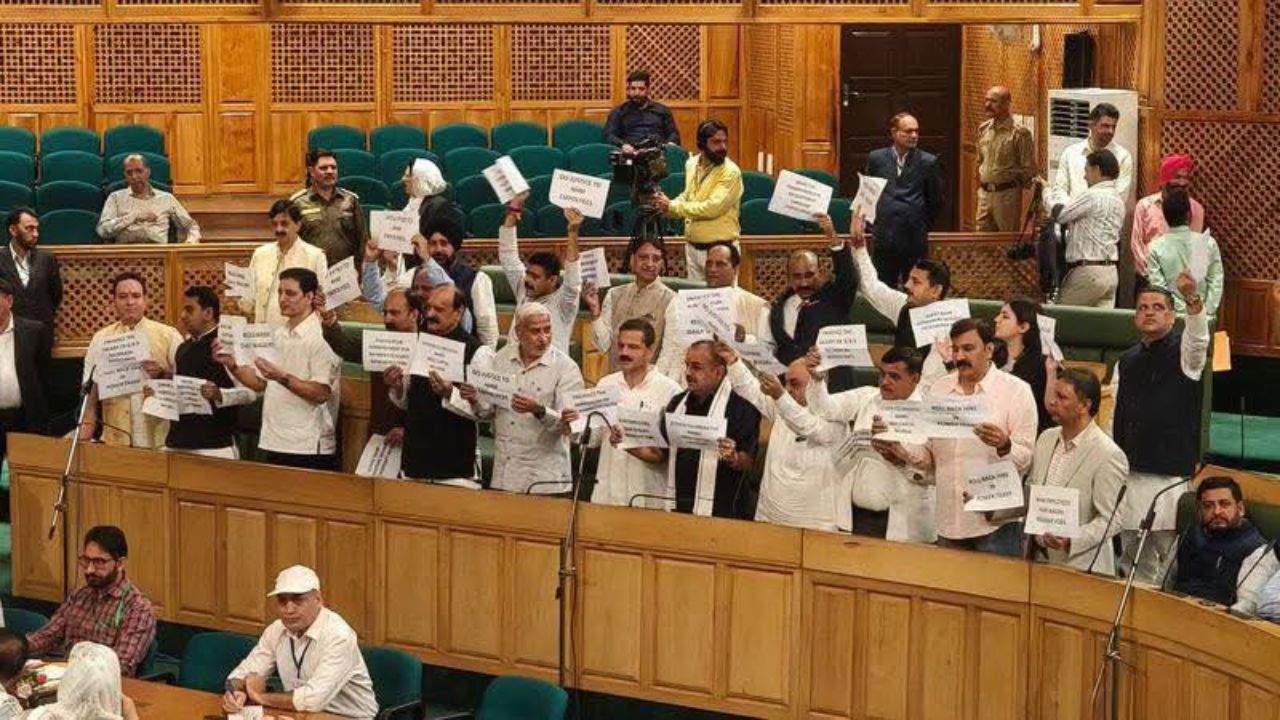
Karnataka Assembly opens crucial debate on Western Ghats and drought crisis. (Img: Pinterest)
Bengaluru: The Karnataka Legislative Assembly’s three-day special session began on Monday with two major challenges dominating the political landscape - the controversy surrounding the Kasturirangan Committee Report on Western Ghats protection and the worsening drought situation affecting large parts of the state.
The session comes at a critical time as the Union government has released the seventh draft notification linked to the Kasturirangan recommendations, giving Karnataka a deadline of September 27 to submit its views. At the same time, farmers across drought-hit regions are seeking urgent relief amid crop losses, water shortages and rising rural distress.
With both environmental concerns and livelihood issues on the table, the special session is expected to witness intense discussions between the ruling Congress government and Opposition parties over development, conservation, farmer welfare and government accountability.
Why Kasturirangan Report has become Karnataka’s biggest political issue
The Kasturirangan Committee Report, prepared to identify ecologically sensitive areas in the Western Ghats, has remained one of Karnataka’s most debated environmental issues for more than a decade.
The report recommended declaring around 56,825 square kilometres across six Western Ghats states as Ecologically Sensitive Areas (ESA), covering nearly 37 per cent of the region.
In Karnataka, around 20,668 square kilometres have been identified as ESA across 10 districts, including Kodagu, Chikkamagaluru, Hassan, Shivamogga, Mysuru, Chamarajanagar, Dakshina Kannada, Uttara Kannada, Udupi and Belagavi.
The proposal has become politically sensitive because several villages, agricultural areas and plantation regions fall within the proposed eco-sensitive zones.
Mining, quarrying and industries at centre of debate
One of the key recommendations of the Kasturirangan Report is restricting activities considered harmful to fragile ecosystems.
The report proposes restrictions on mining, quarrying, sand mining and highly polluting red-category industries in the identified eco-sensitive areas.
It also suggests stricter environmental checks for major infrastructure and development projects.
While environmental groups have supported stronger protection measures for the Western Ghats, many local communities and political representatives have raised concerns about possible effects on livelihoods, land use and economic activities.
Karnataka government prepares response before September 27 deadline
The Karnataka government is expected to finalise its response to the Centre before the September 27 deadline.
Both Congress and BJP have historically opposed implementation of the Kasturirangan recommendations in their current form in Karnataka.
Ahead of the Assembly session, Chief Minister D.K. Shivakumar interacted with farmers and residents in Western Ghats regions, including parts of coastal Karnataka and Malnad areas, to understand local concerns.
The government has maintained that environmental protection needs to be balanced with the interests of farmers and people living in affected villages.
Farmers worried over eco-sensitive zone proposal
The biggest concern among residents of Western Ghats regions is the possible impact of ESA classification on agriculture, plantations and daily life.
Farmers and local communities fear restrictions on development activities and uncertainty over land-related issues.
However, environmental experts have highlighted that the recommendations mainly focus on controlling mining, quarrying and highly polluting industries rather than stopping normal agricultural activities.
Experts have also raised concerns that lack of clear communication and limited availability of the report in Kannada created confusion among people living in affected areas.
Kannada translation issue adds another layer
The availability of the Kasturirangan Report in Kannada has become another important issue during the debate.
Environmental activists have argued that villagers should receive complete information in their own language to understand the recommendations and their possible impact.
A Kannada translation of the report is expected to be released around the time of the Assembly session, potentially influencing discussions among local communities.
Drought crisis creates fresh challenge for Karnataka government
Apart from the Western Ghats issue, the worsening drought situation is expected to dominate the Assembly proceedings.
Karnataka has already declared 124 taluks as drought-affected after assessments carried out in phases.
Officials are continuing ground-level evaluations in several other areas, and the number of drought-hit regions could increase further.
The drought has affected farming activities, drinking water availability, livestock management and rural livelihoods across multiple districts.
Farmers’ losses and relief demand likely to dominate debate
During the session, legislators are expected to raise concerns related to crop damage, water shortages, fodder availability and financial assistance for affected farmers.
The state government has sought additional support from the Centre for drought management and relief measures.
The Opposition is expected to question the government’s drought response and demand stronger assistance for farmers facing economic pressure.
The government, meanwhile, is likely to highlight its relief measures and push for greater financial support from the Centre.
Congress-BJP political battle likely inside Assembly
The special session is expected to witness sharp political exchanges between the ruling Congress and Opposition BJP.
The BJP and JD(S) are likely to raise questions over drought management, farmer issues and the government’s position on the Kasturirangan Report.
The Congress government is expected to defend its approach of balancing environmental conservation with public concerns.
The session also comes after a politically tense monsoon session that witnessed repeated disruptions over the Karnataka Maharshi Valmiki Scheduled Tribes Development Corporation controversy.
Bigger implications for Karnataka
The decisions taken during the special session could have long-term implications for Western Ghats conservation, rural development and farmer livelihoods.
The government’s final response to the Centre on the Kasturirangan Report will determine Karnataka’s position on the eco-sensitive zone proposal. At the same time, drought discussions could shape future relief policies, financial assistance demands and agricultural support measures.
The Karnataka Legislature will continue discussions on drought management and the Kasturirangan Report over the next three days. The government is expected to prepare its official response before the Centre’s deadline, while political parties will continue raising concerns linked to farmers, environment and development.
All eyes will now remain on Assembly debates, the final resolution on the Western Ghats issue and the government’s roadmap to tackle the drought crisis.