 English
 English

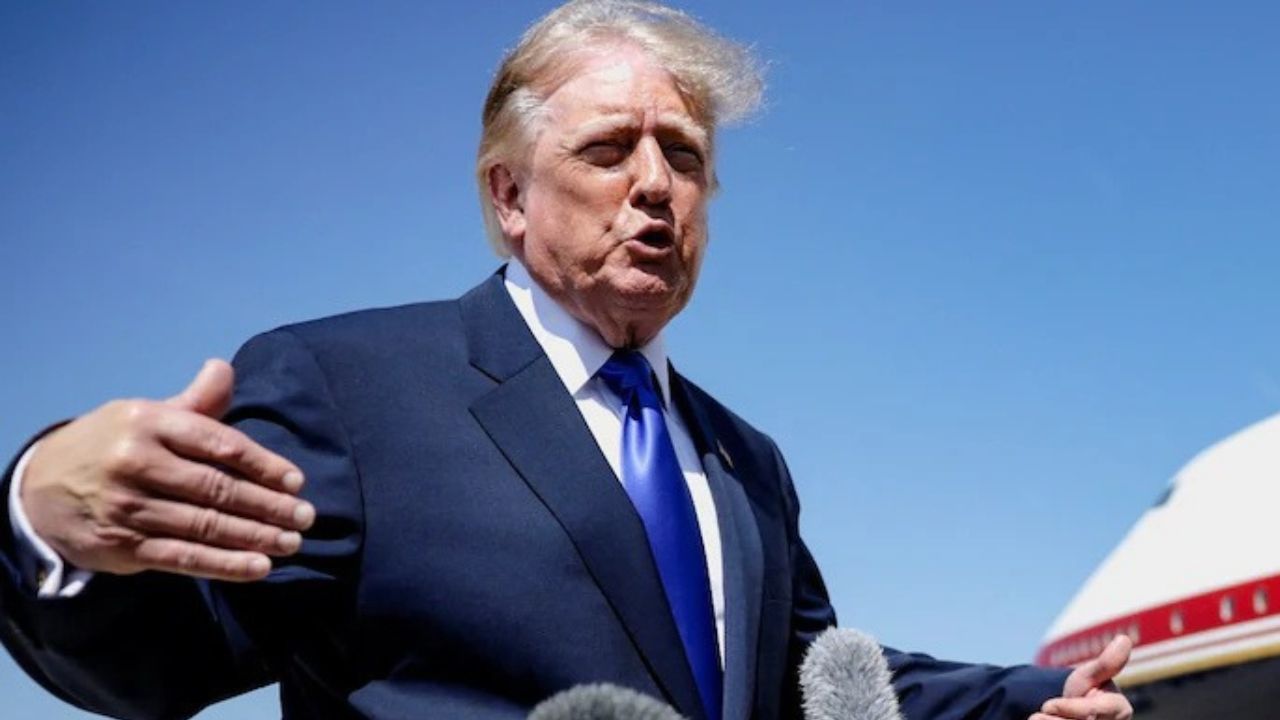
Trump is pushing for more US data centres as America races to maintain its AI advantage. (Img: Pinterest)
Los Angeles: The battle over how fast artificial intelligence should develop has taken a dramatic turn after Nvidia CEO Jensen Huang took a live call from US President Donald Trump during a panel at the All-In Summit in Los Angeles. The unexpected exchange put one of the world’s most powerful technology executives and the US president on the same side of an increasingly heated debate over AI safety, regulation and the pace of technological development.
Trump pushed back against efforts to slow AI development, arguing that restrictions could hurt America’s position in the global technology race and potentially benefit China. Huang broadly agreed with the president’s assessment of the debate. The timing is significant because concerns about AI risks have intensified just as investors are questioning whether the extraordinary spending on AI chips, data centres and infrastructure can continue at its current pace.
Trump has emerged as a strong supporter of rapid AI expansion in the US, particularly the construction of large data centres needed to train and operate advanced AI models. During the phone exchange with Huang, Trump argued that opposition to faster AI development could be driven by political interests or concerns linked to China.
The intervention adds a major geopolitical dimension to the AI safety debate. The US and China are already competing aggressively for leadership in artificial intelligence, advanced semiconductors and computing infrastructure. For Washington, maintaining an advantage in AI is increasingly linked to economic competitiveness, national security and technological influence.
Huang pushed back against the idea that the technology industry must choose between rapid innovation and AI safety. He argued that growing public anxiety has created a false choice between the two, suggesting that AI development and responsible safeguards can progress together.
However, Huang also acknowledged concerns raised from within the AI industry itself. He praised Anthropic researcher Jacob Coxon after Coxon resigned over fears about the direction and pace of AI development. Huang said employees who raise concerns and act as whistleblowers should be taken seriously by technology companies.
That position highlights the complicated balance facing the industry. Technology companies want to move quickly in an intensely competitive market, while researchers and policymakers are demanding stronger safeguards as AI systems become more capable.
The controversy gained momentum after Jacob Coxon resigned from Anthropic over concerns about advanced AI development. His decision became part of a wider discussion about whether leading AI companies are moving too quickly without fully understanding the potential consequences of increasingly powerful systems.
Anthropic CEO Dario Amodei later published a detailed essay calling for greater caution around AI development. OpenAI CEO Sam Altman and SpaceX CEO Elon Musk subsequently endorsed the broader concerns raised in the debate. The discussion now extends beyond Silicon Valley. Investors, governments and technology researchers are increasingly examining the economic, security and social consequences of the AI boom.
The Trump-Huang exchange also came as financial markets showed signs of concern about the sustainability of the AI investment cycle. US technology stocks declined on Monday as investors worried that spending on AI infrastructure could eventually slow. Nvidia shares fell 3.4%. That movement matters because Nvidia has become the biggest corporate symbol of the AI boom.
Its advanced graphics processing units and other chips power many of the data centres used to train and operate large AI models. Technology companies have committed enormous sums to Nvidia hardware as they race to build AI computing capacity. Any slowdown in data centre investment could therefore have wider implications for semiconductor companies, cloud providers and the technology sector.
Nvidia sits at the heart of the current AI infrastructure build-out. Its chips are used by major technology companies to power generative AI systems, large language models and other advanced computing applications.
The AI boom has created a huge demand for high-performance chips, networking systems, data centres and electricity. This has transformed Nvidia from a major semiconductor company into one of the most closely watched companies in the global technology market.
But that success also creates exposure. If companies reduce AI infrastructure spending because of economic pressure, regulation or doubts about returns on investment, Nvidia could face pressure on future growth expectations.
Trump has also been pushing aggressively for more data centre construction across the United States. He has criticised states that have delayed or rejected permits for new facilities, arguing that AI infrastructure can generate significant economic wealth.
The data centre race is becoming a major policy issue because these facilities require huge amounts of electricity, land, water and high-speed network capacity. The rapid expansion has already raised questions about energy demand, environmental impact, local infrastructure and the ability of power grids to support AI-driven electricity consumption.
Trump has positioned AI as a strategic economic asset, comparing its long-term importance with major resources and technologies that transformed previous generations.
The AI debate is also closely tied to the growing technology rivalry between the US and China. Advanced AI chips have become strategically important, with Washington using export controls and semiconductor restrictions as part of its broader technology policy toward Beijing. Any slowdown in US AI development could therefore have implications beyond corporate profits.
American policymakers increasingly view leadership in artificial intelligence as important for military technology, cybersecurity, economic growth and global influence. That is why Trump’s intervention in the AI safety debate carries significance far beyond one technology conference.
The latest confrontation exposes the biggest disagreement inside the AI industry. One side argues that rapid development is essential for technological progress and maintaining the US lead over China. The other side believes increasingly powerful AI systems require stronger safeguards, testing and oversight before they are deployed at scale.
The challenge is becoming harder as AI companies spend billions of dollars building computing capacity while researchers continue to warn about potential risks. For Nvidia, the debate has a direct financial dimension because its growth is closely connected to the continued expansion of AI infrastructure.
The AI industry is now entering a critical phase in which technology companies, investors and policymakers will have to address both growth expectations and safety concerns.
Markets will closely watch whether AI spending remains strong, while governments are likely to face increasing pressure to establish rules around advanced AI systems and data centre expansion.
Nvidia is expected to remain at the centre of the conversation because its chips underpin much of the global AI infrastructure. The larger question is no longer whether AI will transform the economy. It is how quickly that transformation should happen, and how much risk governments and companies are willing to accept along the way.