English
 English

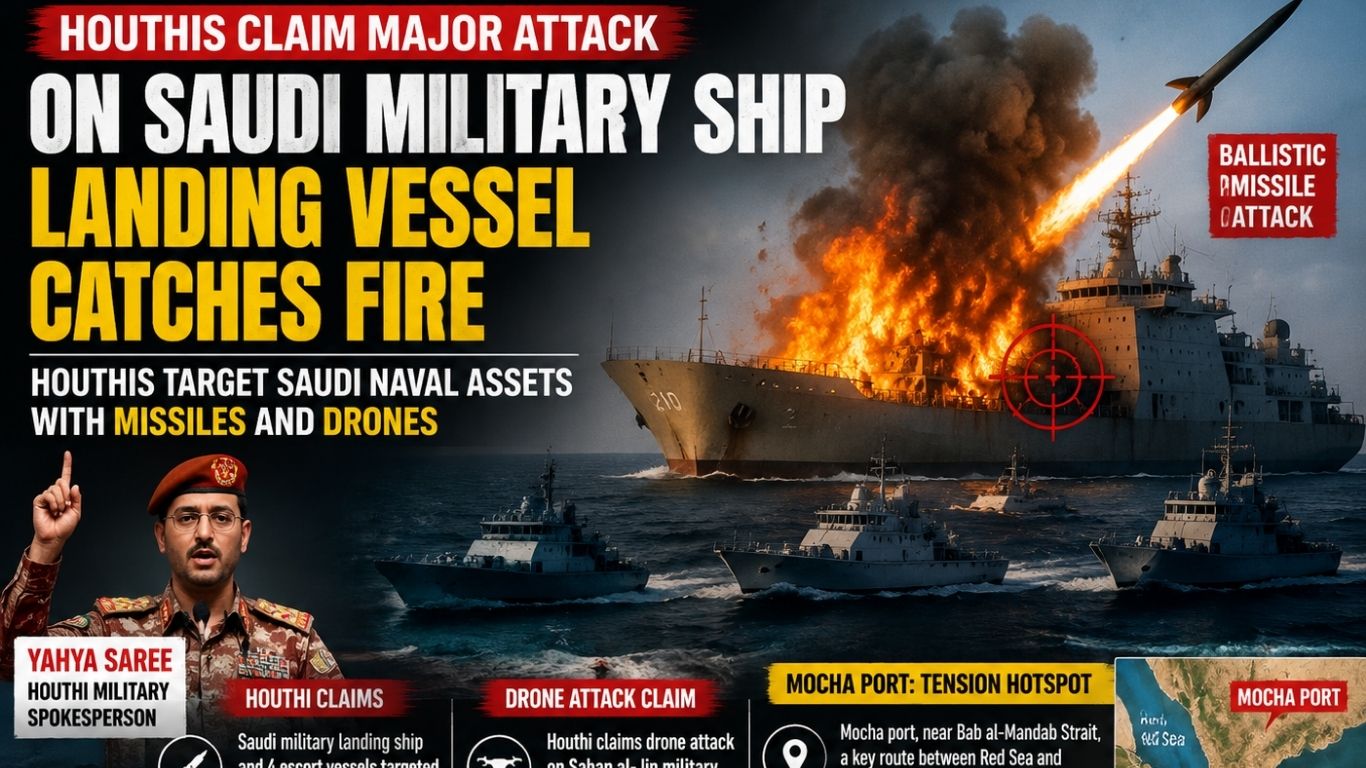
Saudi Arabia issued emergency alerts across several cities after fresh Houthi missile and drone attacks. (Img: Pinterest)
Riyadh: Saudi Arabia on Tuesday warned of a firm response after Houthi missile and drone attacks injured 13 civilians, while emergency alerts were issued across several cities. The escalation rose fresh fears over Saudi oil infrastructure, Red Sea shipping, Strait of Hormuz traffic and the impact on global fuel prices.
The latest developments have pushed the West Asia conflict into a more dangerous phase, with military strikes, energy disruptions and shipping risks increasingly overlapping. For India and other major oil-importing economies, any prolonged disruption could translate into higher crude costs, inflationary pressure and rising import bills.
Saudi Arabia’s Civil Defence issued emergency alerts on Tuesday for several cities, including Yanbu, Jeddah, Abha, Jazan and Taif. An all-clear was later issued after authorities determined that the immediate danger had passed. The alerts followed missile and drone attacks reported in southern Saudi Arabia, including areas around Khamis Mushait, Abha and Taif.
The attacks have placed Saudi Arabia’s air-defence capabilities, civilian safety and critical infrastructure under renewed pressure at a time when the wider region is already facing multiple security threats.
The inclusion of Yanbu in the emergency alerts has particular significance for global energy markets. Yanbu is a major Red Sea port and an important hub for Saudi oil exports. Any sustained threat to the port or associated energy infrastructure could affect the movement of crude and increase uncertainty in international markets.
Saudi Arabia is the world’s leading crude exporter, making any disruption to its production, transportation or export infrastructure a potential global economic issue.
The latest attacks come after Saudi energy infrastructure was also targeted. A crucial East-West oil pipeline damaged in an earlier strike is expected to remain largely out of service for several weeks while repairs are carried out.
The pipeline is strategically important because it allows Saudi crude to reach the Red Sea while reducing reliance on routes through the Strait of Hormuz. The combination of pipeline damage, attacks on Saudi territory and growing maritime risks has increased concerns over the resilience of regional energy supply chains.
The security escalation has already been reflected in global crude markets. Brent crude climbed above USD 107 a barrel, while US West Texas Intermediate crude moved above USD 102 a barrel during early trading on September 15. Both benchmarks had gained more than 1 percent in the previous session.
The rise reflects fears that continued attacks could disrupt oil production, transportation and shipping. If supply disruptions persist, the impact could extend beyond energy markets to transport costs, inflation, airline operations, manufacturing and household fuel prices.
The Houthis claimed that they carried out a large-scale operation involving dozens of ballistic missiles and drones targeting the King Khalid airbase in Khamis Mushait in southern Saudi Arabia. Saudi authorities confirmed missile and drone attacks in the Khamis Mushait, Abha and Taif areas and reported that 13 civilians were wounded.
The Saudi-led coalition has also carried out retaliatory strikes. The Houthis have reported more than 50 Saudi-led strikes, while Riyadh has said it will take necessary operational measures to protect Saudi sovereignty and deter further attacks. The competing claims underline the rapidly escalating military confrontation, although individual battlefield claims may be difficult to independently verify.
The latest confrontation is connected to renewed fighting in Yemen. The country’s civil war intensified again in July, with the Houthis stepping up military activity and declaring a maritime blockade targeting Saudi-linked shipping.
The group has also expanded its presence along Yemen’s Red Sea coast, while the strategic Bab al-Mandab Strait has become an increasingly important flashpoint. Bab al-Mandab connects the Red Sea with the Gulf of Aden and is a critical passage for international trade and energy shipments. Any prolonged disruption could force vessels to take longer routes, increasing shipping time, insurance costs and freight rates.
The crisis is simultaneously affecting another vital maritime chokepoint. Shipping traffic through the Strait of Hormuz declined sharply as attacks intensified across West Asia. Preliminary shipping data showed four commodity vessel transits on Monday, compared with 10 the previous day. Two dry bulk carriers exited the waterway, while two oil tankers entered in ballast, according to the available shipping data.
Some vessels may also have crossed the strait with their Automatic Identification System transponders switched off, meaning the reported numbers may not capture every movement. Hormuz is critical to global energy markets because a significant share of Gulf oil and gas exports passes through the waterway.
The regional crisis is also creating uncertainty in Iraq, where the United States is preparing to complete the withdrawal of its remaining troops by September 30.
The Iraqi government has linked the US withdrawal to demands for non-state armed groups to surrender their weapons. However, several Iran-backed militias have indicated that they do not intend to disarm.
These groups have previously targeted US-linked interests and have also coordinated with Houthi forces, raising concerns that the wider conflict could develop into a multi-front confrontation.
The economic impact is already being felt beyond the immediate conflict zone. Pakistan is considering reviving austerity measures to reduce fuel consumption as international crude prices rise. Islamabad had introduced similar steps earlier during the escalation in the US-Iran conflict.
Previous measures included cuts in fuel allowances for official vehicles and restrictions aimed at reducing petroleum consumption across government operations. With crude prices again moving above USD 100 a barrel, Pakistan faces renewed pressure on its fuel import bill and domestic economy.
For India, which is also heavily dependent on imported crude, sustained high oil prices could increase pressure on the trade balance, inflation and fuel-related costs.
Amid the worsening regional security situation, US President Donald Trump has nominated Republican Congressman and former US Army officer Wesley Hunt as the next US ambassador to Saudi Arabia. The position had remained vacant during the conflict with Iran.
Hunt has previous military and diplomatic experience in the region. His nomination will require confirmation by the US Senate. The appointment comes at a critical point in US-Saudi relations, with Washington and Riyadh facing growing security, energy and diplomatic challenges.
The wider confrontation between Iran and the United States is also spilling into international diplomacy. An Iranian atomic official has accused Washington of blocking Iranian officials from attending a conference of the UN nuclear agency.
Tehran has framed the move as part of increased US pressure, while the dispute highlights the continuing strain around Iran’s nuclear programme and international diplomatic engagement.
The conflict is also putting pressure on US military resources. A US Department of Defence inspector general report said the United States is facing an ammunition shortfall following its costly war in Iran.
The report estimated that Operation Epic Fury cost around USD 33.4 billion between February 28 and June 30. Around USD 22.3 billion of that amount was attributed to expended munitions. The figures underline the scale of military operations and the logistical demands created by prolonged high-intensity warfare.
Saudi Arabia’s warning of a firm response could become a major turning point in the latest West Asia escalation. The immediate concern is whether Houthi attacks continue and whether Saudi Arabia expands its military response. Any further strikes on oil facilities, ports, pipelines or shipping could intensify pressure on global energy markets.
The risk is particularly significant because several critical routes are already under strain. The Red Sea and Bab al-Mandab are facing security concerns, while shipping through the Strait of Hormuz has also declined. That creates a potentially dangerous combination of military escalation and energy-market disruption.
For India, the biggest concern is crude oil. India imports a large share of its oil requirements, meaning a prolonged rise in international crude prices can increase the cost of imports and put pressure on inflation.
Higher crude prices can also affect petrol and diesel pricing, transportation costs, logistics, aviation, manufacturing and the prices of everyday goods. If shipping routes remain disrupted, freight and insurance costs could rise further, adding another layer of pressure to global trade.
The focus will now be on whether the Houthi attacks continue, how Saudi Arabia responds and whether the conflict spreads to additional military and maritime fronts. Energy markets will closely track developments around Saudi oil infrastructure, Yanbu, the Red Sea and the Strait of Hormuz.
The coming days could therefore prove crucial for both regional security and global markets. A prolonged escalation could turn a military confrontation into a wider energy and economic shock.