 English
 English

Fiscal Deficit Takes Center Stage
New Delhi: The Union Budget 2026–27 marks a key milestone in India’s fiscal consolidation journey, with the fiscal deficit declining from 4.4 percent of GDP in FY 2025–26 (Revised Estimates) to 4.3 percent in FY 2026–27 (Budget Estimates). The fiscal deficit remains the primary operational target of fiscal policy and is aligned with the medium-term debt glide path outlined in previous budgets.
Union Budget 2026-27: Defence allocation set at ₹7.85 lakh crore, up from ₹6.81 lakh crore last year
Alongside the lower fiscal deficit, the Central Government’s debt-to-GDP ratio is projected to fall from 56.1 percent in FY 2025–26 to 55.6 percent in FY 2026–27. This steady decline reinforces confidence in India’s public finance management.
The government has reiterated its medium-term objective of bringing the debt-to-GDP ratio down to 50±1 percent by FY 2030–31, ensuring long-term fiscal sustainability without compromising development priorities.
Fiscal consolidation is being achieved in a supportive growth environment. As per the National Statistics Office’s first advance estimates, real GDP growth is projected at 7.4 percent in FY 2025–26, indicating robust economic momentum.
Importantly, nominal GDP growth is estimated at 8 percent in FY 2025–26 and is projected to rise to 10 percent in FY 2026–27. Higher nominal GDP growth helps improve fiscal ratios by expanding the economic base, making deficit and debt levels more manageable.
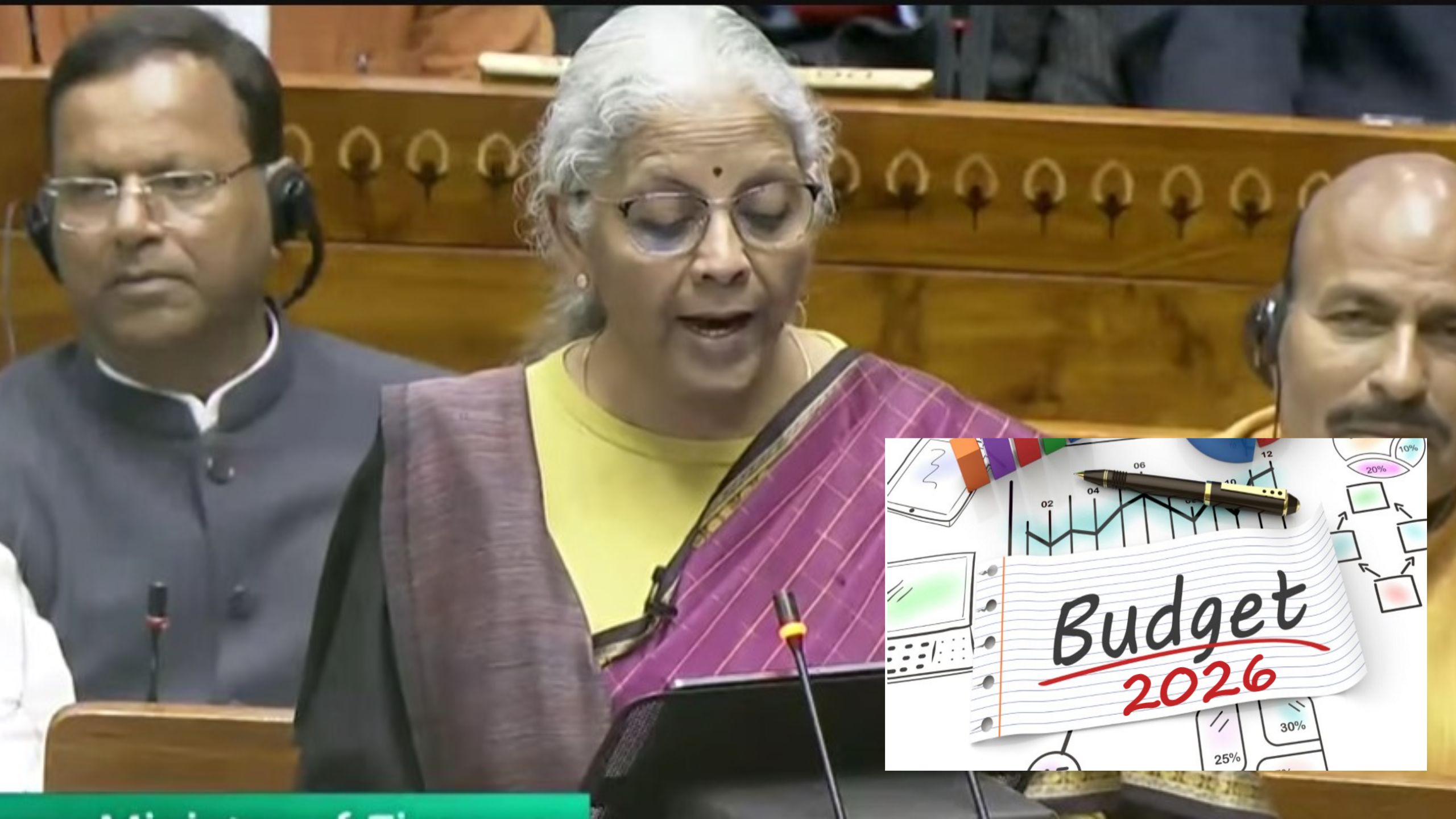
No Change in Income Tax Slabs
The total expenditure of the Central Government in BE 2026-27 is projected to be ₹53.47 lakh crore (13.6 percent of GDP), showing a growth of 7.7 percent over RE 2025-26 of ₹49.65 lakh crore. The budget for FY 2026-27 projects ₹12.22 lakh crore (3.1 percent of GDP) towards capital expenditure.
India’s growth is being driven by strong domestic demand, resilient consumption, and sustained investment activity. The services sector continues to lead growth, while manufacturing, construction, and agriculture show steady expansion.
India’s total exports (merchandise and services) reached USD 825.3 billion in FY25, with continued momentum in FY26. Despite tariffs imposed by the United States, merchandise exports grew by 2.4 percent (April–December 2025), while services exports increased by 6.5 percent.
New Income Tax Act to replace 1961 Law, bringing major tax reforms; Key changes explained
In BE 2026-27, Gross Tax Revenue (GTR) is estimated at ₹44.04 lakh crore. It represents a growth of 8.0 percent over RE 2025-26. Direct taxes at ₹26.97 lakh crore are the major contributor to GTR (61.2 percent of the GTR). Indirect taxes are estimated at ₹17.07 lakh crore. In BE 2026-27, the GTR-to-GDP ratio is estimated at 11.2 percent.
Other aspects of the fiscal strategy include support to economic growth through continued focus on capital expenditure, leaving adequate fiscal room to respond to global economic events and to ensure continued prosperity of the country in its journey towards Viksit Bharat. Other aspects include reforms in tax policy, expenditure policy, government borrowings, lending, and investments.