 English
 English
India and the US are close to finalizing an interim trade deal, but key issues like pulses market access, tariff reduction pace, and e-commerce policies remain unresolved. Political sensitivity and legal complexities continue to delay the final agreement.
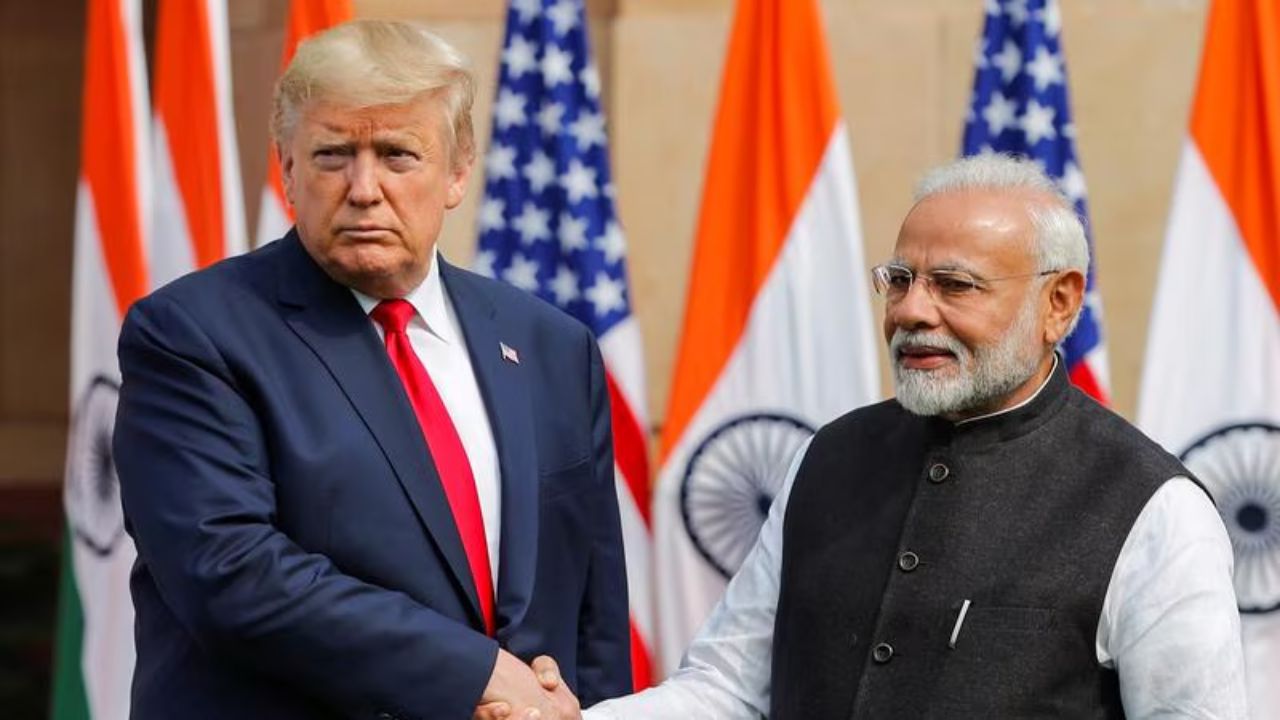
India-US trade deal could see major progress
New Delhi: An interim trade deal between India and the United States is considered to be nearly finalized. Officials from both nations acknowledge that an agreement is within reach, yet consensus still needs to be reached on several key issues. Resolving these matters is essential for the deal to be officially concluded.
The most significant point of contention in these negotiations revolves around "pulses" (lentils and legumes). India seeks to safeguard its domestic pulses market to ensure that Indian farmers do not suffer financial losses. Conversely, the U.S. aims to secure greater market access in India, enabling it to sell its own pulses within the country.
Given that issues concerning agriculture and farmers are politically highly sensitive in both nations, reaching a consensus on this matter is proving to be a difficult task.
Another major sticking point concerns the pace at which tariffs (import duties) are to be reduced. The U.S. advocates for a rapid reduction in tariffs, whereas India prefers a gradual approach to minimize any adverse impact on domestic industries.
In essence, the two nations remain at odds regarding the questions of "how quickly" and "by how much" tariffs should be lowered.
Recently, the U.S. White House released a "fact sheet" claiming that India would reduce tariffs on certain commodities—a list that included pulses. This triggered a political controversy within India, as this specific detail was absent from the official joint statement issued by both sides.
Subsequently, the U.S. amended the document to remove the reference to pulses; however, the incident resulted in a slight erosion of trust between the two nations.
Following a court ruling in the U.S., the country's previous tariff policy (implemented under the IEEPA) was deemed unlawful. Consequently, the U.S. is now attempting to impose tariffs through new legal mechanisms—a development that has further complicated the ongoing trade negotiations.
Currently, U.S. officials are simultaneously engaged in a number of other pressing matters, such as the "Special 301 investigation" and upcoming WTO meetings. As a result, the finalization of the India-U.S. trade deal may experience some delays.
The two nations also hold differing views regarding the taxation of e-commerce (such as software and digital music). India advocates for the imposition of taxes on these items, whereas the U.S. seeks to keep them tax-free and make this arrangement permanent.
All in all, a trade deal between India and the U.S. is nearly finalized; however, consensus is still required on issues such as pulses, tariffs, and e-commerce. If these outstanding issues are resolved, this major agreement could be concluded very soon.