 English
 English

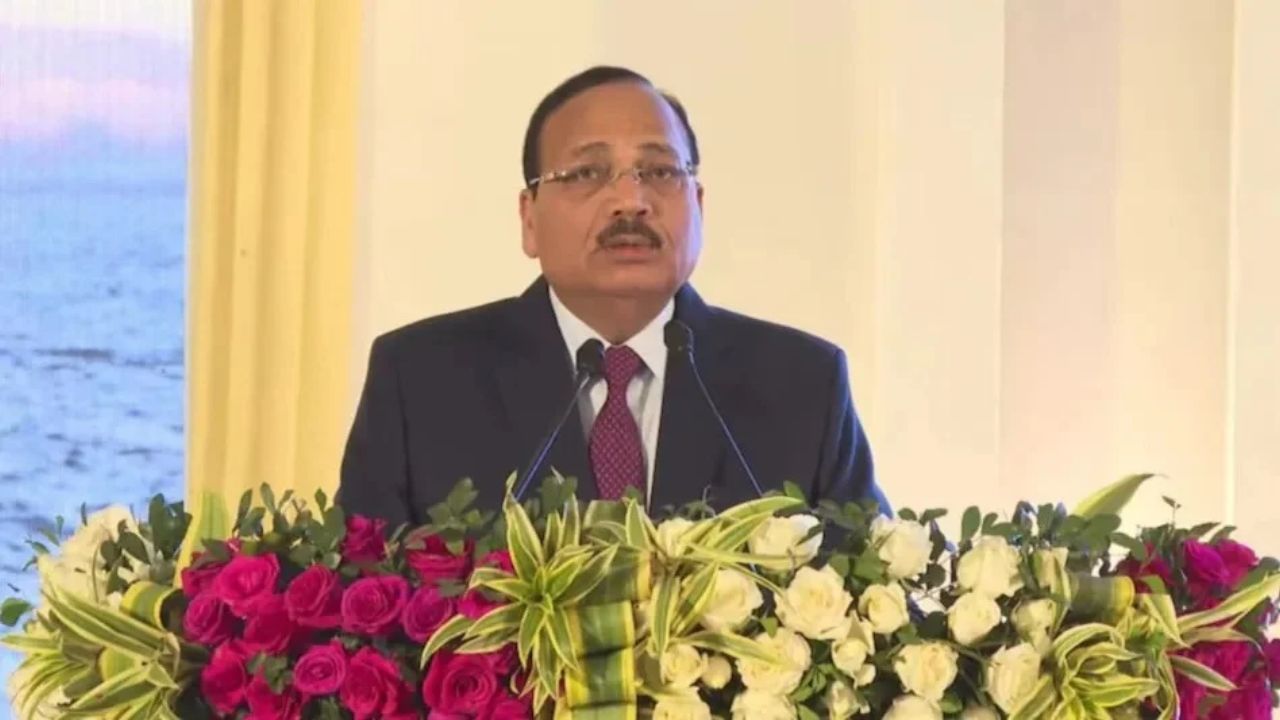
Chief Justice of India (CJI) Justice Surya Kant at 11th BRICS+ Legal Forum (Img: Dynamite News)
New Delhi: Chief Justice of India (CJI) Justice Surya Kant on Friday highlighted the crucial role of strong goverment institutions and the rule of law in driving economic growth, innovation and sustainability while addressing the inaugural session of the 11th BRICS+ Legal Forum organised by the Bar Association of India.
Speaking on the theme “Rule of Law Frameworks and Institutional Capacity Building for Economic Resilience, Innovation and Sustainability,” CJI Surya Kant said that institutions are not created around growth after it begins, but form the very architecture on which economic progress stands.
CJI Surya Kant at the 11th BRICS+ Legal Forum: A justice system that delivers timely decisions builds global trust, strengthens ease of doing business and makes a country more reliable for investment and economic growth.#SuryaKant #CJI #BRICS #LegalForum pic.twitter.com/FhyPs5Mrll
— Dynamite News (@DynamiteNews_) August 22, 2026
Justice Surya Kant said the growth of BRICS+ nations cannot depend only on resources or geography but requires trusted institutions capable of ensuring stability and predictability.
“Institutions are not scaffolding we erect around growth once it has already begun. They are its architecture,” he said, adding that the justice delivery system provides three key elements for economic development, trust, predictability and stability.
He said BRICS+ countries together represent more than 40 per cent of humanity and a significant share of global economic output, with India continuing to be recognised as one of the fastest-growing major economies.
Chief Justice of India, Justice Surya Kant at the 11th BRICS+ Legal Forum: Most of those who are well-conversant with the Indian judicial system are aware that the Supreme Court in 2012 in Bharat Aluminium drew a line that international commerce had been waiting the better part… pic.twitter.com/MAPn4j2Ani
— Dynamite News (@DynamiteNews_) August 22, 2026
Highlighting the connection between justice and the economy, the CJI introduced the concept of “Nyaya-nomics”, describing it as the economics of justice.
He explained that consistent adjudication and trust in legal processes reduce transaction costs, strengthen market confidence and create favourable conditions for growth.
“Development has been proportional to the enforceability of our commitments,” Justice Surya Kant said.
Chief Justice of India, Justice Surya Kant at the 11th BRICS+ Legal Forum: Most of those who are well-conversant with the Indian judicial system are aware that the Supreme Court in 2012 in Bharat Aluminium drew a line that international commerce had been waiting the better part… pic.twitter.com/MAPn4j2Ani
— Dynamite News (@DynamiteNews_) August 22, 2026
Moving from theory to examples, CJI Surya Kant highlighted several landmark Supreme Court judgments that shaped India’s commercial and arbitration landscape.
He referred to decisions including Bharat Aluminium vs Kaiser Aluminium, PASL Wind Solutions vs GE Power Conversion, and other arbitration-related rulings, saying the Court ensured that technicalities do not override the genuine intent of parties.
He also highlighted the role of insolvency jurisprudence, stating that faster resolution of financial disputes helps recycle capital and supports economic growth.
“Across the years these judgments span, India rose from among the bottom quarter of the World Bank’s Ease of Doing Business rankings into its top hundred, and enforcing a contract stopped being a byword for delay,” he said.
Chief Justice of India, Justice Surya Kant at the 11th BRICS+ Legal Forum: Most of those who are well-conversant with the Indian judicial system are aware that the Supreme Court in 2012 in Bharat Aluminium drew a line that international commerce had been waiting the better part… pic.twitter.com/MAPn4j2Ani
— Dynamite News (@DynamiteNews_) August 22, 2026
Looking ahead, Justice Surya Kant suggested creating a BRICS+ judicial fellowship to allow young judges from member nations to learn from each other’s judicial systems.
He also proposed a shared jurisprudence repository where judgments from countries like India, Brazil and South Africa could be accessed by courts facing similar legal questions.
Calling it “Nyaya Setu” or a Bridge of Justice, he said the initiative could connect different legal traditions through shared learning and trust.
Concluding his address, CJI Surya Kant said that the strongest economies of the future will not only be those rich in natural resources but those whose courts and institutions uphold commitments and ensure justice.
He said the rule of law remains the foundation for economic resilience, innovation and sustainable development, urging BRICS+ nations to build institutions that act as bridges of trust rather than mere structures of formality.