 English
 English

The Delhi High Court has scheduled the Youth Congress petition over the proposed Jantar Mantar protest for October 12. (Img: Pinterest)
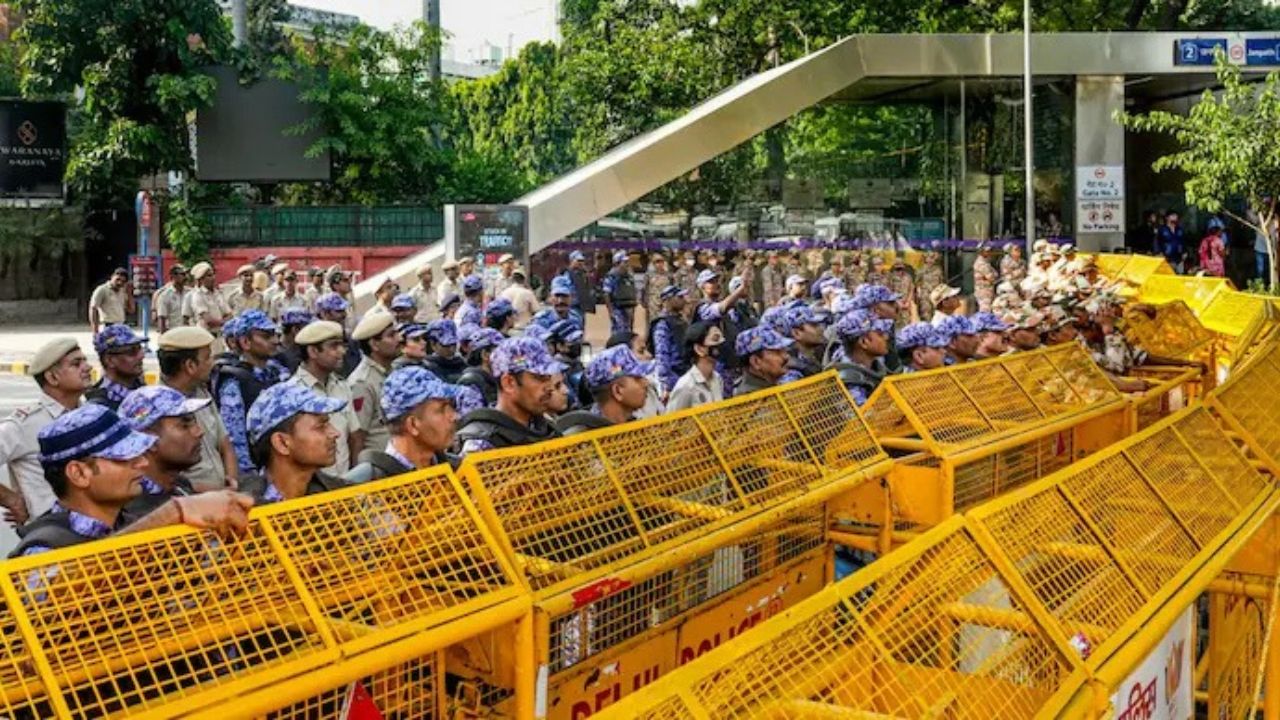
New Delhi: The Delhi High Court on Friday refused to grant an urgent hearing to the Indian Youth Congress petition challenging Delhi Police’s refusal to allow a protest against Chief Election Commissioner Gyanesh Kumar at Jantar Mantar.
The petition was mentioned before Acting Chief Justice Nitin Wasudeo Sambre by Senior Advocate Sanjoy Ghose raising concerns over the constitutional right of IYC to peaceful assembly amid the controversy surrounding the SIR electoral-roll revision exercise. The matter had first been mentioned on October 8. The counsel returned to court on Friday after being given the liberty to mention the case again if it was not listed for hearing.
However, the High Court decided that the matter could wait until October 12. Justice Sambre observed that the petition was yet to be examined on its merits and the decision to defer the hearing did not mean the Court had upheld the police action.
The petition was filed by Indian Youth Congress national president Uday Bhanu Chib against a Delhi Police order dated October 1.
According to the petition, the organisation had applied for permission on September 25 to hold a peaceful demonstration at Jantar Mantar involving around 100 to 150 people. The Youth Congress said it was ready to follow all lawful conditions relating to security, traffic management, discipline and the maintenance of public order.
However, the organisation claims that the rejection was communicated on October 1, the same day the proposed demonstration was initially scheduled to take place.
The Youth Congress has questioned the timing of the decision and argued that the authorities should assess each protest request on its specific circumstances rather than applying restrictions in a routine manner.
The detailed response from Delhi Police to the petition’s allegations was not available in the reported proceedings. The reasons for rejecting the application and the arguments from both sides remain important aspects of the pending case.
## Youth Congress Invokes Constitutional Rights
A key part of the petition concerns the constitutional right to freedom of expression and peaceful assembly.
The Youth Congress argues that while police have the authority to regulate public gatherings, that power should not be used to impose a blanket ban without an individual assessment of the circumstances. The organisation has challenged what it describes in its petition as a mechanical application of guidelines governing protests and public assemblies.
The plea invokes Article 19(1)(a) of the Constitution, which protects freedom of speech and expression, and Article 19(1)(b), which guarantees the right to assemble peacefully and without arms, subject to constitutionally permitted restrictions.
The organisation contends that the denial of permission infringes these fundamental rights. However, these are the petitioner’s arguments, and the court has not yet ruled on whether the police decision was lawful.
The petition was filed through advocate Roopesh Singh Bhadauria.
## Why Is the Youth Congress Protesting Against CEC Gyanesh Kumar?
The proposed demonstration is linked to allegations of irregularities in the Special Intensive Revision, commonly known as SIR, of electoral rolls.
The electoral-roll revision exercise has become a subject of political debate, with critics raising concerns about the possibility of eligible voters being left out of voter lists. The Youth Congress has sought accountability over the process and planned to demonstrate against Chief Election Commissioner Gyanesh Kumar.
Electoral rolls are central to the democratic process because they determine which eligible citizens are registered to vote in a constituency. Concerns about missing names, verification procedures and the accuracy of voter records can therefore have direct consequences for citizens.
At the same time, electoral-roll revisions are intended to review and update voter information. The dispute centres on allegations about how the exercise has been carried out and whether adequate safeguards are available to protect eligible voters. The allegations of irregularities remain contested and have not been established by the court in this case.