 English
 English

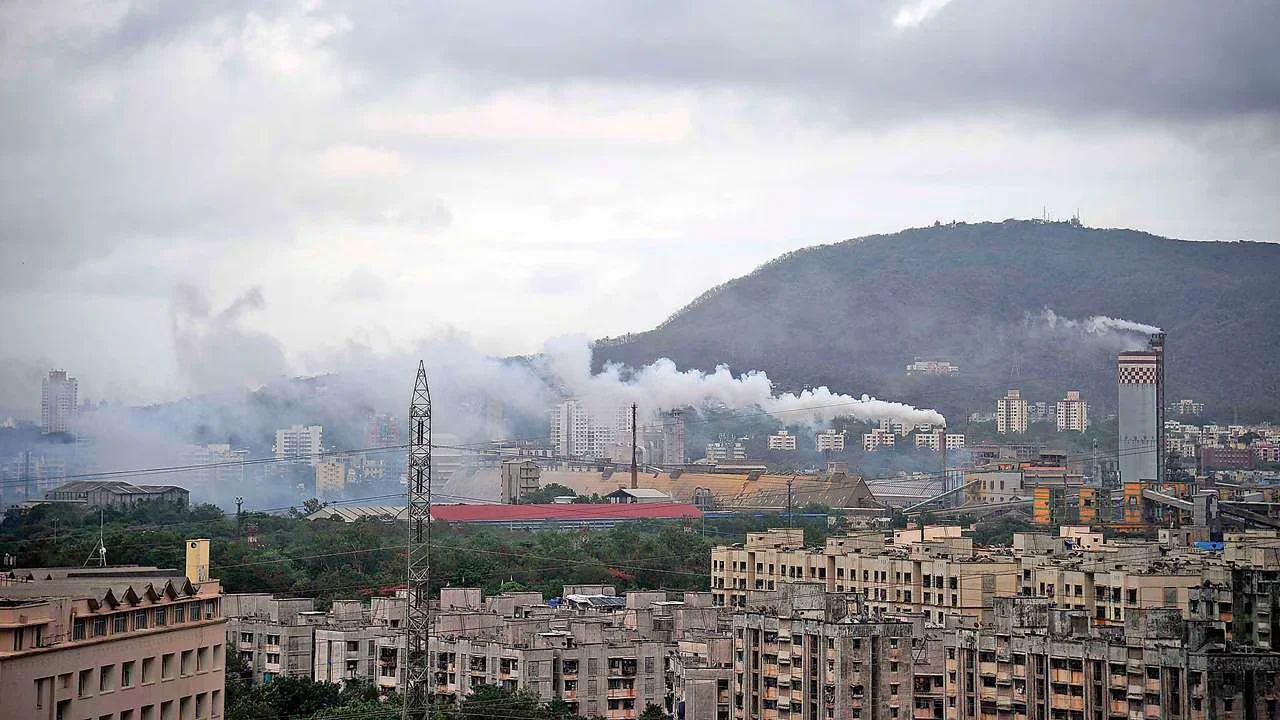
Haze returns to Delhi as the AQI climbs to 244 and GRAP Stage 1 restrictions come into force. (Img: )
New Delhi: The Government of National Capital Territory of Delhi (GNCTD) enforced the first stage of the Graded Response Action Plan (GRAP) across the National Capital Region (NCR) on Wednesday after the air quality levels in the national capital deteriorated to the poor category. The Commission for Air Quality Management (CAQM) announced the restrictions after Delhi’s Air Quality Index (AQI) climbed to 244 at 2 pm, up sharply from 179 a day earlier.
The move marks the first implementation of GRAP restrictions this season and signals the return of the annual winter pollution challenge for Delhi and neighbouring areas. Forecasts from the India Meteorological Department (IMD) and the Indian Institute of Tropical Meteorology (IITM) indicate that air quality is likely to remain in the poor category over the coming days.
The directions apply across Delhi-NCR, including relevant areas of Haryana, Uttar Pradesh and Rajasthan. The CAQM’s GRAP sub-committee has instructed enforcement agencies to implement the prescribed measures immediately, maintain close surveillance of pollution levels and assess whether stricter interventions become necessary.
Delhi Environment Minister Manjinder Singh Sirsa has outlined a series of measures aimed at curbing vehicular emissions, construction dust and other local sources of pollution. Under the announced measures, parking charges across Delhi are set to double, with Metro station parking facilities exempted.
The government has also announced a No PUC, No Fuel policy, under which vehicles without a valid Pollution Under Control certificate will be denied fuel. The measure is intended to strengthen compliance with vehicle-emission standards and discourage the operation of high-polluting vehicles.
Staggered office timings and work-from-home arrangements are also planned for Municipal Corporation of Delhi staff and government offices to help reduce peak-hour traffic congestion and vehicle emissions.
The government’s wider winter pollution strategy includes plans for a 50 per cent work-from-home arrangement and restrictions on vehicles registered outside Delhi that do not meet BS-VI emission standards, subject to exemptions. These additional measures are part of the broader winter action plan and should be distinguished from the immediate GRAP Stage 1 directions.
Construction and demolition activities will face stricter scrutiny under the first stage of GRAP. Labour-intensive construction work without adequate dust-mitigation arrangements is prohibited, while construction agencies are required to adopt prescribed dust-control measures, including water sprinkling at project sites.
Authorities will intensify inspections to ensure compliance with construction and demolition waste-management standards. Agencies have also been directed to strengthen dust suppression at road construction, widening, repair and maintenance projects.
Open burning of garbage and other waste remains prohibited. Municipal authorities are expected to ensure regular collection and disposal of municipal solid waste, prevent waste accumulation and strengthen enforcement against activities that contribute to particulate pollution.
Mechanised road sweeping, water sprinkling and the scientific disposal of collected road dust are among the key measures intended to reduce the concentration of airborne particulate matter across the capital and surrounding urban areas.
The Delhi government has reported the deployment of 608 anti-smog guns and 1,150 mist-spray units across the city to suppress dust and improve local pollution-control efforts.
An Integrated Command and Control Centre (ICCC) has also been established to monitor construction-related pollution. Authorities are using an artificial intelligence-based traffic management system to improve traffic flow and reduce emissions associated with congestion.
The effectiveness of these interventions will depend on consistent field-level enforcement, coordination between civic agencies and pollution-control authorities, and the identification of local emission hotspots.
The Graded Response Action Plan is a graded emergency framework designed to prevent air pollution from worsening across Delhi-NCR. Its four stages are triggered according to the severity of air quality, with progressively stricter measures introduced as pollution levels rise.
GRAP Stage 1 applies when the AQI is between 201 and 300, classified as poor. Stage 2 is activated when the index reaches 301–400, categorised as very poor. Stage 3 applies to an AQI of 401–450, classified as severe, while Stage 4 is triggered when the AQI exceeds 450 and enters the severe-plus category.
Under Stage 1, authorities are required to strengthen dust mitigation, enforce construction and demolition regulations, improve waste management, intensify mechanised sweeping and water sprinkling, and take action against visibly polluting vehicles. Traffic management and compliance checks on industrial emissions are also part of the broader pollution-control framework.
The CAQM has directed district administrations, municipal bodies and pollution-control agencies to ensure strict implementation. Residents have also been urged to follow the citizen charter associated with Stage 1 and cooperate with measures intended to reduce emissions.
The Stage 1 measures also include restrictions on the use of coal and firewood in tandoors at hotels, restaurants and open eateries. Diesel generator use is subject to prescribed restrictions and enforcement requirements under the applicable GRAP directions.
These interventions are aimed at reducing local combustion emissions, which can add to particulate pollution in densely populated neighbourhoods. Commercial establishments are expected to comply with the applicable fuel-use and emission-control requirements.
Authorities have also been directed to impose environmental compensation where warranted, regulate traffic where necessary and penalise vehicles found visibly emitting excessive smoke.
Delhi-NCR experiences recurring air-quality deterioration during the transition from autumn to winter. Lower wind speeds, changing atmospheric conditions, construction dust, road dust, vehicle emissions, industrial activity and seasonal agricultural residue burning in neighbouring states can combine to trap pollutants close to the ground.
The return of haze after the festive period has renewed concerns about the health and environmental consequences of prolonged exposure to elevated particulate pollution. Fine particles such as PM2.5 can penetrate deep into the respiratory system, while PM10 contributes to respiratory irritation and reduced visibility.
The extent of pollution in the coming weeks will depend on meteorological conditions, regional emission sources and the effectiveness of enforcement. GRAP is designed to respond to changing air-quality conditions, with the CAQM’s sub-committee monitoring AQI readings and forecasts before deciding whether further restrictions are required.
The GRAP restrictions come ahead of the Delhi government’s broader Winter Action Plan, scheduled to take effect from November 1. The plan focuses on vehicular pollution, road and construction dust, industrial emissions and other recurring sources of seasonal air pollution.
Among the announced measures are the No PUC, No Fuel policy, tighter dust monitoring, increased mechanised road sweeping, construction-related restrictions and a proposed 50 per cent work-from-home arrangement. The government has also announced plans to restrict the entry of non-Delhi-registered vehicles that do not meet BS-VI emission standards, subject to applicable exemptions.
The immediate priority is to prevent Delhi’s air quality from deteriorating further as winter approaches. The CAQM will continue to monitor pollution levels across the NCR, while the implementation of GRAP Stage 1 will depend on coordinated action by government departments, local bodies, enforcement agencies and residents.