English
 English

Monsoon stuck for 11 days (Internet)
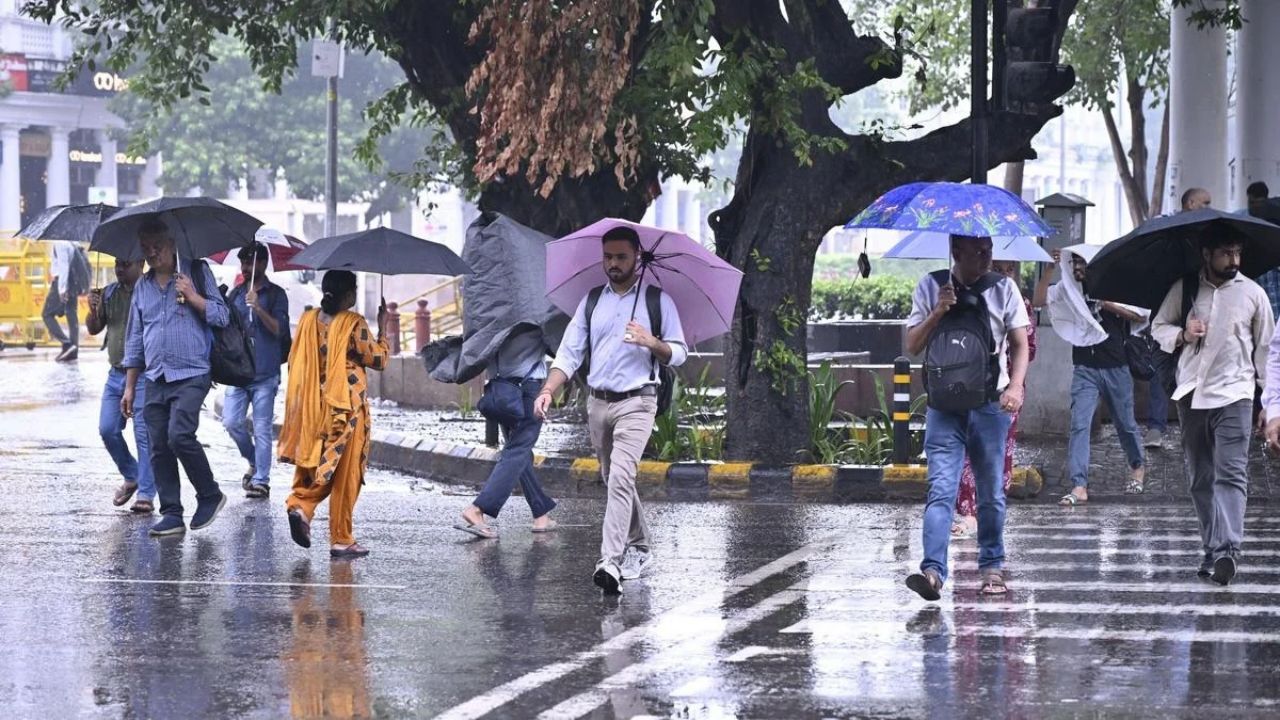
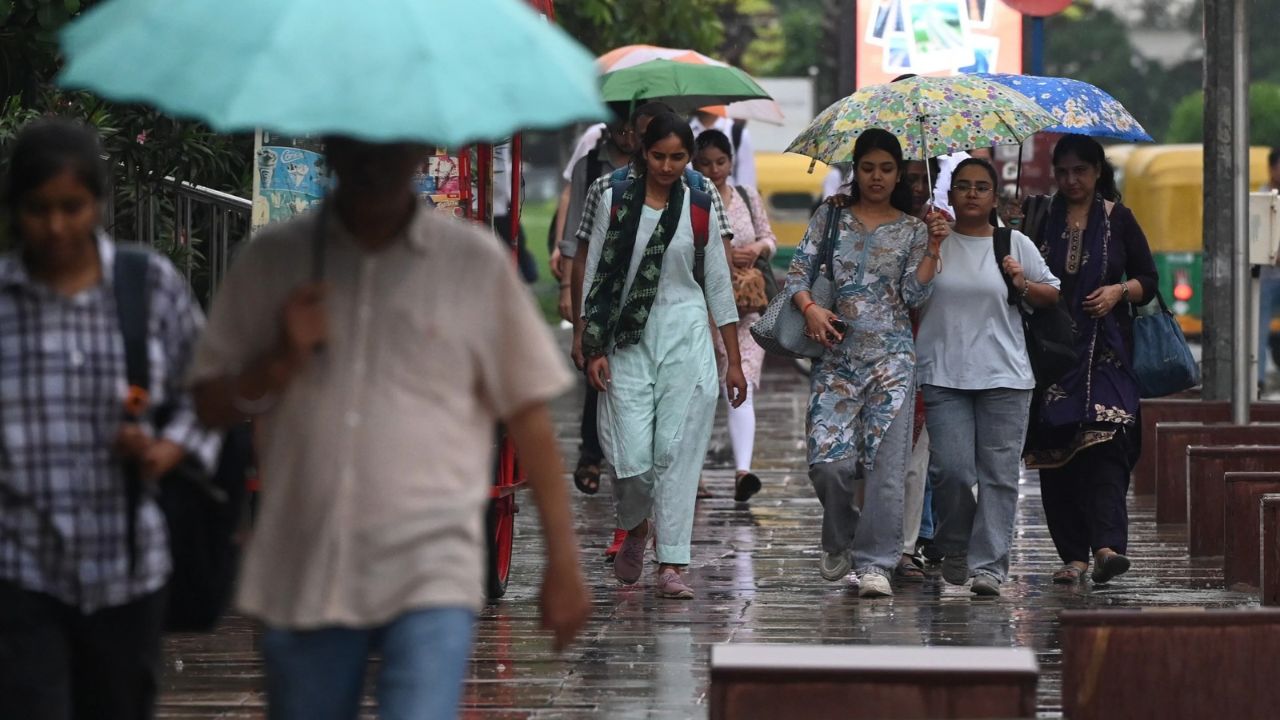
New Delhi: The Southwest Monsoon, which had advanced rapidly across 19 states earlier this month, has now hit an unexpected pause. For the last 11 days, the monsoon has remained stalled around Telangana, delaying its progress into several parts of North and Central India and leaving millions waiting for widespread rainfall.
The slowdown has already impacted the country's rainfall statistics. Between June 1 and June 18, India recorded nearly 38% below-normal rainfall, with Gujarat and Maharashtra witnessing some of the largest deficits.
According to the India Meteorological Department (IMD), a combination of five major weather developments has disrupted the monsoon's advance.
The biggest reason is the weakening of moisture-laden winds from the Arabian Sea, which normally supply the energy needed for monsoon clouds to move deeper into the country.
At the same time, south-westerly winds over the Arabian Sea have slowed significantly, reducing moisture transport toward Maharashtra and adjoining regions.
Meteorologists also point to a weak cross-equatorial flow, meaning winds crossing the equator are carrying much less moisture than usual. In addition, no strong low-pressure systems have formed over either the Bay of Bengal or the Arabian Sea, depriving the monsoon of a key driving force.
Another crucial factor is the weakening of the Madden-Julian Oscillation (MJO), a large-scale atmospheric pattern that helps push rain-bearing clouds northward from southern India. With the MJO currently inactive, monsoon activity has lost momentum near Telangana.
The stalled monsoon has allowed temperatures to climb once again across parts of Madhya Pradesh, Uttar Pradesh, Rajasthan and Bihar. While some regions have received isolated pre-monsoon showers, they have not been enough to bring significant relief.
Cities such as Banda (Uttar Pradesh), Brahmapuri (Maharashtra) and Boudh (Odisha) have recorded temperatures between 42°C and 43°C, intensifying discomfort and increasing concerns over prolonged dry conditions.
Adding to the uncertainty, a US weather agency has indicated that the Intertropical Convergence Zone (ITCZ) remains sluggish, limiting the inflow of moisture into the Indian monsoon system.
Meteorologists are also closely monitoring the emergence of El Niño-like conditions, which could lead to uneven rainfall patterns and localized drought risks in parts of the country later in the season.
The IMD has forecast heavy rainfall over Sikkim, Assam, Meghalaya, West Bengal and Bihar on June 20 and 21.
Meanwhile, Madhya Pradesh, Rajasthan, Chhattisgarh and Jharkhand may witness thunderstorms, light rain and gusty winds reaching 40-60 kmph. Rainfall activity is also expected to continue across Karnataka, Tamil Nadu, Puducherry and parts of Maharashtra.
Weather experts believe the monsoon's progress is currently being blocked by strong upper-atmospheric jet streams, located roughly 8-15 kilometres above the Earth's surface.
As these jet streams weaken over the coming days, monsoon winds are expected to regain strength and push northward once again. The IMD says conditions are likely to become favourable within the next four to five days, allowing the monsoon to resume its advance into Maharashtra, Madhya Pradesh, Chhattisgarh and other remaining regions.