English
 English

SC takes tough stand on Delhi air pollution
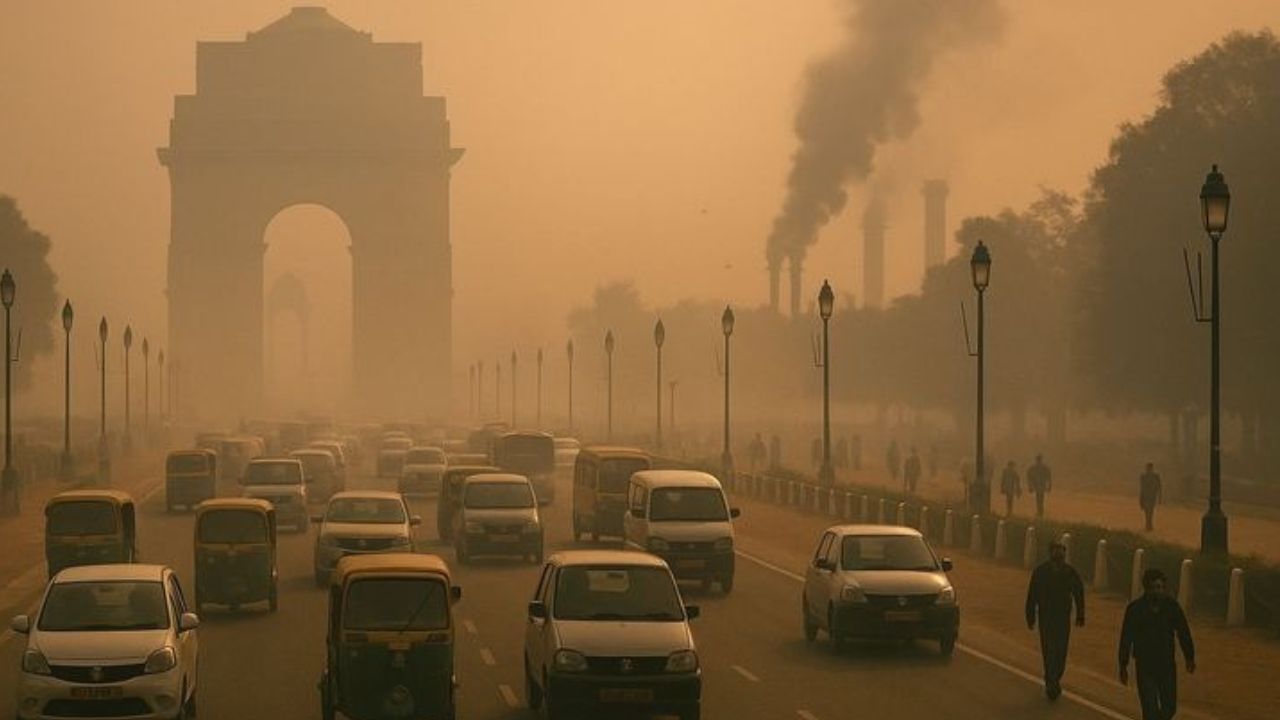
New Delhi: The Supreme Court on Monday took a tough stance on the rising air pollution in Delhi-NCR. The court directed the Commission for Air Quality Management (CAQM) to file an affidavit detailing the steps taken and proposed so far. The court stated that agencies must prepare in advance, not just after the situation worsens, to prevent it from reaching a critical level.
A bench comprising Chief Justice BR Gavai and Justice K Vinod Chandran stated that "the responsibility to curb pollution is not merely an emergency response, but a preventive one." The court asked the CAQM what steps have been taken so far to prevent pollution from reaching a "critical level."
The Supreme Court ordered the Commission to file a detailed affidavit detailing current actions, future plans, and preventive measures. The court also stated that "preparation is essential rather than reacting," so that citizens' health is not endangered.
During the hearing, senior advocate Aparajita Singh, the court's amicus curiae (assistant advisor) in the case, pointed out that many air quality monitoring stations were not functioning during Diwali. She stated that only nine out of 37 stations were operational.
Singh argued that if the monitoring system itself is not working, it will be difficult to determine when to implement the Graded Response Action Plan (GRAP). The court expressed serious concern and asked the CAQM to clarify the situation.
The lawyer representing the CAQM stated that the Central Pollution Control Board (CPCB) is responsible for pollution monitoring. Additional Solicitor General Aishwarya Bhati assured the court that all agencies would submit their reports soon.
The Supreme Court reiterated its previous direction that agencies should not take action only when pollution increases, but should also develop preventive measures in advance.
Natural Ways to Reduce Air Pollution at Home
On October 15, the Supreme Court allowed the limited sale and use of green firecrackers, stating that a balance is necessary between festivities and environmental concerns. The court stated that firecrackers could only be sold between October 18 and 20, and that bursting them would be permitted only during designated times.
The court described this permission as a "test case" exemption and directed the Central and State Pollution Control Boards to submit daily air quality monitoring reports from October 14 to 25.
The Supreme Court's stern remarks have once again made it clear that controlling pollution in Delhi-NCR requires not just temporary measures, but long-term strategies and accountability. The court said that the administration should work on the principle of "pre-emptive preparation" to ensure citizens' right to clean air.