 English
 English

Agriculture at the Core of Viksit Bharat
New Delhi: The Economic Survey 2025–26 places agriculture at the heart of India’s long-term vision of Viksit Bharat. It highlights that the sector is not only ensuring food security but is also playing a critical role in driving inclusive economic growth and improving the livelihoods of millions of rural households.
Despite challenges such as climate variability and market fluctuations, Indian agriculture has shown remarkable resilience and steady expansion in recent years.
Budget Session 2026 Begins: PM Modi calls for accelerated reforms and solution-driven governance
According to the Survey, the agriculture and allied sector has recorded an average annual growth rate of around 4.4 per cent over the past five years at constant prices.
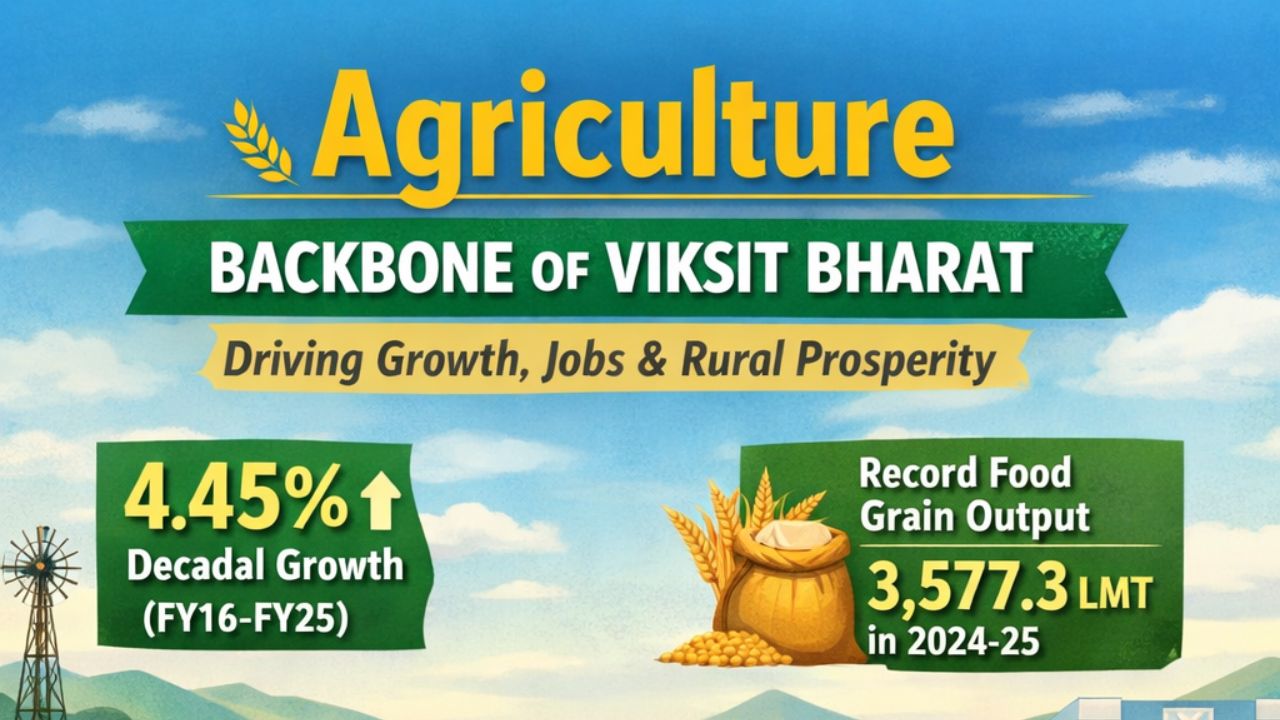
In the second quarter of FY 2025–26 alone, the sector grew by 3.5 per cent. More importantly, the decadal growth rate of 4.45 per cent between FY16 and FY25 is the highest compared to previous decades, reflecting structural strengthening of the sector.
This sustained growth has been driven largely by allied activities rather than crops alone, marking a significant shift in India’s agricultural landscape.
The Survey underlines that livestock, fisheries, and aquaculture have emerged as major growth engines. Livestock recorded an impressive growth rate of 7.1 per cent, while fishing and aquaculture grew even faster at 8.8 per cent during the decade.
Between FY15 and FY24, the livestock sector’s Gross Value Added (GVA) increased by nearly 195 per cent, with a compound annual growth rate of 12.77 per cent at current prices. Similarly, fish production rose by over 140 per cent between 2014 and 2025, far exceeding growth seen in earlier decades. These trends show that allied sectors are now crucial in boosting farm incomes and reducing rural distress.
Agriculture driving rural growth and prosperity
India’s food grain production has continued its upward trajectory, reaching a record high of 3,577.3 lakh metric tonnes in the Agriculture Year 2024–25. This marks an increase of over 254 lakh metric tonnes compared to the previous year.
Higher output of rice, wheat, maize, and coarse cereals such as millets (Shree Anna) has driven this growth, reinforcing India’s food security position.
The horticulture sector has emerged as one of the strongest pillars of agricultural growth, contributing nearly 33 per cent of agricultural GVA. In 2024–25, horticulture production surpassed food grain output, highlighting a shift toward high-value crops.
Production rose from 280.70 million tonnes in 2013–14 to 367.72 million tonnes in 2024–25, driven by fruits, vegetables, and other horticultural crops. India is now the world’s largest producer of dry onions and ranks second globally in fruits, vegetables, and potatoes, strengthening its position in global food markets.
Budget Session 2026 Begins: PM Modi calls for accelerated reforms and solution-driven governance
The Economic Survey concludes that agriculture will remain central to India’s development journey. With strong performance in dairy, poultry, fisheries, and horticulture, the sector is not only supporting GDP growth but also ensuring more stable and diversified income sources for farmers, making it a cornerstone of inclusive and sustainable development.