English
 English

Delhi Police replaces Jantar Mantar with three designated protest venues across the national capital, including Ramlila Ground, Burari Ground and CBD Ground in East Delhi. (Img: X)
New Delhi: The Delhi Police has de-notified Jantar Mantar as a designated venue for protests and demonstrations, naming Ramlila Ground in central Delhi, Burari Ground in north Delhi and CBD Ground in east Delhi as alternative sites. The decision, formalised through a standing order issued on October 11 by Delhi Police Commissioner Anurag Kumar, follows recommendations from a committee constituted by the Union Ministry of Home Affairs (MHA) to identify alternative locations for public demonstrations.
The revised order partially modifies the earlier standing order issued on April 28, 2022. The police has said that detailed standard operating procedures (SOPs) governing the organisation of protests and demonstrations at the three newly designated venues will be issued separately.
The move comes amid heightened security in the national capital following protests against the Election Commission of India (ECI), particularly over the Special Intensive Revision (SIR) of electoral rolls and demands for the resignation of Chief Election Commissioner Gyanesh Kumar.
## Supreme Court had urged reconsideration of protest venue
The decision follows a Supreme Court observation earlier in October that the authorities should consider identifying another suitable location for peaceful protests, equipped with adequate facilities for demonstrators.
During the proceedings, Solicitor General Tushar Mehta informed the court that the competent authority would consider designating a venue other than Jantar Mantar. The submission was made before a Bench headed by Chief Justice of India Justice Surya Kant, with senior advocate Kapil Sibal also reportedly agreeable to the proposal.
The court's intervention brought renewed attention to the arrangements governing public demonstrations in Delhi, including the need to balance citizens' right to peaceful assembly with public order, security and the convenience of commuters.
Under the revised arrangement, Ramlila Ground, Burari Ground and CBD Ground in East Delhi will serve as designated venues for protests. The forthcoming SOPs are expected to specify the procedures for organising demonstrations at these locations.
## Decision follows security crackdown on anti-SIR protests
The de-notification comes days after police prevented protesters from reaching Jantar Mantar for a demonstration called by the Cockroach Janta Party (CJP), along with student and opposition groups. The demonstrators were demanding Chief Election Commissioner Gyanesh Kumar's resignation over alleged irregularities in the electoral roll revision exercise.
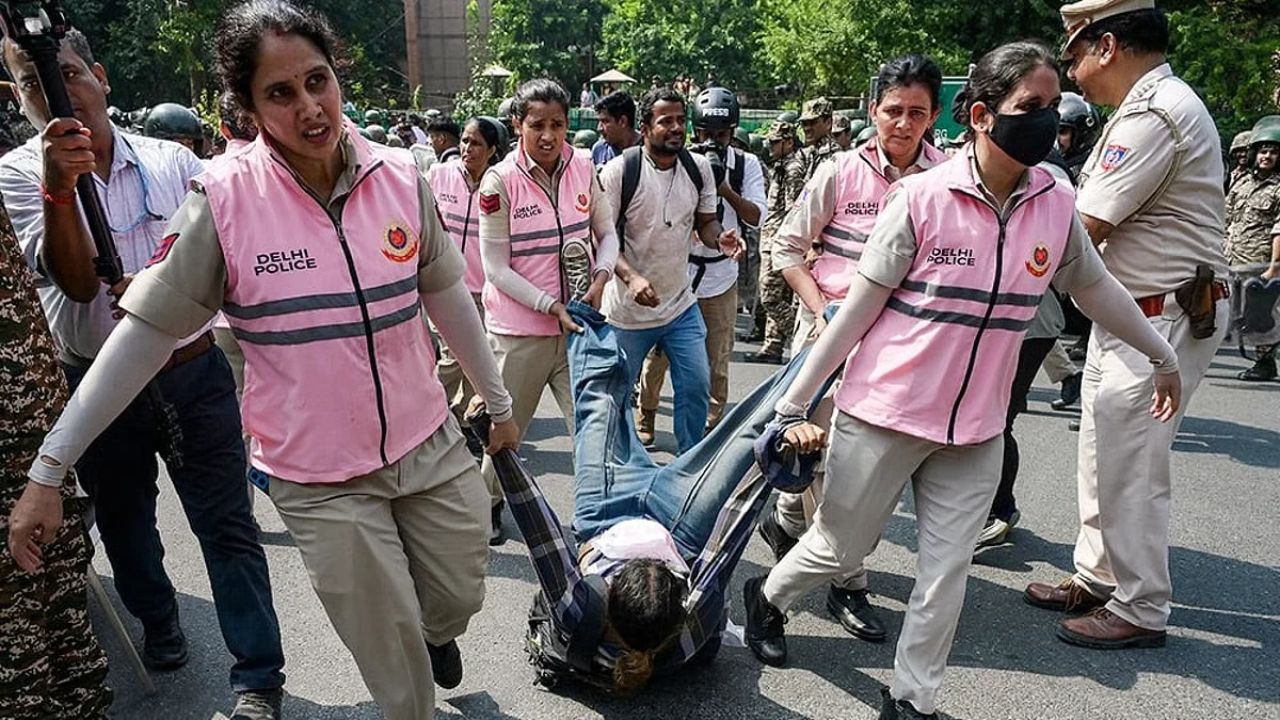
On October 10, extensive security arrangements were put in place across the national capital. Barricades and police deployments restricted access to several locations, while demonstrators attempting to assemble at Jantar Mantar and other parts of central Delhi were detained at multiple points.
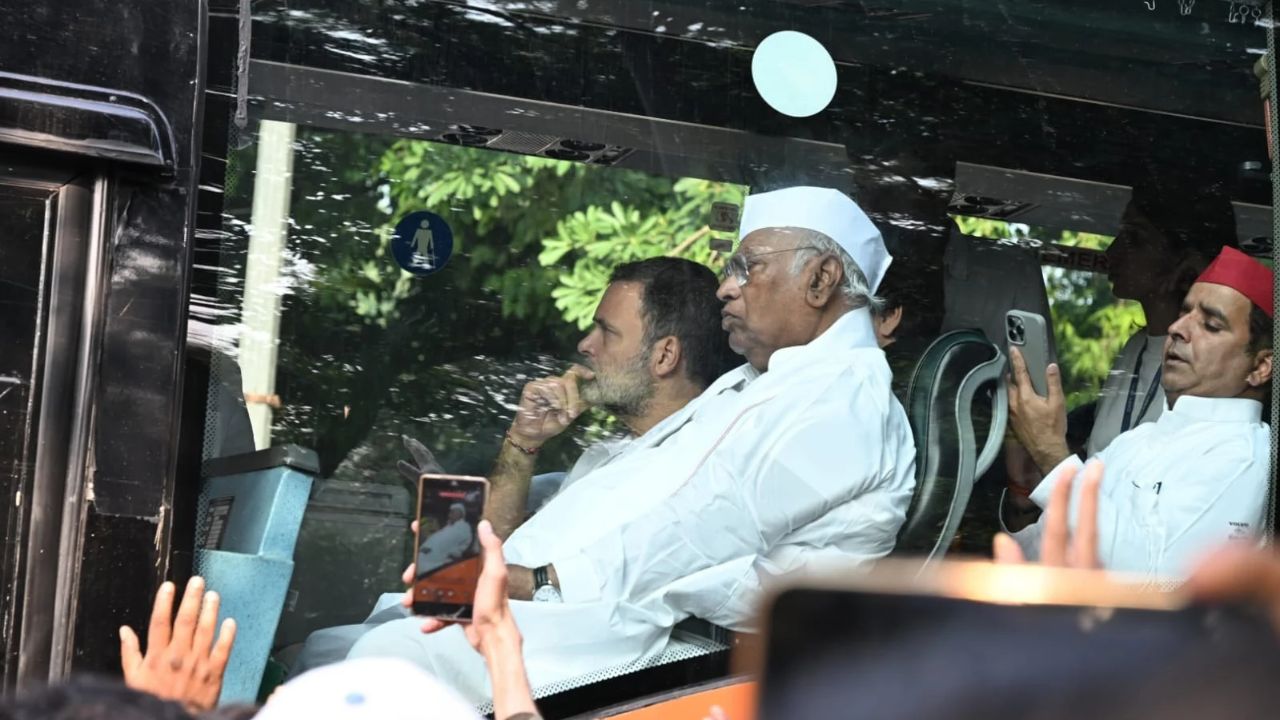
Protesters were reported in areas including Connaught Place and Dilli Haat as police prevented groups from converging on the designated protest venue. Reports put the number of people detained during the crackdown at more than 7,000, including several opposition leaders and former chief ministers. Those named in reports included Mamata Banerjee, Arvind Kejriwal, Pinarayi Vijayan and Manik Sarkar, who were subsequently released.
CJP leaders Abhijeet Dipke, Saurav Das and Ashutosh Ranka were also detained and remained in custody overnight before being released on Sunday, according to reports.
More than 25,000 security personnel were deployed across Delhi during the October 10 operation, as authorities tightened security amid concerns over further demonstrations. The arrangements also affected public movement and transport, with restrictions reported around key roads and protest-sensitive locations.
Despite the change in the official status of Jantar Mantar, police personnel continued to guard the area after the announcement. Barricades remained in place along access roads, and officers monitored key intersections to regulate traffic and prevent unauthorised gatherings.
## CJP leaders criticise move, raise concerns over democratic rights
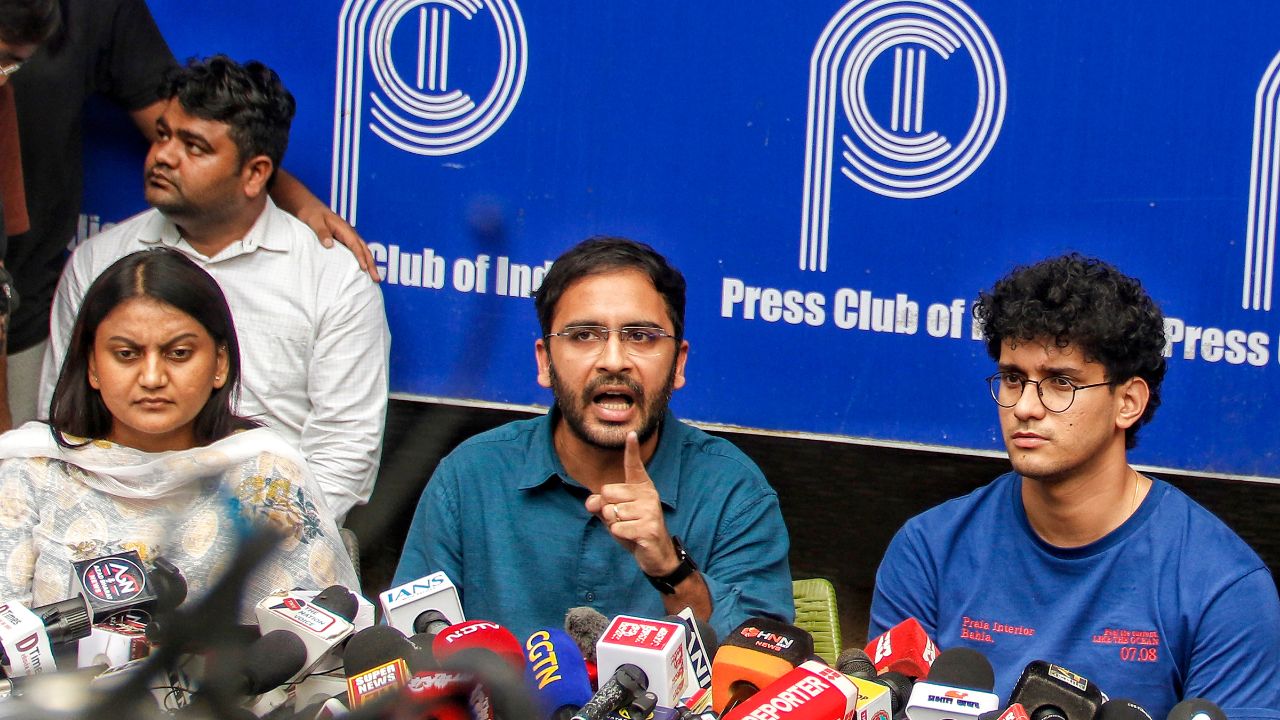
The decision has drawn criticism from the Cockroach Janta Party, whose leaders have questioned whether removing Jantar Mantar from the list of designated protest venues would make it more difficult for citizens to raise grievances against the government.
CJP co-convener Saurav Das criticised the decision in a post on X, describing it as an assault on the fundamental right to protest and assemble peacefully. He questioned whether the Home Ministry had consulted citizens, civil society organisations or other stakeholders before approving the change.
Das argued that Jantar Mantar had long served as a public platform for people seeking accountability from those in power. He rejected the decision as arbitrary and alleged that the move could weaken democratic avenues for dissent. He also asserted that protests would continue despite the change in the venue's official status.
Ratna Singh, the CJP's head of legal affairs, similarly criticised the decision, arguing that the authorities had responded to demands for space to express dissent by withdrawing the designation of the existing protest site. Her remarks reflected the party's concern that the venue change could further complicate efforts to organise demonstrations in the capital.
The criticism centres on the distinction between formally designating a location for protests and the broader constitutional protection for peaceful assembly. While the authorities can regulate venues and impose reasonable restrictions to maintain public order, the practical accessibility of designated sites remains a key issue for demonstrators and civil society groups.
## Jantar Mantar's legacy as a protest landmark
Located in central New Delhi, Jantar Mantar has for decades been among the country's most recognisable venues for public demonstrations. Its proximity to Parliament and major government institutions has made it a focal point for citizens, workers, farmers, students, political parties and social organisations seeking to highlight grievances and demand policy changes.
The site has hosted demonstrations on a wide range of issues, including employment, farmers' demands, education policy, social justice and electoral reforms. Its symbolic importance lies not only in its location but also in its association with public mobilisation and the visibility it offers to protest movements seeking national attention.
Jantar Mantar had also emerged as a prominent venue during the July agitation led primarily by the CJP, with support from Left organisations. The campaign called for the removal of then Union Education Minister Dharmendra Pradhan. The agitation brought renewed focus to the role of street protests in shaping political debate and pressuring the government.
Access to the site had reportedly become increasingly restricted in recent weeks. Following the emergence of protests against the SIR exercise, the area was heavily barricaded, and demonstrators seeking to assemble there faced heightened security restrictions.
The latest order formally removes Jantar Mantar from the list of designated protest venues, replacing it with three locations spread across different parts of Delhi. Whether the new arrangement will provide comparable visibility, accessibility and facilities for demonstrators is likely to remain a subject of debate.
## What changes under the new order?
The revised standing order establishes Ramlila Ground, Burari Ground and CBD Ground in East Delhi as the designated locations for organising protests and demonstrations. The order does not provide the full operational framework for these sites, with Delhi Police stating that detailed SOPs will be issued separately.
The forthcoming guidelines are expected to clarify the procedures for seeking permission, organising gatherings and complying with security requirements at the alternative venues. Until those procedures are issued, the practical implications of the revised arrangement will depend on how the authorities implement the new framework.
The development places the spotlight on the management of public demonstrations in the national capital at a time of political mobilisation over electoral roll revisions. With opposition groups and the CJP continuing to raise objections over the SIR exercise, the new protest-site policy is likely to remain central to the wider debate over public order, access to civic space and the exercise of democratic rights.