 English
 English
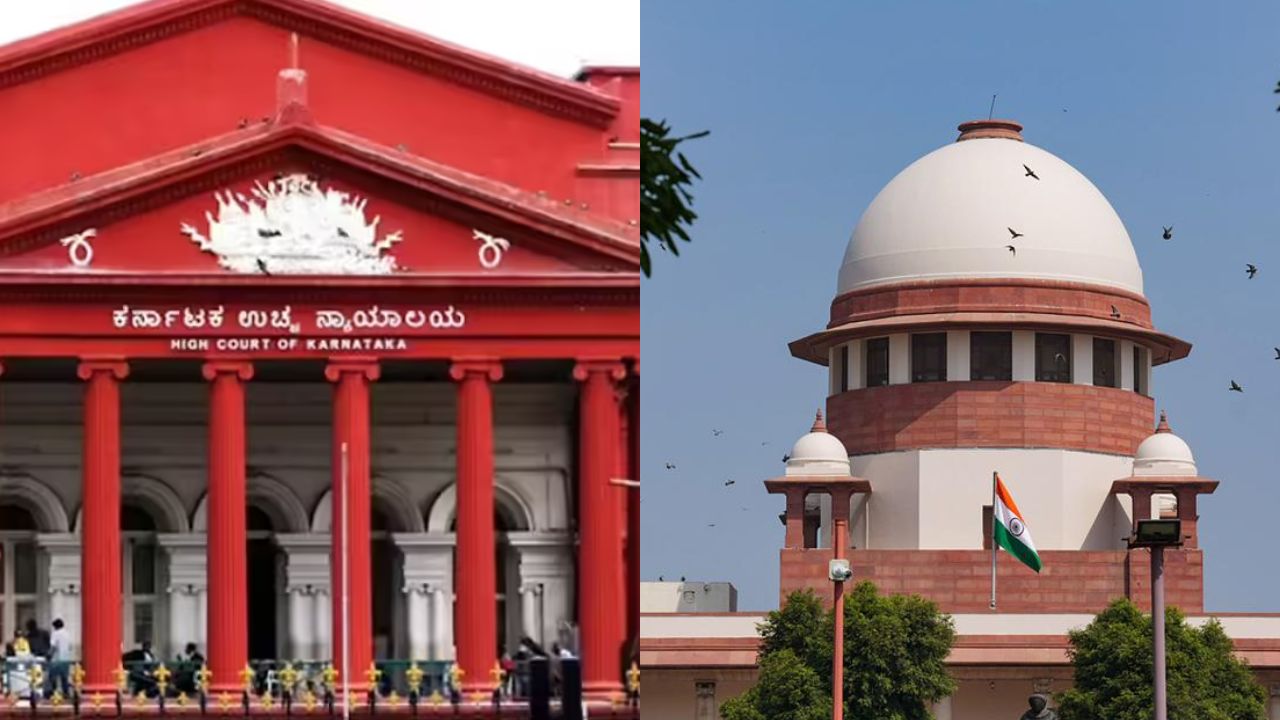
The move is part of the ongoing process to fill vacancies in High Courts across the country (Img: Internet)
New Delhi: The Supreme Court collegium on Tuesday approved the proposal for the appointment of three judicial officers as judges of the Karnataka High Court. The decision was taken at a meeting chaired by Chief Justice of India Surya Kant.
The move is part of the ongoing process to fill vacancies in High Courts across the country.
According to an official statement, the collegium has recommended the elevation of Rajeshwari Narayana Hegde, Kedambadi Ganesh Shanthi, and Mahadevappa Brungesh as judges of the Karnataka High Court.
Supreme Court collegium has recommended the names of three Judicial Officers to be appointed as judges of the Karnataka High Court. pic.twitter.com/VsaKi1z2Zb
— Dynamite News (@DynamiteNews_) April 14, 2026
The three officers are currently serving in the judicial system and have been selected following the prescribed consultation process.
Supreme Court collegium recommends names of 2 women advocates as judges of Kerala High Court
The Supreme Court collegium, headed by the Chief Justice of India and comprising the senior-most judges of the apex court, is responsible for recommending appointments and transfers in the higher judiciary.
Its recommendations are forwarded to the government for further processing under the established framework.
As per the Memorandum of Procedure (MoP), the process for appointing High Court judges begins with the Chief Justice of the concerned High Court initiating the proposal.
Any recommendation from the state government is routed through the Chief Justice. The Governor, acting on the advice of the Chief Minister, forwards the proposal to the Union Ministry of Law and Justice within a stipulated timeline.
The Centre examines the proposal along with background inputs before sending it to the Chief Justice of India. The CJI then consults senior Supreme Court judges before finalising the recommendation.
The recommendation is subsequently sent back to the Law Ministry for further action.
Assembly Elections 2026: No Supreme Court relief for West Bengal voters deleted in SIR process
The appointment is formalised after the President signs the warrant of appointment. The Department of Justice then issues an official notification in the Gazette of India.
The latest recommendations come amid efforts to address vacancies in High Courts, which have an impact on case pendency and judicial functioning.