 English
 English

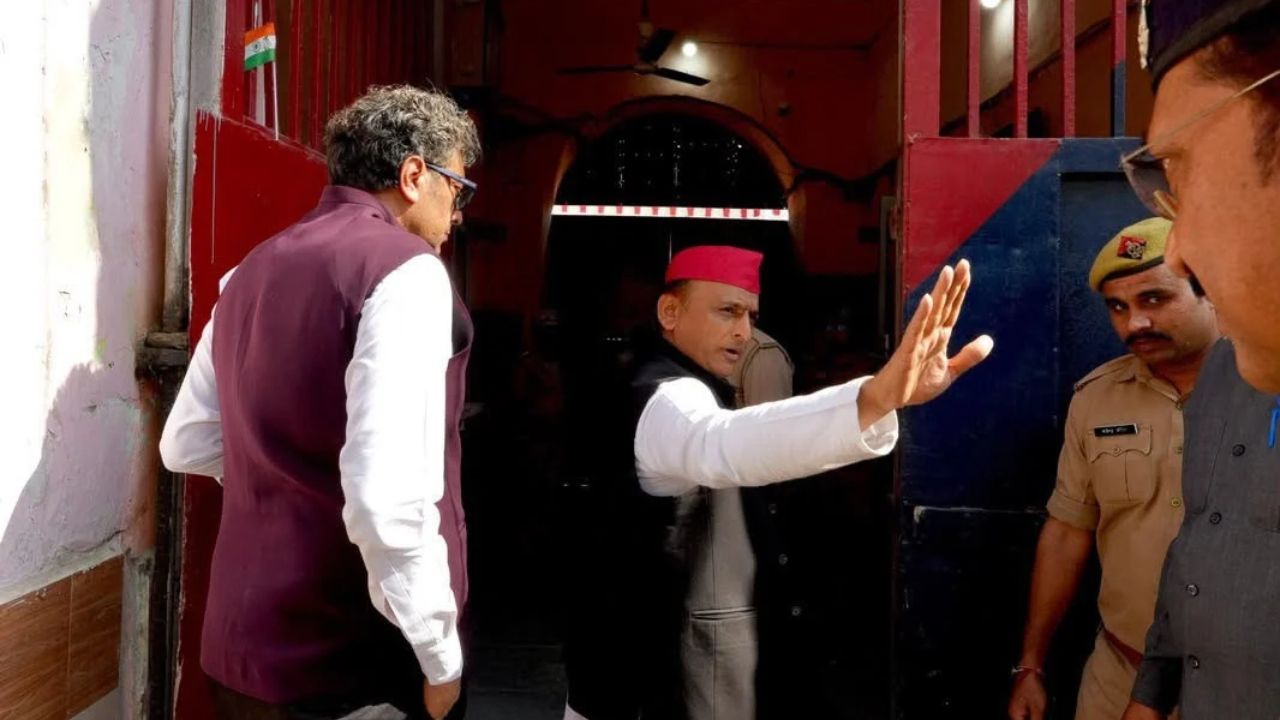
Akhilesh Yadav’s ‘Vote Theft’ Charge Puts Election Commission Under Spotlight as UP MLC Polling Ends. (Img: X)
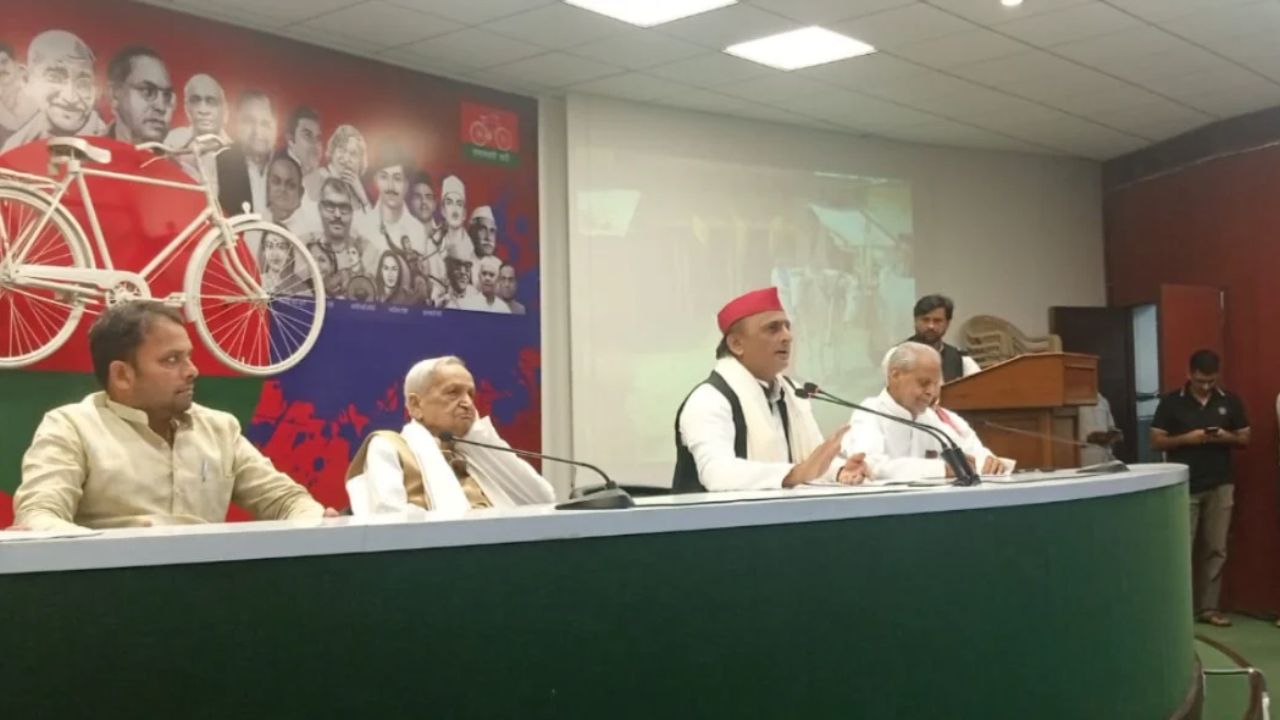
Lucknow: Samajwadi Party chief Akhilesh Yadav launched a sharp attack on the BJP and questioned the Election Commission’s vigilance during the Uttar Pradesh Graduates’ and Teachers’ MLC elections on Friday, alleging voter-list manipulation and intimidation of SP voters in several districts.
After casting his vote in Saifai, Yadav urged people to exercise their franchise, asserting that every vote was crucial to protecting democracy and the Constitution. His remarks came as polling across 11 Legislative Council constituencies witnessed political confrontations, allegations of electoral malpractice and questions over the accuracy of voter lists.
Voting concluded at 4 pm on October 23, with counting scheduled for October 27. The contest, involving five graduates’ constituencies and six teachers’ constituencies, is also being closely watched ahead of the 2027 Uttar Pradesh Assembly elections.
Yadav alleged that the BJP was manipulating electoral rolls during the MLC elections. He also claimed that reports had emerged from several districts of SP voters allegedly facing intimidation involving BJP workers and officials when attempting to cast their votes.
These allegations have not been independently established. However, they intensified the political exchange surrounding the conduct of the elections and the responsibility of authorities to ensure that eligible voters could exercise their franchise without intimidation.
The SP chief also questioned the Election Commission’s vigilance, using a sarcastic reference to the BJP setting up a university to teach what he described as vote theft. He maintained that democracy could not be strengthened through electoral malpractice and said the Samajwadi Party would continue working to strengthen democratic institutions.
Alongside his criticism of the BJP and the Election Commission, Yadav urged voters to participate in the electoral process, emphasising that every ballot mattered in safeguarding democracy and the Constitution.
Commenting on voter participation, he suggested that people without degrees might not have turned up to vote. His remark came during elections in which eligibility is restricted to electors registered on the separate voter lists maintained for the respective graduates’ and teachers’ constituencies.
Unlike Assembly elections, these MLC polls do not allow every ordinary voter in Uttar Pradesh to participate. Only those registered on the relevant constituency-specific electoral rolls are eligible to cast their ballots.
Official figures cited during polling showed voter turnout at 40.87% by 2 pm on Friday. Bareilly-Moradabad recorded the highest turnout among the reported constituencies at 59.17%, followed by Varanasi at 57.97%. The Allahabad-Jhansi graduates’ constituency recorded the lowest turnout at 26.30% at that time.
These figures reflect the reported position at 2 pm and should not be interpreted as the final turnout after polling ended at 4 pm.
In Lucknow, 259 polling booths were established, with more than 1.16 lakh registered voters eligible to participate. Across all 11 constituencies, approximately 14.81 lakh registered electors were eligible to vote, with 152 candidates contesting the elections. The final turnout figures would be needed to establish the overall participation rate after the close of polling.
Political tensions were reported at several polling locations, with Gorakhpur among the districts witnessing a confrontation between BJP and SP workers.
At DAV Degree College in Gorakhpur, workers from the two parties reportedly engaged in a heated exchange, with both sides accusing the other of attempting to influence the polling process. The incident took place in the presence of SP candidate Dr Sanjayan Tripathi, who was also reportedly heckled while speaking to the media outside a polling station.
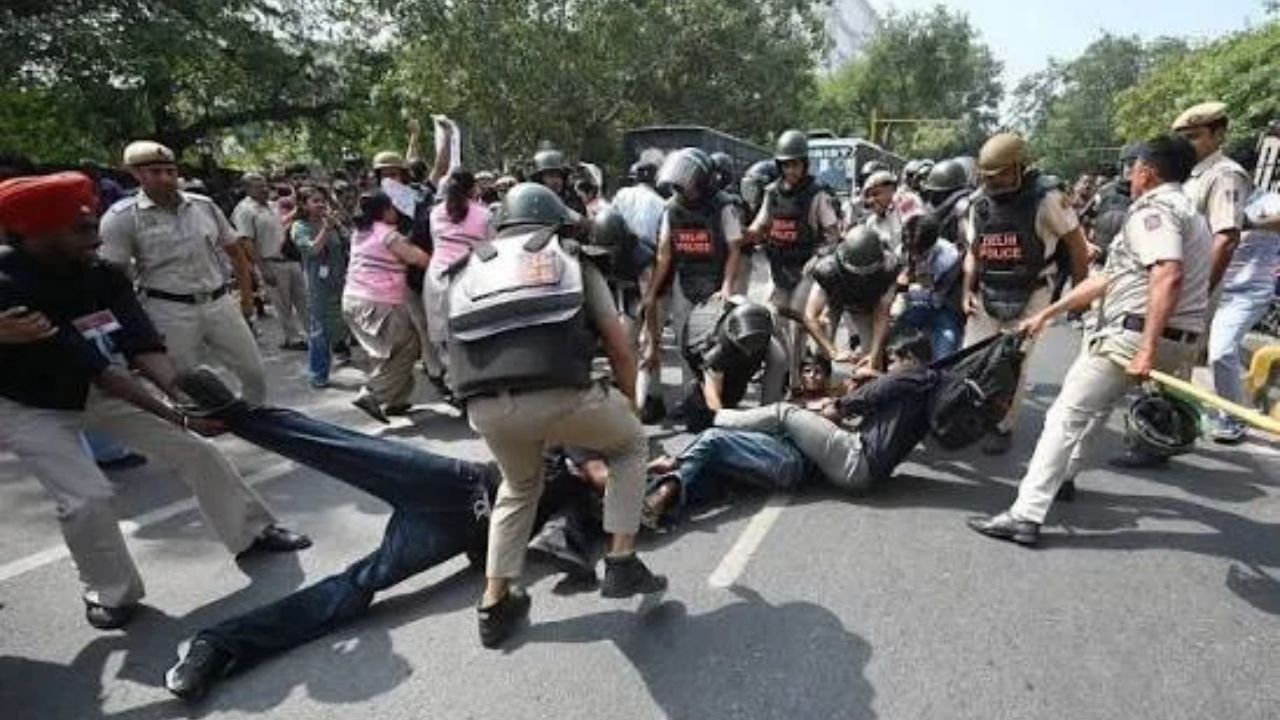
In Agra, tensions escalated in Fatehabad after an allegation that an SP polling agent had been assaulted. BJP and SP supporters reportedly confronted one another, prompting police to intervene and use force to disperse the groups.
Before polling, SP candidate Dr Akash Agarwal and party election in-charge Sanjay Lathar had raised concerns about the alleged misuse of government machinery. They reportedly approached the Chief Electoral Officer seeking closer scrutiny of polling personnel, videography at sensitive booths and measures to ensure teachers could vote without pressure. An SP candidate in Agra was also reported to have suffered an emotional breakdown during the tense contest. The precise circumstances behind the incident require independent confirmation.
In Muzaffarnagar, BJP and SP workers reportedly clashed in the presence of Minister of State Kapil Dev Agarwal. SP workers alleged that the minister had taken several people inside a polling booth while casting his vote. This allegation had not been independently verified.
In Aligarh, SP supporters reportedly objected to the presence of Minister of State Surendra Diler at a polling location. Fatehpur also witnessed a confrontation between BJP and SP workers, with both sides accusing each other of electoral malpractice.
In Varanasi, SP MLA Ragini Sonkar alleged that education department officials were threatening school affiliations and teachers’ employment. The claim added to the opposition party’s concerns about whether teachers and other education-sector voters were able to participate freely.
Police personnel reportedly intervened at several locations as confrontations unfolded. The competing allegations require examination by the relevant authorities before any conclusions can be drawn about responsibility for the incidents.
The political atmosphere grew more charged after hoardings targeting Akhilesh Yadav and other Samajwadi Party leaders appeared at several locations in Lucknow, Ballia and Sitapur while voting was underway.
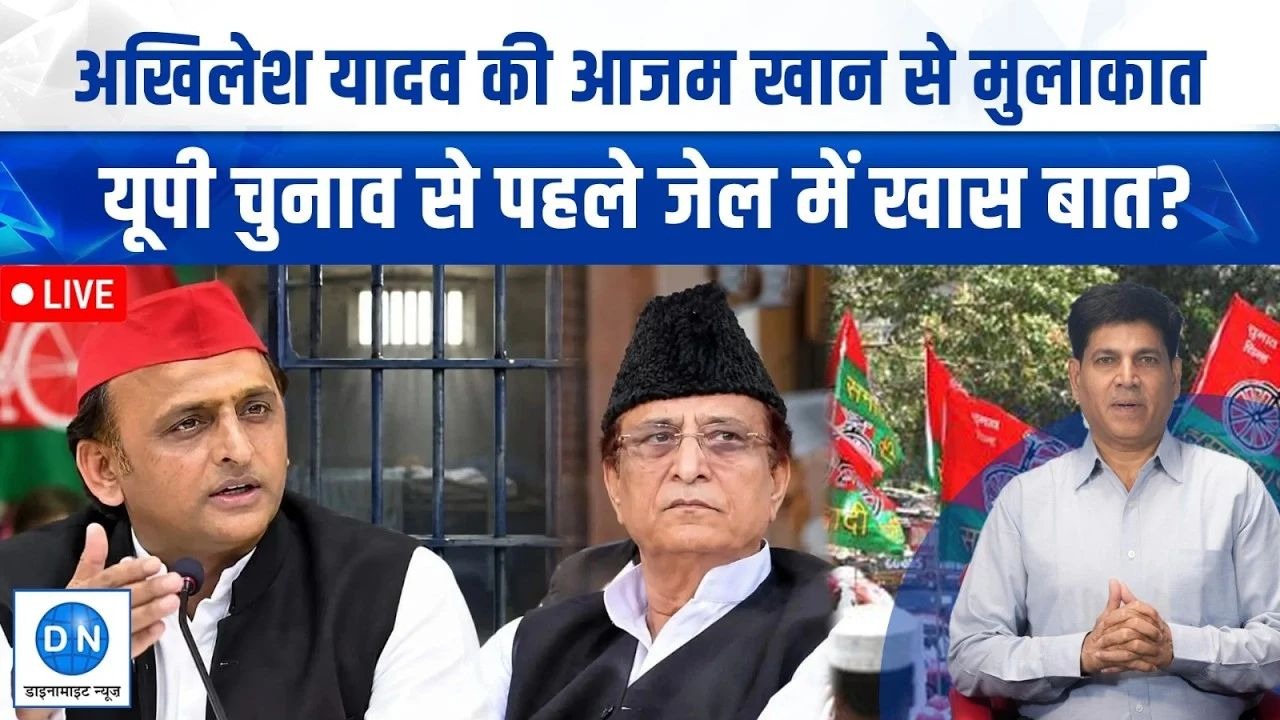
Some posters reportedly depicted Yadav alongside slain gangster Atiq Ahmed and jailed SP leader Azam Khan, while other displays targeted his family. SP workers removed or tore down some of the hoardings, accusing those responsible of attempting to influence voters and create tension on polling day.
In Ballia, police said no one had claimed responsibility for putting up the posters and that an investigation was underway. The identity of those responsible and any intention to influence voting would need to be established through the investigation.
Questions over electoral-roll accuracy emerged as another significant issue during the MLC elections. Entries containing incorrectly rendered or nonsensical names were reportedly identified in the Allahabad-Jhansi graduates’ constituency, prompting the Chief Electoral Officer to order an inquiry.
The discrepancies were reportedly linked, in part, to a software process that translated some English-language entries into Hindi instead of accurately transliterating the names. The issue raised concerns about the verification procedures used to prepare constituency-specific voter lists.
Both the BJP and the SP had raised concerns about electoral rolls and polling arrangements before the elections, although their specific allegations differed. The inquiry is expected to help establish the nature of the reported discrepancies and whether any corrective action is required.
Accurate electoral rolls are particularly important in graduates’ and teachers’ constituencies because voting eligibility depends on registration on the relevant specialised lists. Errors in names or other details can undermine confidence in the process and warrant timely scrutiny by election authorities.
Uttar Pradesh Jal Shakti Minister Swatantra Dev Singh cast his vote at polling booth number 217 at the Jalaun district council office in Orai for the Allahabad-Jhansi graduates’ constituency.
After voting, he expressed confidence that the BJP would win all 11 seats, citing the work of the Narendra Modi-led central government and the Yogi Adityanath government for teachers and other sections of society.
His prediction contrasted with the SP’s allegations of voter-list manipulation and intimidation, highlighting the competing political narratives surrounding the elections. The actual outcome will become clear when votes are counted on October 27.
The five graduates’ constituencies are Lucknow, Varanasi, Agra, Meerut and Allahabad-Jhansi. The six teachers’ constituencies are Lucknow, Agra, Varanasi, Meerut, Bareilly-Moradabad and Gorakhpur-Faizabad. The constituencies span all 75 districts of Uttar Pradesh, but only voters registered on the appropriate graduates’ or teachers’ electoral rolls are eligible to participate.
The retiring members from the graduates’ constituencies are Avanish Kumar Singh, Ashutosh Sinha, Manvendra Pratap Singh, Dinesh Kumar Goel and Man Singh Yadav. The teachers’ constituency members whose terms are due to expire are Umesh Dwivedi, Lal Bihari Yadav, Akash Agarwal, Shrichand Sharma, Hari Singh Dhillon and Dhruv Kumar Tripathi.
The terms of the sitting members are due to end on December 6, making the biennial elections necessary to determine their successors in the Uttar Pradesh Legislative Council.
The election notification was issued on September 29, nominations closed on October 6, scrutiny took place on October 7 and October 9 was the last date for withdrawal of candidature. The entire electoral process is scheduled to be completed before October 31.
Ballot papers, rather than electronic voting machines, were used in the elections. Schools from nursery to Class 12 were closed in several districts, while some colleges, universities and other higher education institutions were also shut temporarily. These institutions were scheduled to reopen on Saturday. Restrictions were imposed within 100 metres of polling stations to help maintain order.
The Model Code of Conduct was reported to be in force across most of Uttar Pradesh in connection with the elections, with Kanpur Nagar, Kanpur Dehat and Unnao excluded from its application, according to the reported announcement.
Although the Legislative Council elections involve a smaller, specialised electorate than Assembly elections, their political significance extends beyond the 11 seats. The BJP and the SP are using the contest to assess their organisational networks, local leadership and influence among registered graduates and teachers ahead of the 2027 Uttar Pradesh Assembly elections.
For the BJP, the challenge is to maintain its support while responding to allegations of administrative interference and polling irregularities. For the SP, the immediate test is whether it can translate local mobilisation and concerns over electoral arrangements into votes while ensuring its complaints receive scrutiny.
The reported clashes, allegations of intimidation, controversial hoardings and electoral-roll discrepancies have put the conduct of the polls under the spotlight. However, allegations made by political parties and their supporters should be distinguished from verified findings, and the responsibility for establishing the facts rests with the relevant authorities.
With voting now concluded, attention shifts to the counting scheduled for October 27. The results will determine the next representatives for the 11 constituencies and provide a measure of political support among graduate and teacher voters, while the handling of complaints and inquiries will remain important to public confidence in the electoral process.