 English
 English

India’s 7.8 per cent GDP growth puts the economy within close reach of the 8 per cent mark, according to Shaktikanta Das. (Img: X)
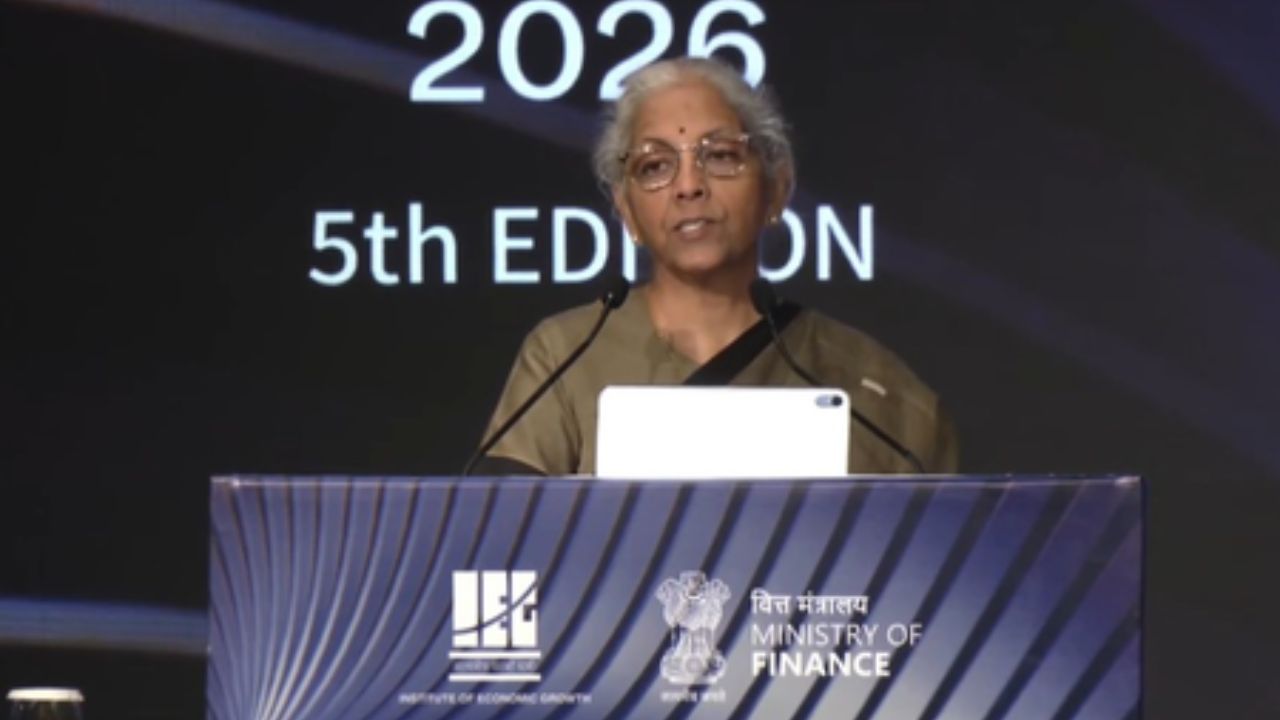
New Delhi: India’s economy has remained resilient despite geopolitical tensions, trade fragmentation and energy shocks, with real GDP growing 7.8 per cent in the first quarter of 2026-27, Principal Secretary to the Prime Minister Shaktikanta Das said at the Kautilya Economic Conclave in New Delhi. He attributed the resilience to a decade of economic reforms, stronger institutions, macroeconomic stability and sustained investment in productive capacity.
Das, a former Reserve Bank of India Governor and former Economic Affairs Secretary in the Union Finance Ministry, said the reforms introduced over the past decade were not isolated policy measures. According to him, they created systemic buffers that allowed the Indian economy to absorb global disruptions and recover relatively quickly.
He highlighted flexible inflation targeting, the Goods and Services Tax, digital payments, banking-sector reforms and stronger governance systems as key elements of India’s economic architecture.
The reforms gained importance as the global economy went through a series of shocks, including the Covid-19 pandemic, the Russia-Ukraine war, conflicts in West Asia, volatile energy prices, rising geopolitical tensions and growing trade restrictions.
India’s real GDP expanded 7.8 per cent in the first quarter of financial year 2026-27, supported by domestic demand and investment. Das indicated that India was within close reach of 8 per cent growth and pointed to growth above 8 per cent across the four quarters from July-September 2025 to April-June 2026.
The performance is significant because the Indian economy has continued to expand despite an uncertain external environment. Strong domestic consumption, investment activity and expanding productive capacity have emerged as important growth drivers.
For businesses and investors, sustained domestic demand also provides a degree of protection against weak global trade and external economic volatility.
One of the major areas highlighted by Das was India’s digital public infrastructure. The JAM framework, combining Jan Dhan bank accounts, Aadhaar and mobile connectivity, has enabled faster and more targeted delivery of government benefits. Its importance became particularly visible during the Covid-19 pandemic, when millions of people required rapid financial assistance.
Digital governance has also helped reduce information gaps, streamline administrative processes and improve accountability. Das cited estimates suggesting that direct benefit transfers have resulted in savings of around Rs 5.1 lakh crore by reducing leakages in welfare programmes.
Macroeconomic stability was identified as another major pillar of India’s economic resilience. The flexible inflation-targeting framework introduced in 2016 strengthened the monetary policy framework and helped India manage inflationary pressures during multiple global disruptions.
The framework became particularly important during periods of supply-chain disruption, commodity-price volatility and external shocks. Das also highlighted fiscal consolidation as an important part of the government’s economic strategy. The approach has focused on improving fiscal stability while continuing expenditure on infrastructure and other areas that support economic growth.
The Goods and Services Tax was another major reform highlighted by Das. GST helped create a more integrated national market by replacing multiple indirect taxes with a unified tax framework.
It also reduced the cascading effect of taxes and contributed to the formalisation of economic activity. Greater formalisation has implications for tax collection, business compliance, digital transactions and access to formal financial services.
The recovery of the banking sector was described as another important factor behind India’s economic resilience. The Insolvency and Bankruptcy Code, bank recapitalisation, stronger regulatory oversight and measures to address stressed assets have helped improve the financial sector.
Gross non-performing assets of banks fell to 1.68 per cent in June 2026, while profitability improved significantly, according to figures cited by Das. A healthier banking system can support stronger credit growth and provide businesses with greater access to financing for expansion and investment.
India’s investment in infrastructure and logistics has also become a central part of its long-term growth strategy. PM Gati Shakti, the National Logistics Policy, Sagarmala and UDAN have focused on improving connectivity, reducing logistics bottlenecks and making the movement of goods and people more efficient.
Better logistics infrastructure can reduce transaction costs, improve supply-chain efficiency and make Indian businesses more competitive. Das identified this investment in productive capacity as a critical foundation for investment-led growth.
Energy security is another important part of India’s economic resilience. India has expanded its energy mix across fossil fuels, renewable energy, biofuels and nuclear power. This diversification can reduce dependence on any single source and provide greater flexibility during international supply disruptions.
Energy prices have a direct impact on inflation, imports, the current account and household spending. For a large and rapidly growing economy, therefore, energy diversification has both economic and strategic importance.
Das also pointed to signs of a manufacturing resurgence driven by production-linked incentive schemes, semiconductor investments, automation and Industry 4.0 technologies.
The manufacturing push is aimed at strengthening domestic production, attracting investment, creating jobs and developing more competitive supply chains.
Semiconductors and advanced manufacturing are particularly important as countries seek to reduce vulnerabilities in critical technology and industrial supply chains. For India, the expansion of technology-intensive manufacturing could also help move the economy towards higher-value production.
The next phase of India’s economic growth is expected to be shaped by artificial intelligence, deeper financial markets, strategic self-reliance, sustainable development and human capital.
Das highlighted AI’s potential to improve productivity across industries while transforming public services, healthcare, education and scientific research. However, the rapid expansion of AI will also require stronger frameworks for data governance, cybersecurity, algorithmic bias and AI safety.
India’s AI approach is expected to focus both on developing domestic technological capabilities and foundation models and on widening access to AI applications.
As India’s economy expands, Das also stressed the need to deepen the financial system. Stronger corporate bond markets, pension and insurance funds, municipal finance and green and transition finance could create additional sources of long-term capital.
A deeper financial market would reduce excessive dependence on traditional bank lending and could help fund infrastructure, manufacturing, clean energy and other capital-intensive sectors.
Strategic self-reliance is expected to remain another important part of India’s economic strategy. However, the approach does not mean withdrawing from global markets. The focus is on building domestic capabilities in strategically important areas while continuing to attract global investment, technology and trade.
This balance has become increasingly important as geopolitical tensions, supply-chain disruptions and technology restrictions reshape the global economy.
India’s long-term growth will also depend heavily on its people. Investment in education, healthcare, vocational skills and workforce development will become increasingly important as automation and artificial intelligence transform the nature of employment.
A skilled workforce can help India capture opportunities in advanced manufacturing, technology, digital services and emerging industries while improving productivity across the economy.
Das’ assessment also underlined that high growth alone will not be enough for India’s next economic phase. Sustainable development, climate leadership, clean-energy investment and a gradual transition towards a lower-carbon economy will become increasingly important as India expands its economic footprint.
The challenge will be to maintain rapid economic expansion while ensuring energy security, environmental sustainability and inclusive development.
The central challenge now is to maintain the reform momentum while expanding India’s long-term productive capacity. The combination of macroeconomic stability, healthier banks, digital infrastructure, logistics investment, manufacturing expansion and technological development has created a stronger base for growth.
The next phase, however, will require continued reforms and investment in AI, financial markets, strategic capabilities, sustainability and human capital. Das’s assessment places the focus beyond short-term GDP numbers and towards India’s ability to sustain resilient growth over decades. The broader objective is to strengthen the foundations needed to support the Viksit Bharat 2047 vision.