English
 English

The term “Hindu rate of growth” was coined by economist Raj Krishna in 1978
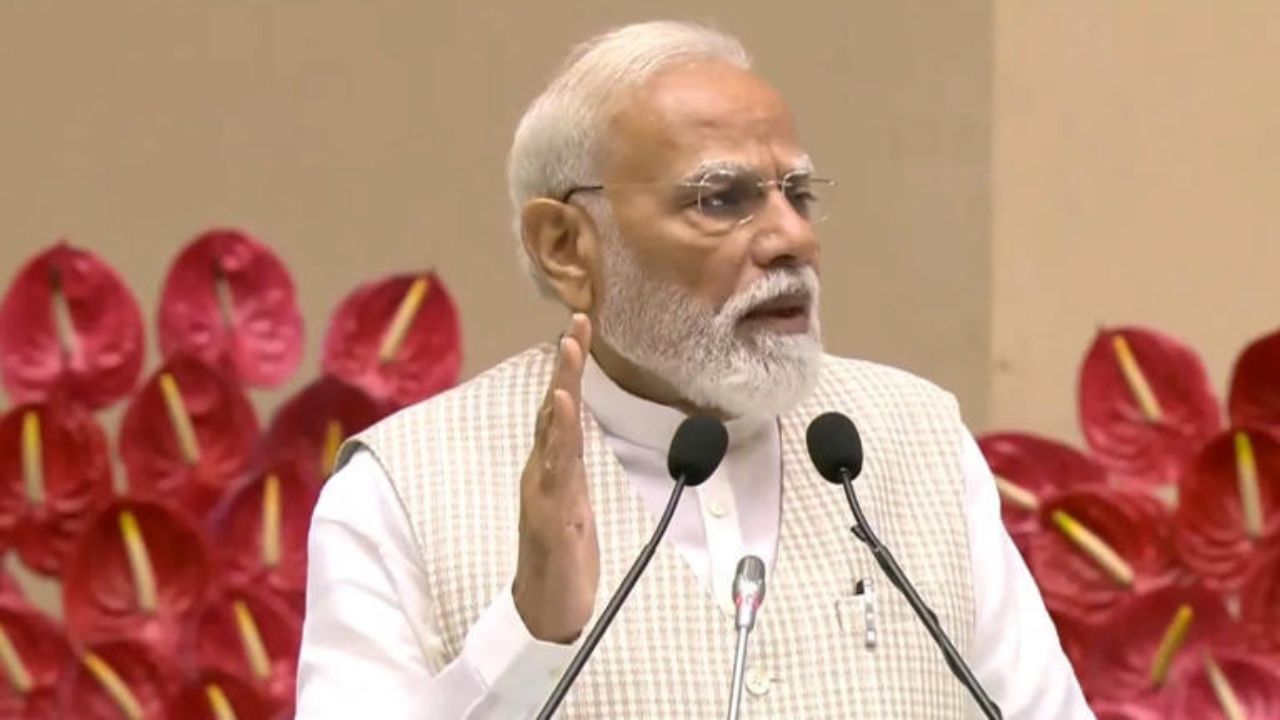
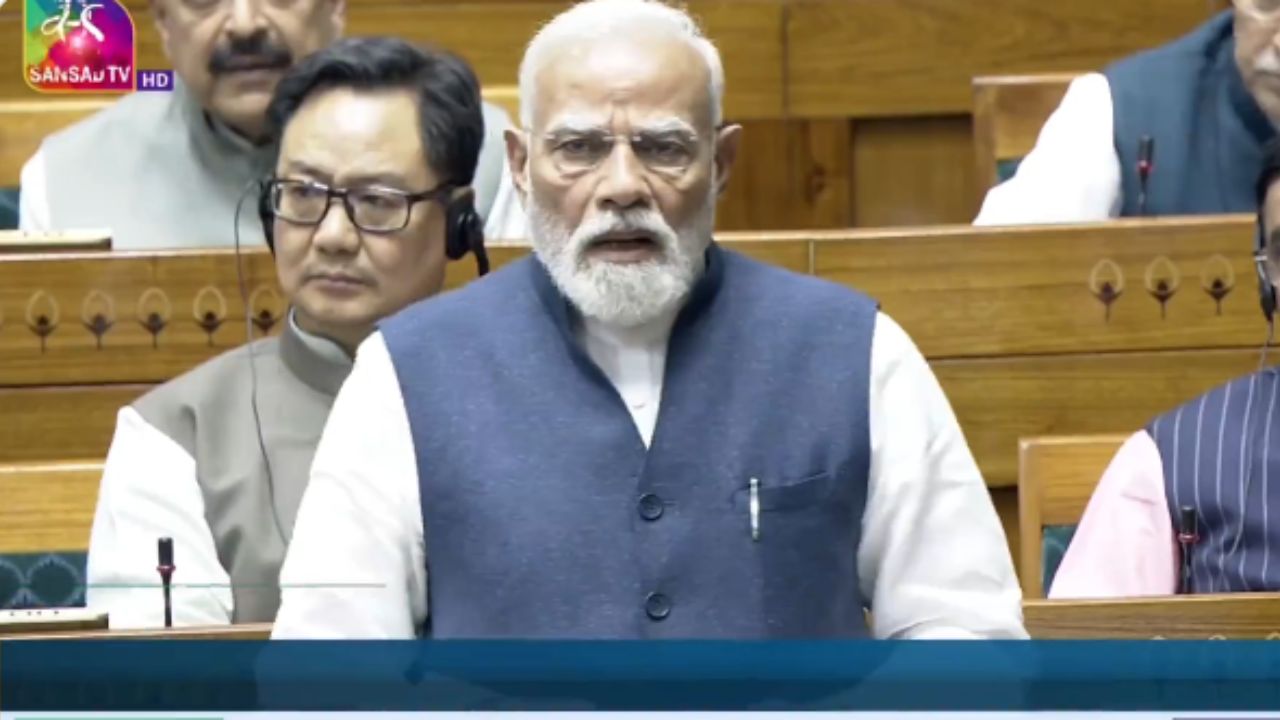
New Delhi: Prime Minister Narendra Modi has strongly rejected the use of the term Hindu rate of growth, arguing that it was created to distort perceptions of the Hindu faith by linking it to decades of economic stagnation. Speaking at the 23rd Hindustan Times Leadership Summit, the Prime Minister said the phrase unfairly connected cultural identity with the country’s earlier economic struggles. He emphasised that India today stands in what he described as a different league with rising global credibility and an economy marked by resilience.
PM Modi said that even as global divisions deepen and many economies face rising uncertainty, India continues to act as a bridge builder on the world stage. He said that while global forecasts often speak of slowdown, India continues to deliver growth and while trust is weakening internationally, India serves as a pillar of confidence for investors and partners.
The expression Hindu rate of growth was introduced in 1978 by economist Raj Krishna to describe India’s economic performance during the decades after independence. From the 1950s to the 1980s the economy grew at roughly 3.5 to 4 percent a year. The label suggested that the slow pace reflected aspects of the so called Hindu way of life such as acceptance of fate or limited material ambition.
However many economists have long argued that the stagnation was driven not by cultural factors but by policy choices. These included heavy state control over industries, restrictive licensing systems and limited market competition. Analysts today consider the term misleading because it associates economic failure with a religious community.
Dhirendra Shastri on the Delhi bombings: “If Hindus unite, no one will resort to violence.”
The phrase regained attention in 2023 when former Reserve Bank of India Governor Raghuram Rajan warned that India might be heading toward a new phase of slow growth. He cited third quarter GDP numbers to argue that the economy was losing momentum. His comments triggered a wave of reactions from financial experts who felt the comparison was exaggerated.
State Bank of India’s research team countered by saying that recent GDP variations were not reflective of long term weakness. They noted that broader data on savings, investment and structural capacity did not support the claim that India was approaching earlier levels of sluggish growth. Many economists agreed that calling the present situation a return to the Hindu rate of growth oversimplified today’s economic environment.
Parliament to hold special debate on 150 years of ‘Vande Mataram’; PM Modi to address
The discussion took another dimension when BJP MP Sudhansu Trivedi introduced the phrase Hindutva rate of growth while discussing India’s economic progress over the last decade. Citing International Monetary Fund numbers that placed India’s 2023 growth at 6.3 percent he noted that this rate exceeded the growth of major economies such as the United States, the United Kingdom and Japan.
Trivedi argued that the robust growth was rooted in governance decisions, welfare schemes and public expenditure aimed at uplifting weaker sections. He referred to a Sanskrit idea that wealth brings happiness only when used in accordance with Dharma linking economic policy with ethical principles. He emphasised that this concept was fundamentally different from the outdated Hindu rate of growth narrative.
As India positions itself for future expansion the debate around the Hindu rate of growth remains a point of contention. Critics believe the term carries unjust cultural connotations while supporters argue that it serves as a reminder of past economic missteps. PM Modi’s latest remarks have revived public scrutiny of how India’s economic trajectory should be framed and understood in both historical and contemporary contexts.