English
 English

320 million litres glacier water set to transform Ladakh’s iconic wetland. (Img: Dynamite News)
Leh: A massive glacier water diversion project has been launched in Ladakh to revive the rapidly shrinking Tso Kar Lake, one of India’s most important high-altitude wetlands. The project is attracting attention because it combines climate adaptation, wildlife conservation and livelihood protection in one of the world’s toughest cold desert environments.
Lieutenant Governor VK Saxena has initiated the ambitious mission to channel unused glacier meltwater from the Rupsho Kharnak stream into Tso Kar Lake, which has lost nearly 70 per cent of its water spread over the last decade.
Ladakh Lieutenant Governor Vinai Kumar Saxena has launched a major ecological restoration project to revive Tso Kar Lake in the Changthang region by utilising glacier water that was previously flowing unused into the Sindhu River.
The project aims to divert nearly 320 million litres of glacier meltwater every day during peak summer discharge. The water, equivalent to around 132 cusecs, will be transported from the Rupsho Kharnak stream located approximately 11 kilometres away from the lake.
Situated at an altitude of nearly 18,000 feet, the glacier stream holds significant water potential that the administration now plans to use for restoring the fragile wetland ecosystem of Tso Kar.
The initiative is being described as one of India’s largest high-altitude lake revival efforts, designed to address water scarcity, biodiversity loss and climate-related challenges in the Himalayan region.
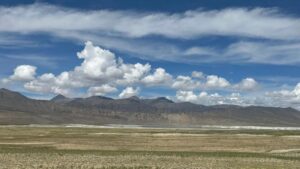
Tso Kar Lake, located in Ladakh’s Changthang plateau, has witnessed a dramatic decline in recent years due to reduced water availability and changing environmental conditions.
The iconic wetland, which once spread across nearly 11,000 acres, has reportedly reduced to around 3,200 acres.
The shrinking water body has affected the ecosystem that supports several migratory bird species, including the rare black-necked crane, which depends on Ladakh’s wetlands for breeding and survival.
The decline of the lake has also created challenges for local communities, especially Pashmina goat herders who depend on nearby grasslands for livestock grazing.
Img: Dynamite News
The Ladakh administration has adopted a nature-based water management approach instead of constructing a large concrete channel that could disturb the sensitive Himalayan environment. The project will use natural slopes and gravity-based water flow to redirect glacier water towards Tso Kar Lake.
A cascading system involving three natural depressions has been planned along the route of the water channel. The first depression covers nearly 270 acres, while the second and third cover around 24 acres and 10 acres respectively.
Check dams and regulated outlets will control the movement of water and allow sediments to settle before cleaner water reaches the main lake. Officials believe this method will protect the fragile ecosystem while creating additional freshwater habitats.
The restoration project is expected to create three new freshwater wetlands before the water finally reaches Tso Kar Lake. These additional water bodies will store nearly 1,230 million litres of water and provide new habitats for migratory birds and high-altitude wildlife.
The wetlands are also expected to enhance tourism potential along the Leh-Manali Highway by creating new scenic water landscapes in the cold desert region. The project highlights a new model of sustainable water conservation where natural geography is being used instead of heavy infrastructure.
The administration started work on the project in September before the arrival of extreme winter conditions in Ladakh. Around 20 cusecs of water from the Rupsho Kharnak stream has already been diverted into the first depression, which has started filling.
Officials said the water is being channelised through an earthen route along with an old unused concrete canal that had remained abandoned since 1995. The early progress is being closely monitored as temperatures in Ladakh can fall below minus 20 to minus 30 degrees Celsius during winter, making construction and maintenance extremely challenging.
The revival of Tso Kar Lake is expected to bring major benefits for local communities living around the wetland. Many villagers in the region depend on Pashmina goat herding, but the shrinking lake has reduced traditional grazing grounds.
Due to the loss of grasslands, several herders have been forced to travel 50 to 75 kilometres away from their homes in search of suitable grazing areas. Officials expect the restoration of the lake to improve pasture availability, support livestock-based livelihoods and strengthen the local rural economy.
The Tso Kar revival project was planned after LG VK Saxena visited the lake on August 10 and interacted with local residents who highlighted the rapid disappearance of the water body. Following the visit, the administration conducted a detailed survey of the area to identify possible solutions.
An initial proposal suggested building an RCC water channel, but authorities later decided against it due to concerns over environmental impact. The final plan focused on low-cost, low-impact engineering using natural terrain and gravity-based water movement.
The initiative follows another glacier water management project in the Stok region, where glacier meltwater has been redirected towards irrigation systems supporting agricultural areas near Leh.
The Tso Kar wetland complex is recognised as an important ecological zone under the Ramsar Convention, which protects internationally significant wetlands. The region supports migratory birds, wildlife species and unique Himalayan biodiversity.
Environmental experts have increasingly highlighted the importance of protecting high-altitude wetlands as climate change continues to impact glaciers, water resources and ecosystems across the Himalayas. The revival of Tso Kar could become a model for restoring other vulnerable mountain ecosystems facing similar challenges.
Authorities will continue monitoring water flow, wetland development and ecological recovery as the glacier diversion project progresses. If successful, the initiative could become a blueprint for high-altitude water management projects across Himalayan regions.
At a time when climate change is threatening traditional water sources, Ladakh’s Tso Kar revival mission represents a major attempt to combine technology, conservation and community welfare.